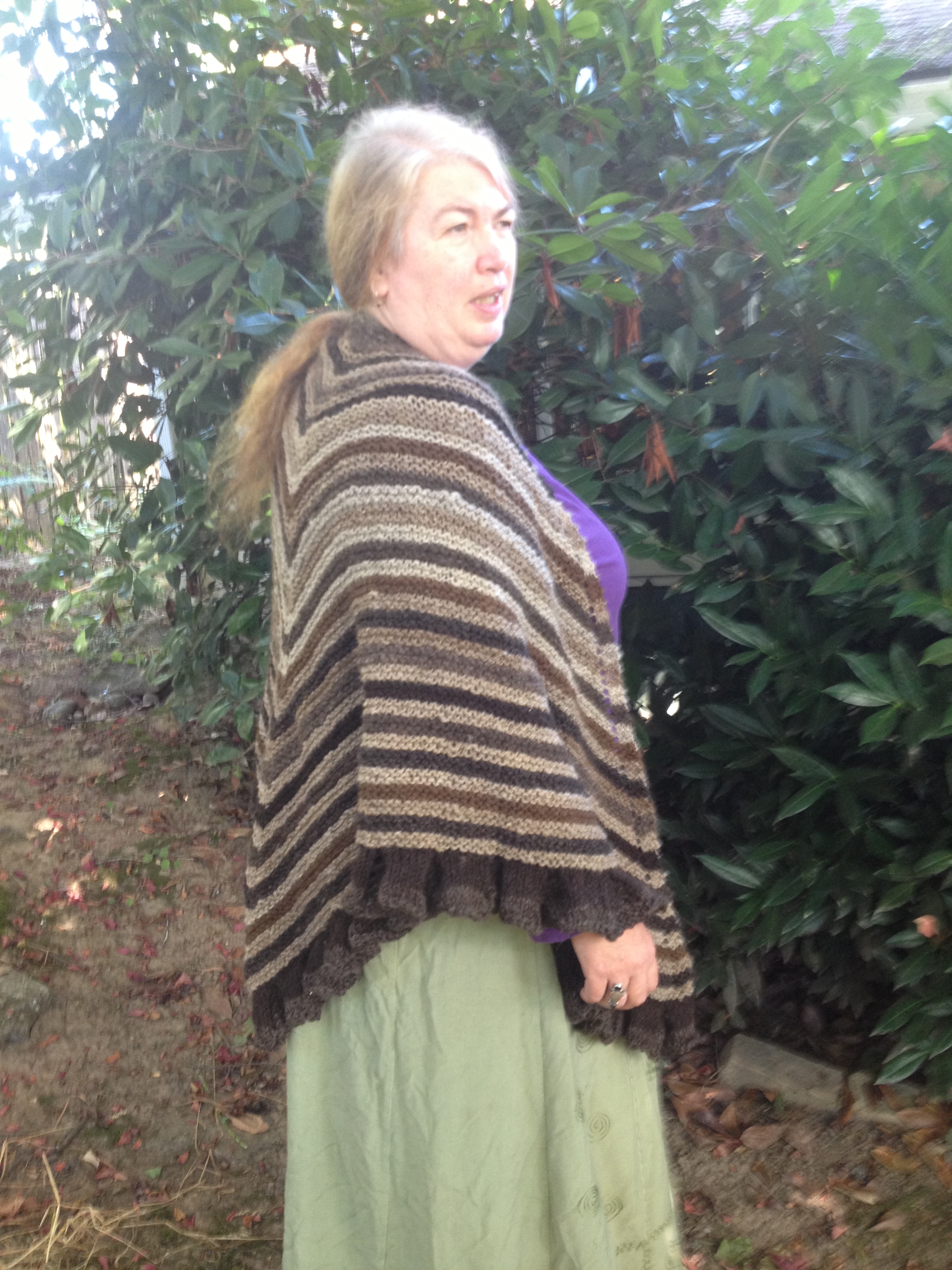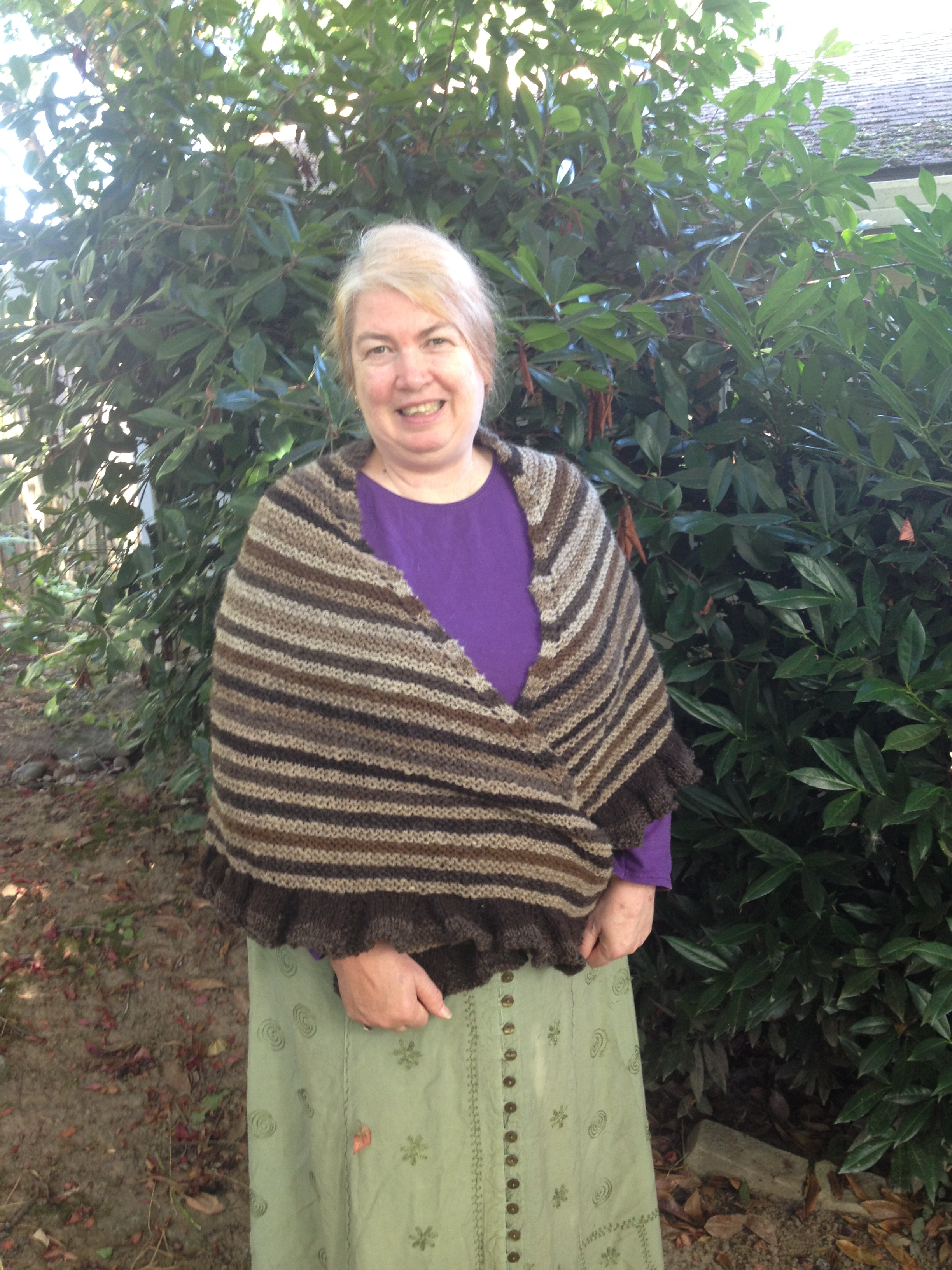
• Spindles 27.02.2014 No Comments

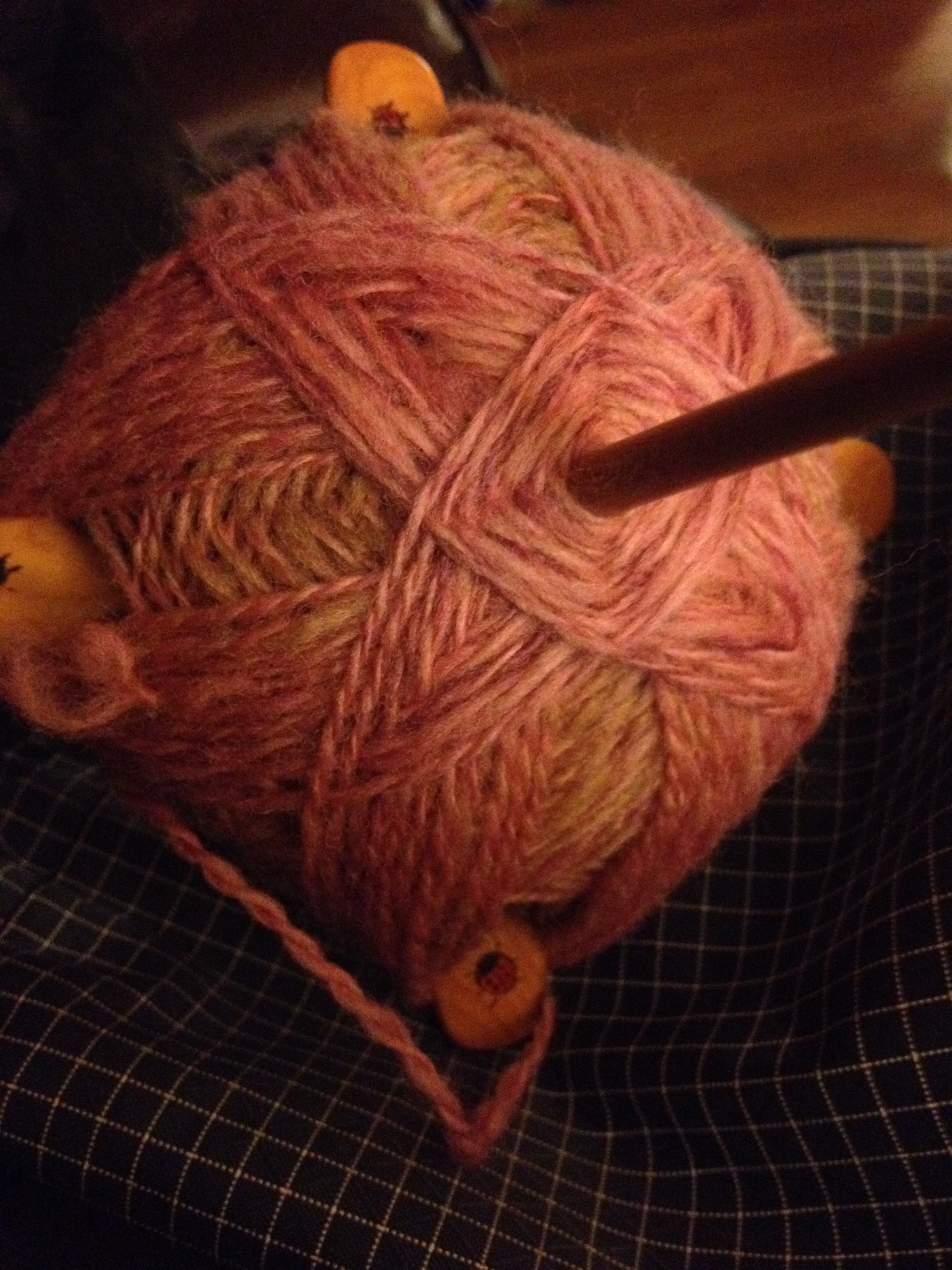
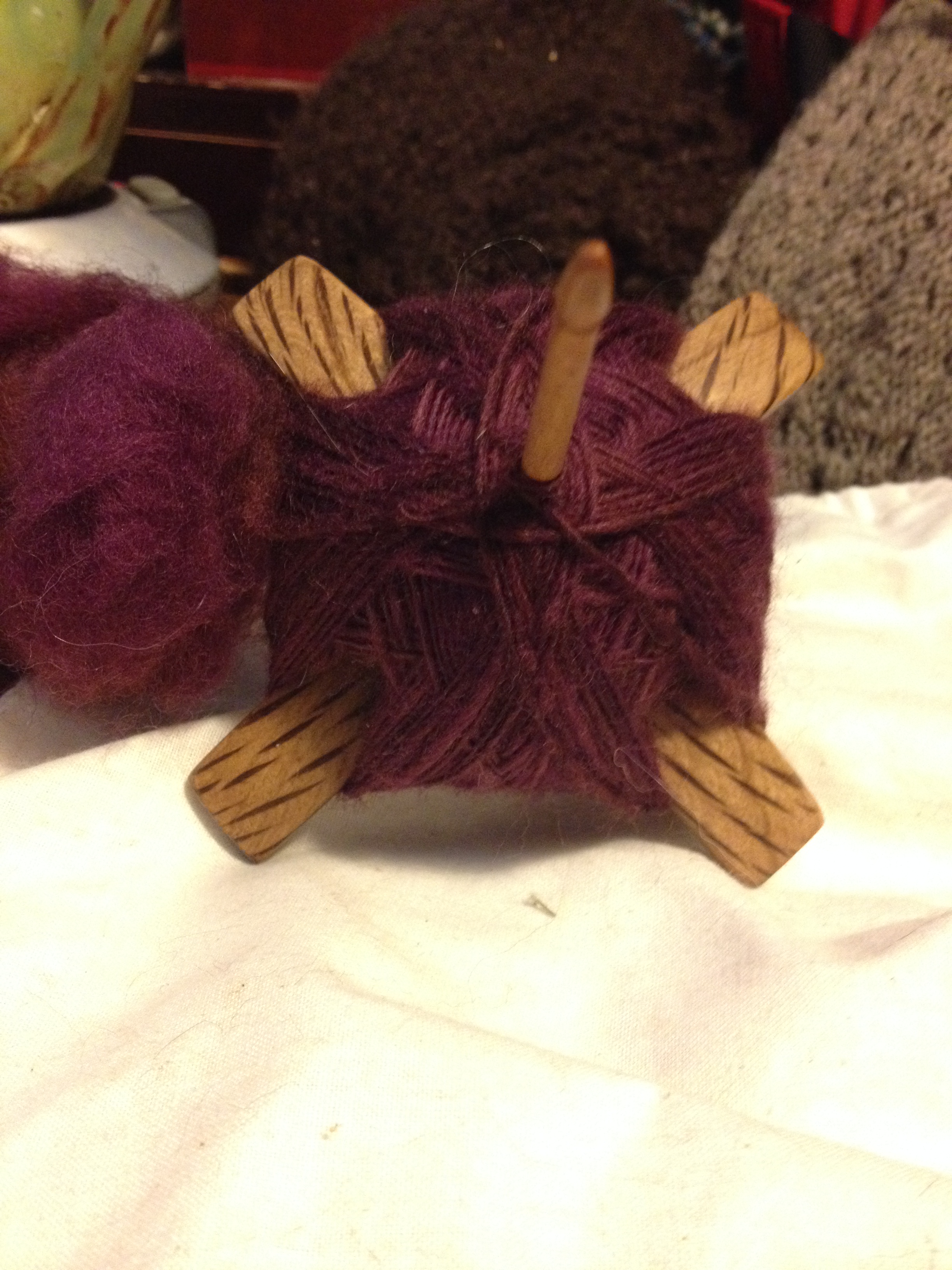
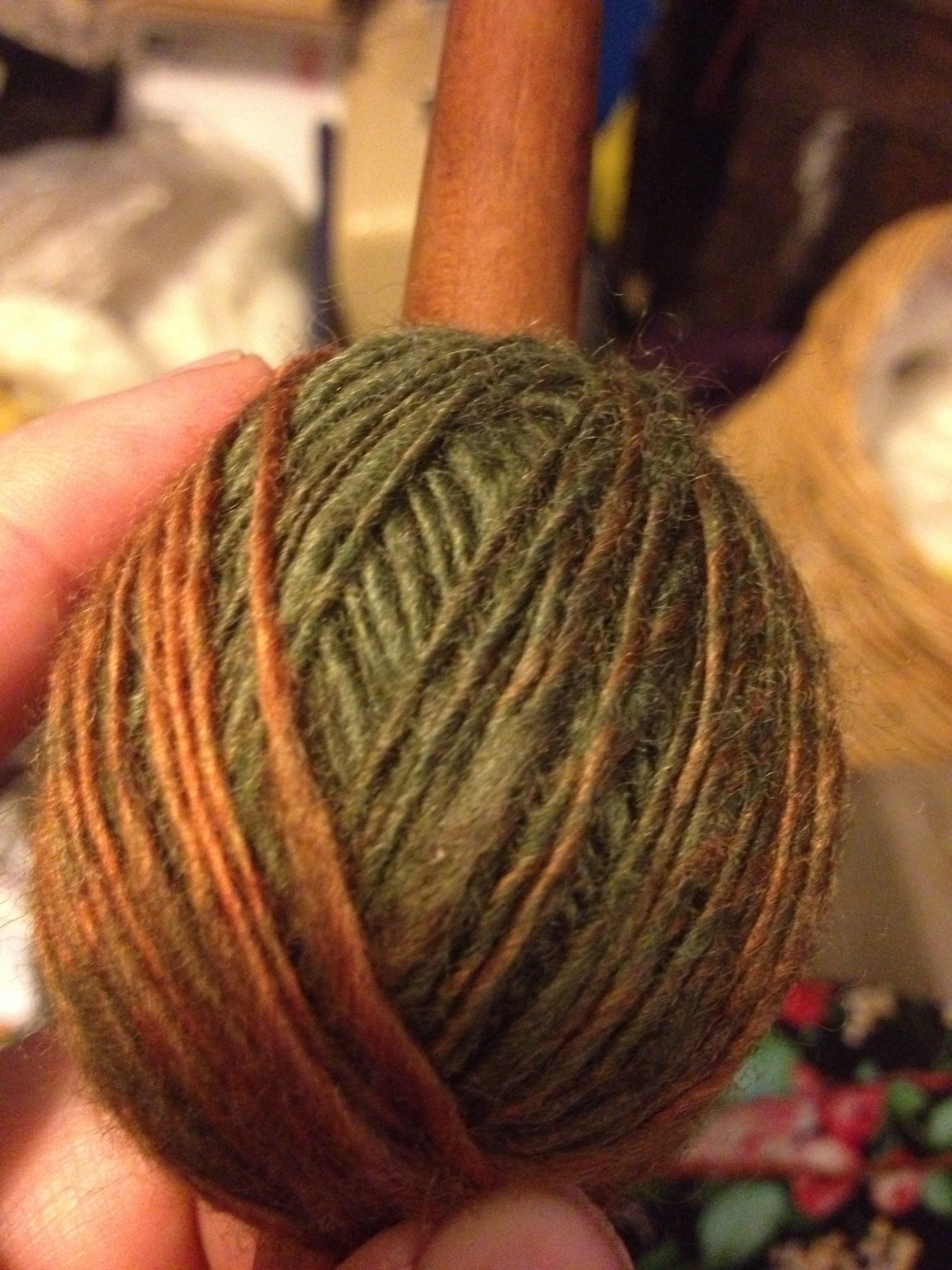
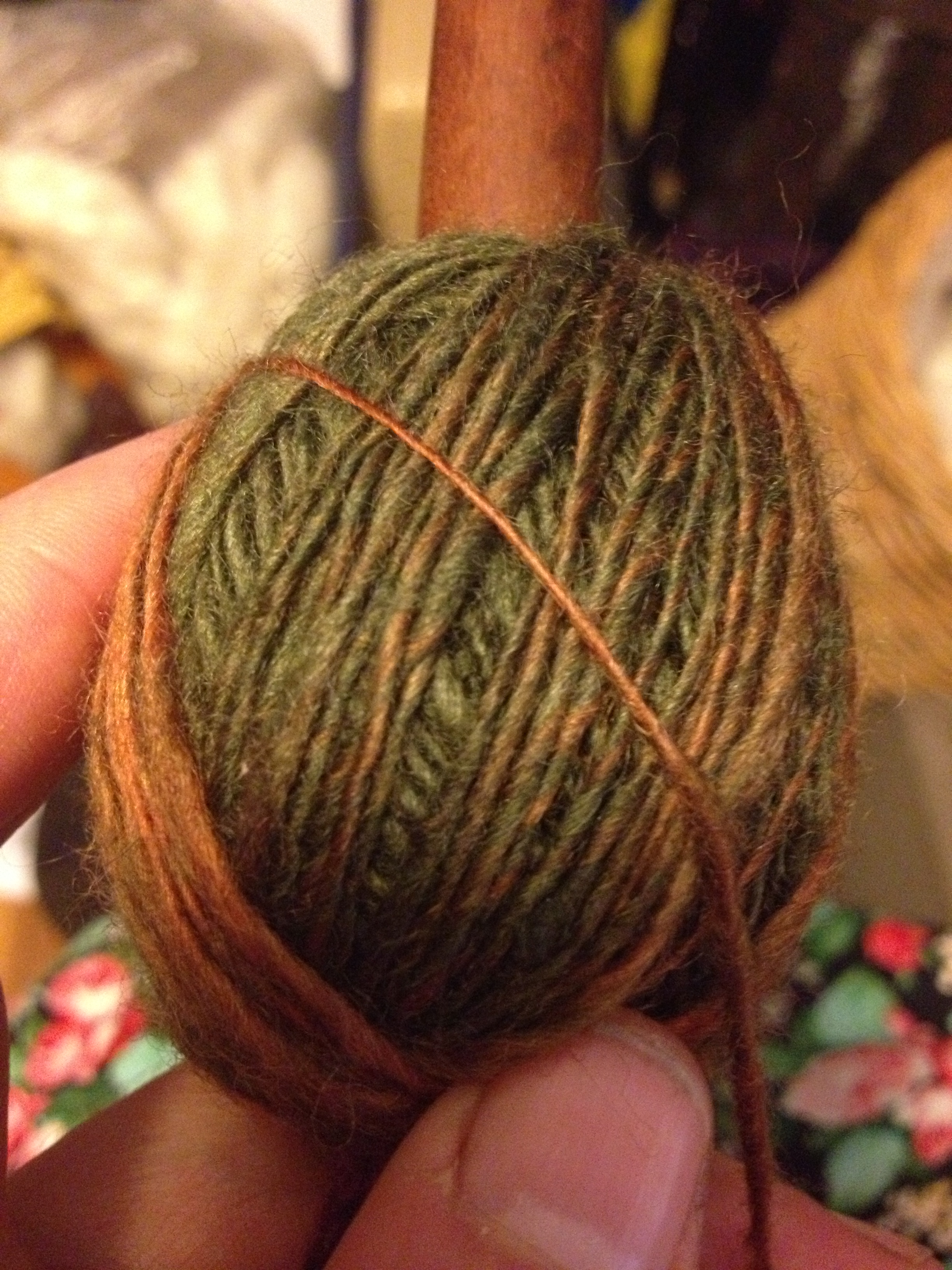
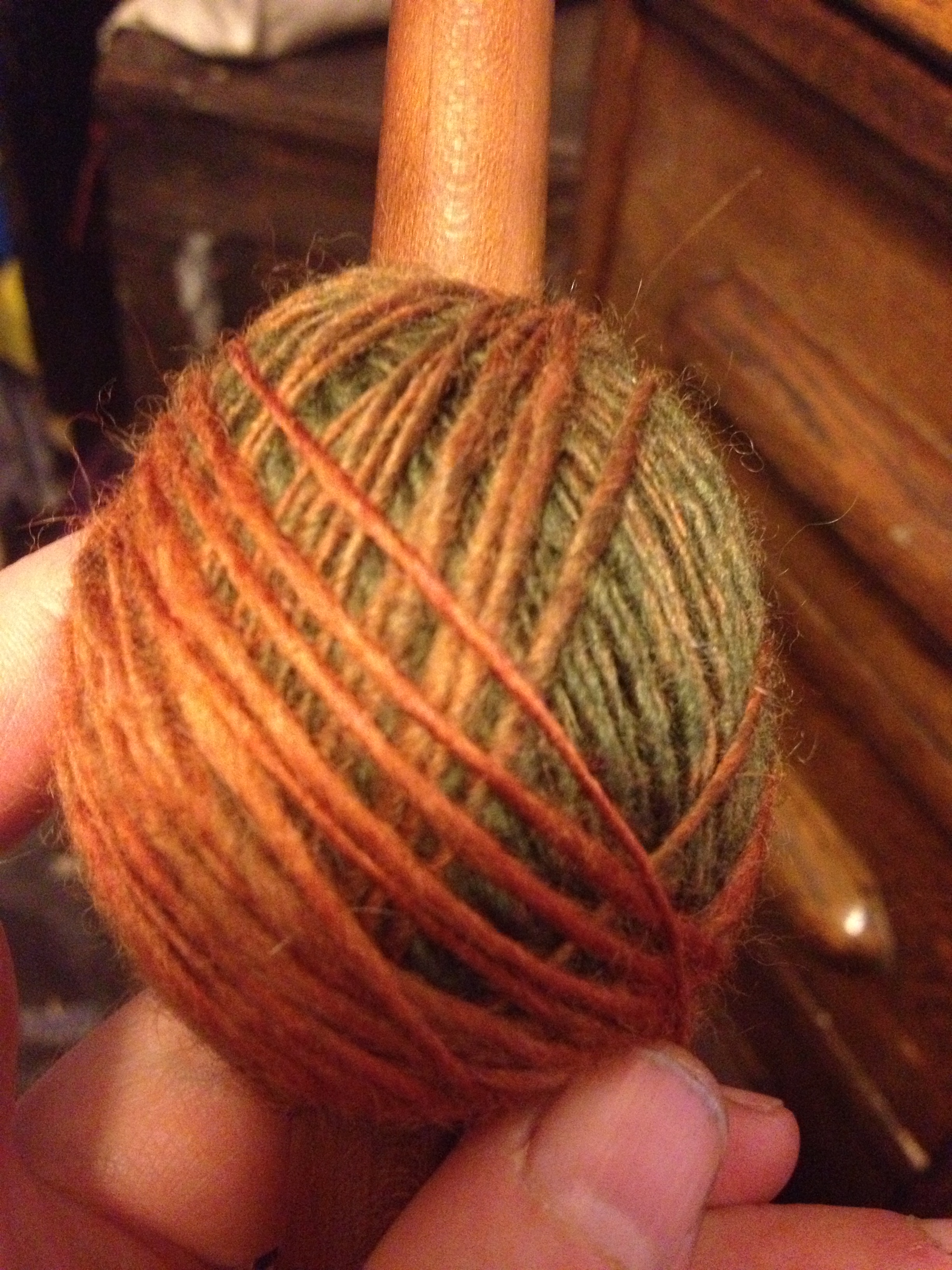
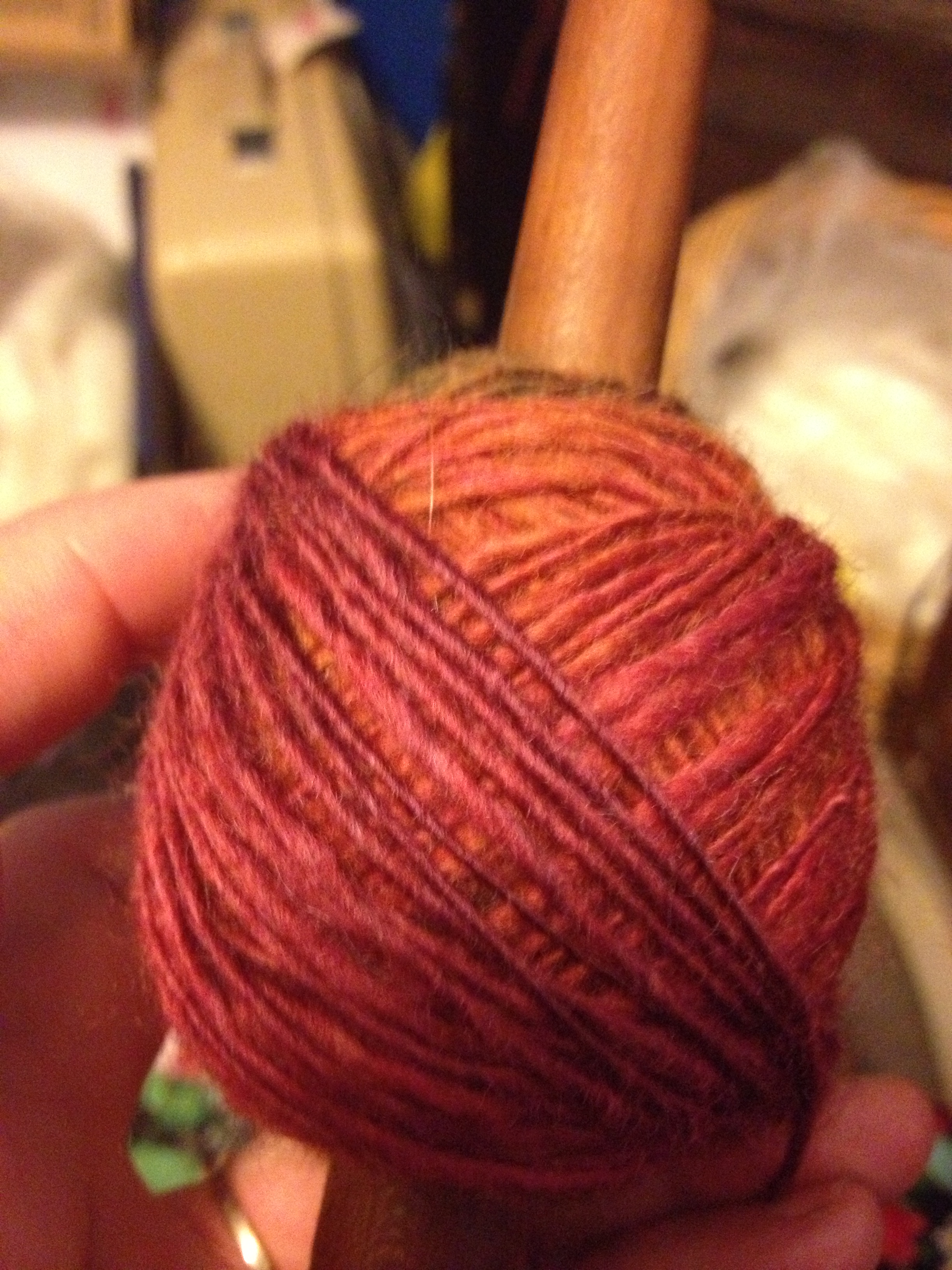
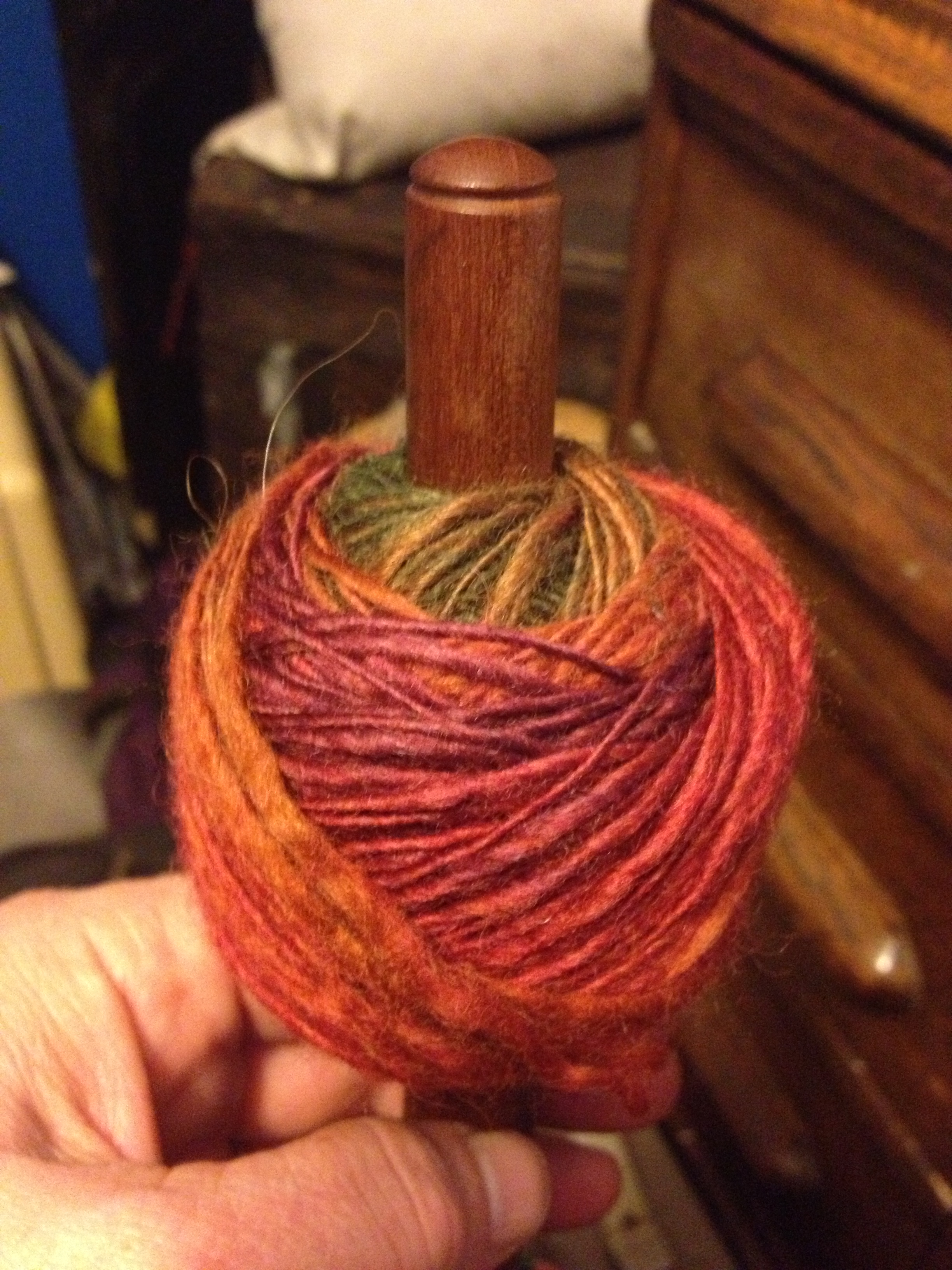
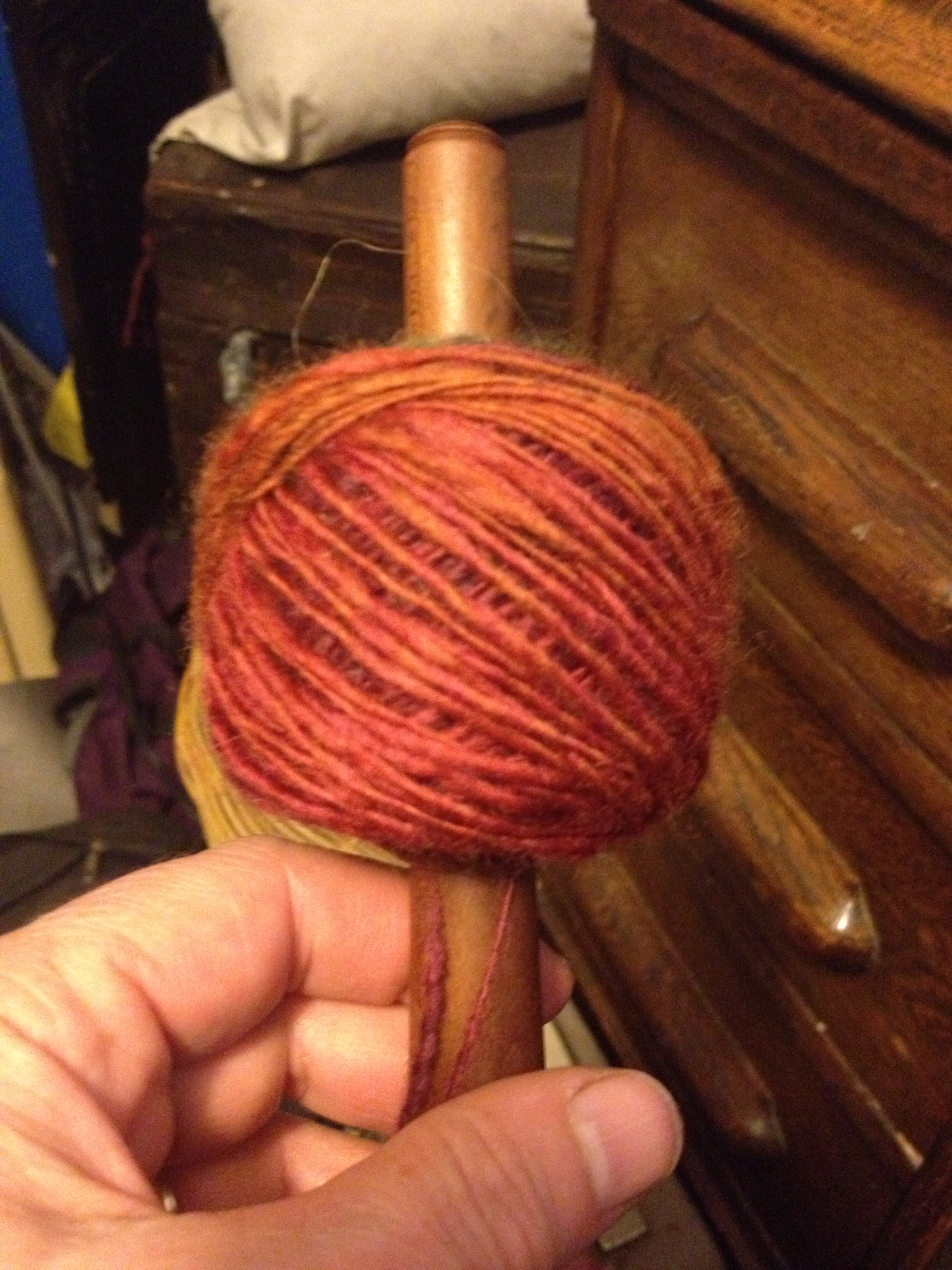
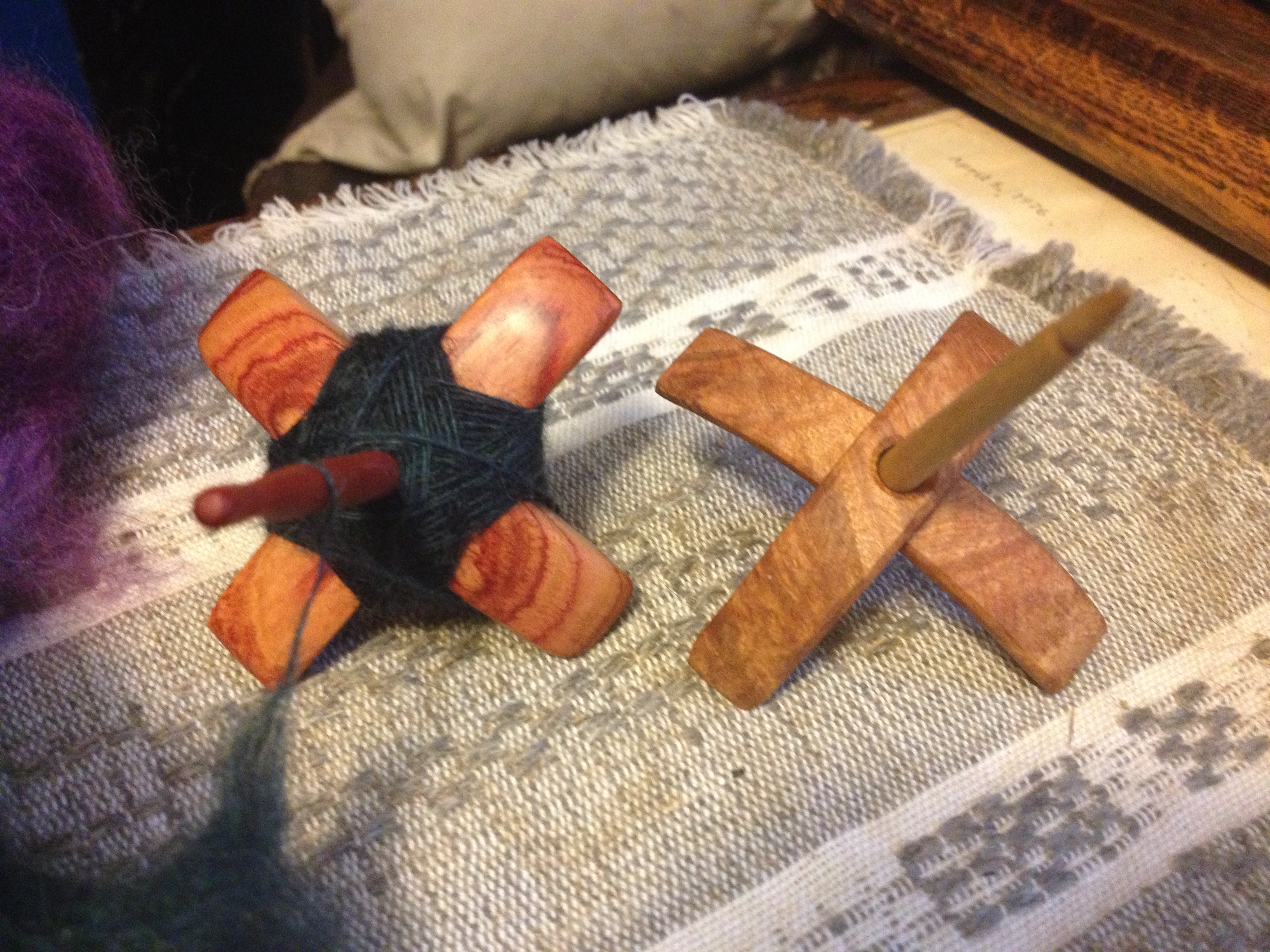
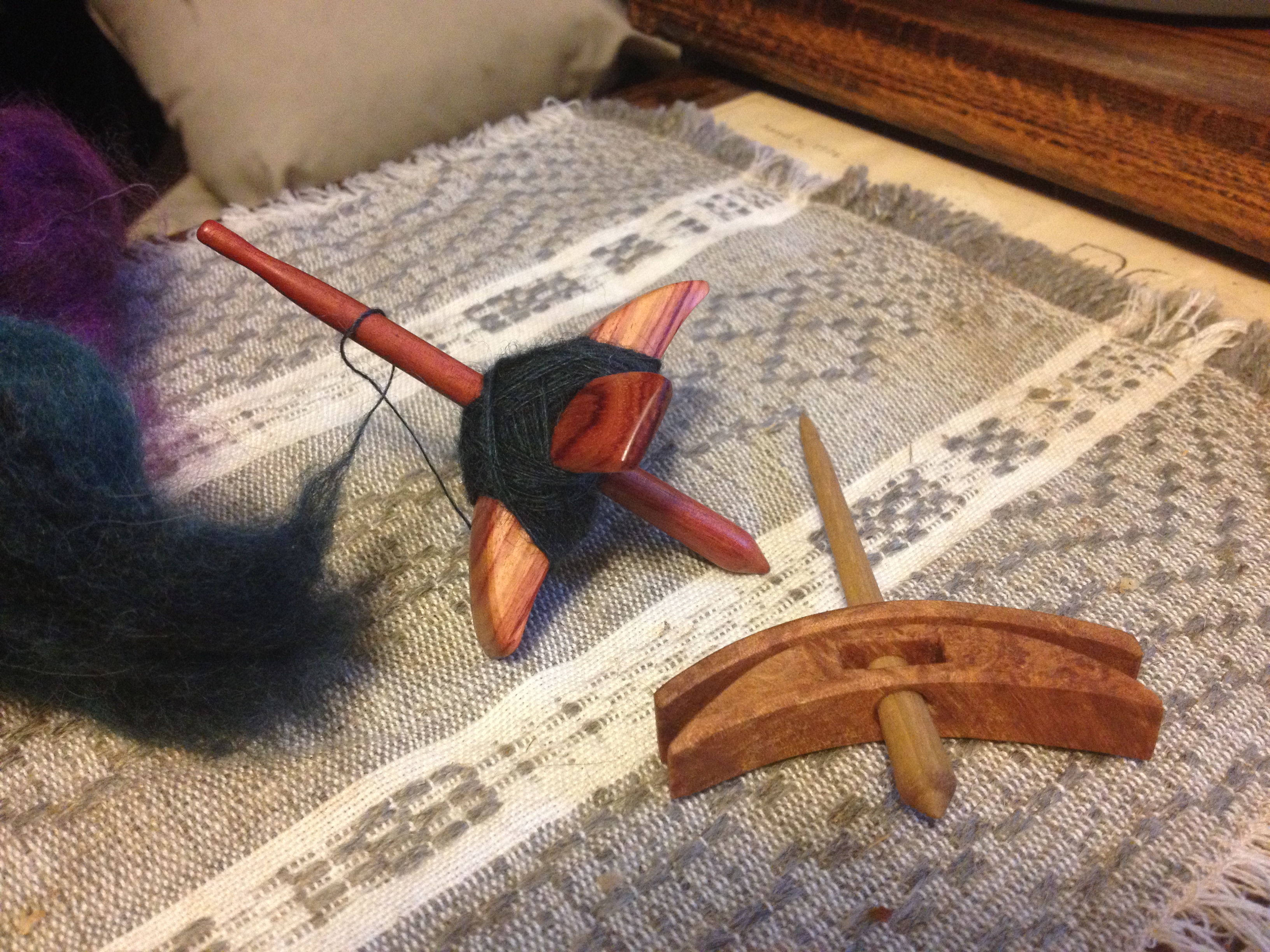
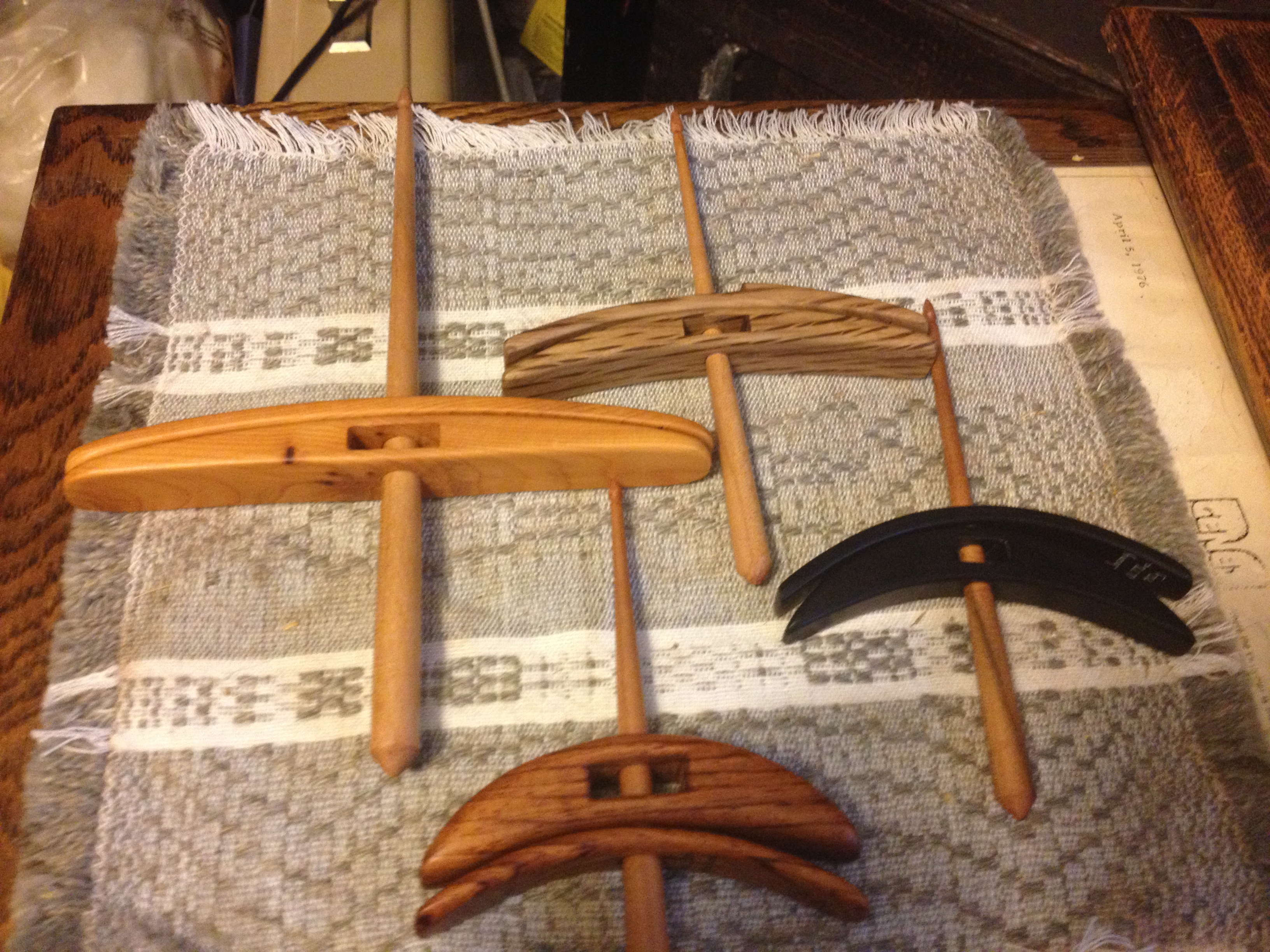
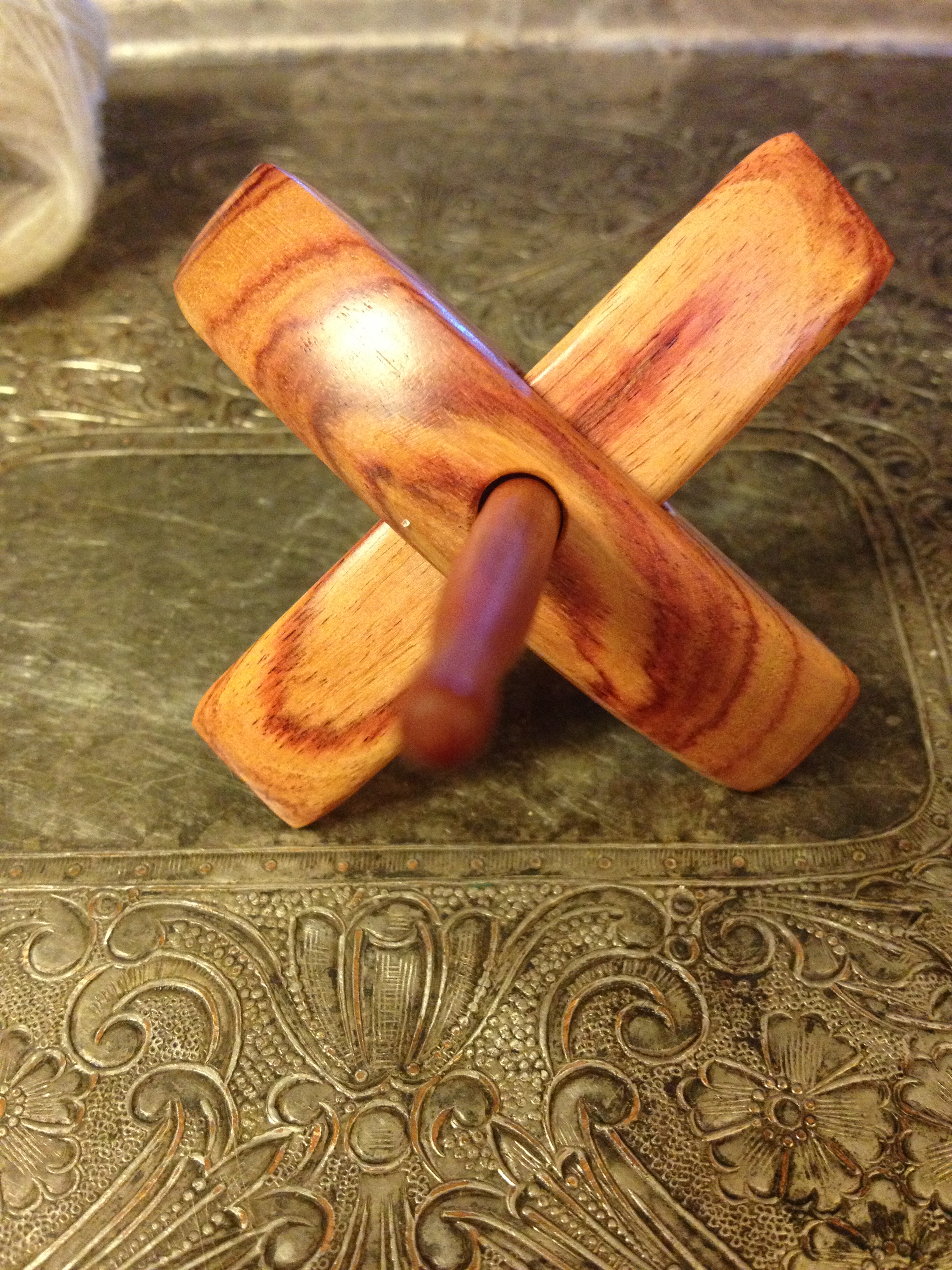
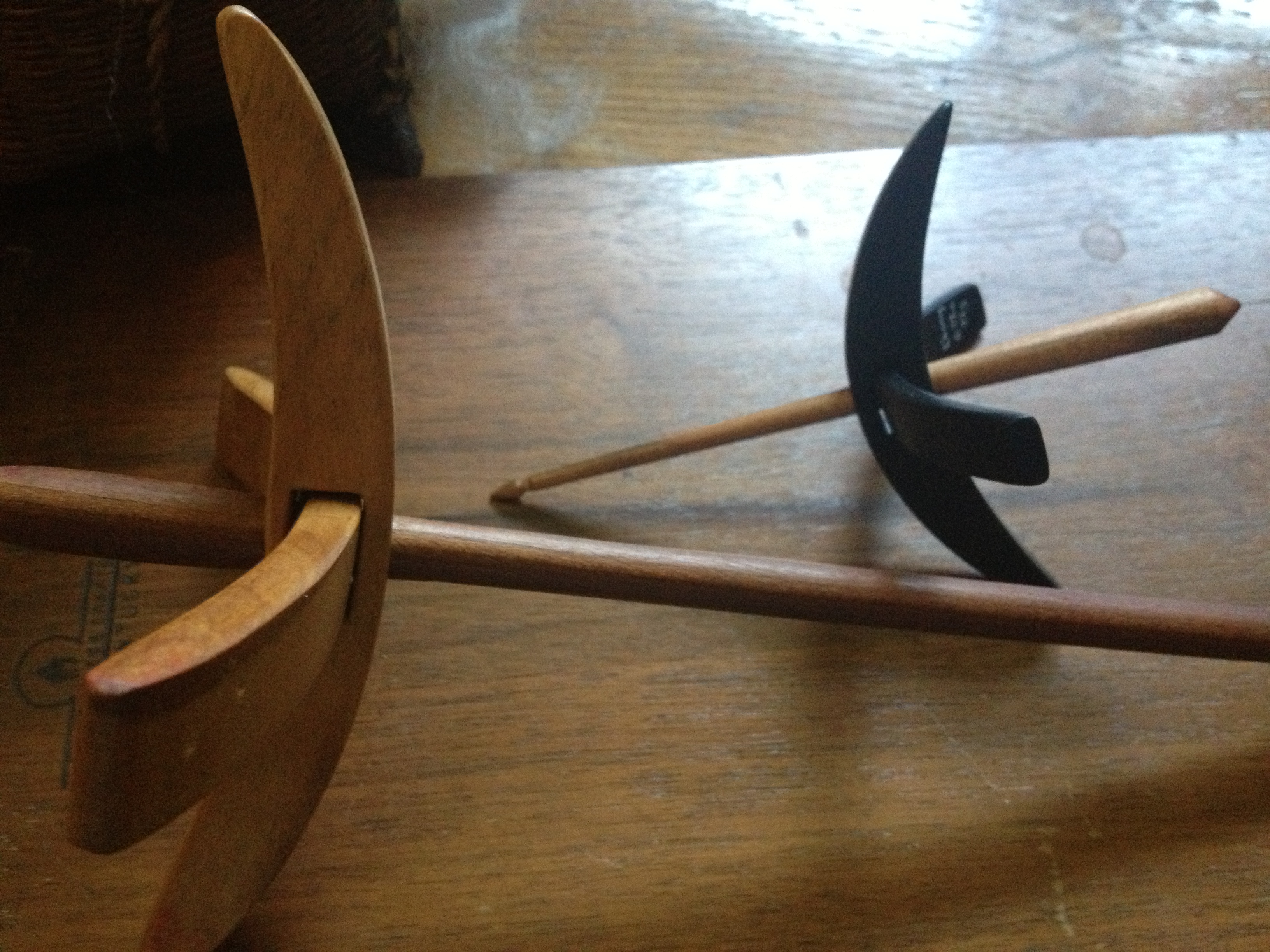
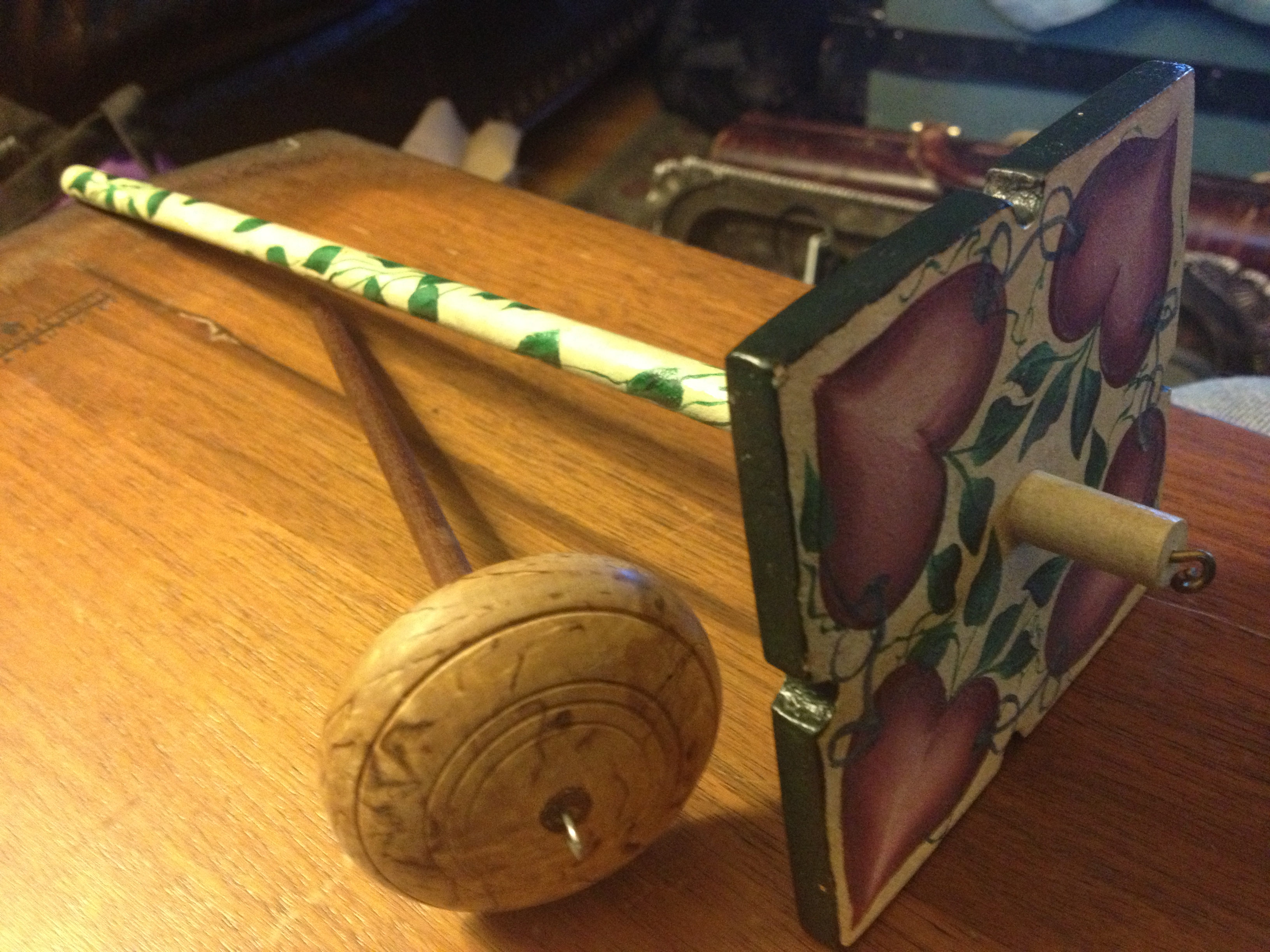
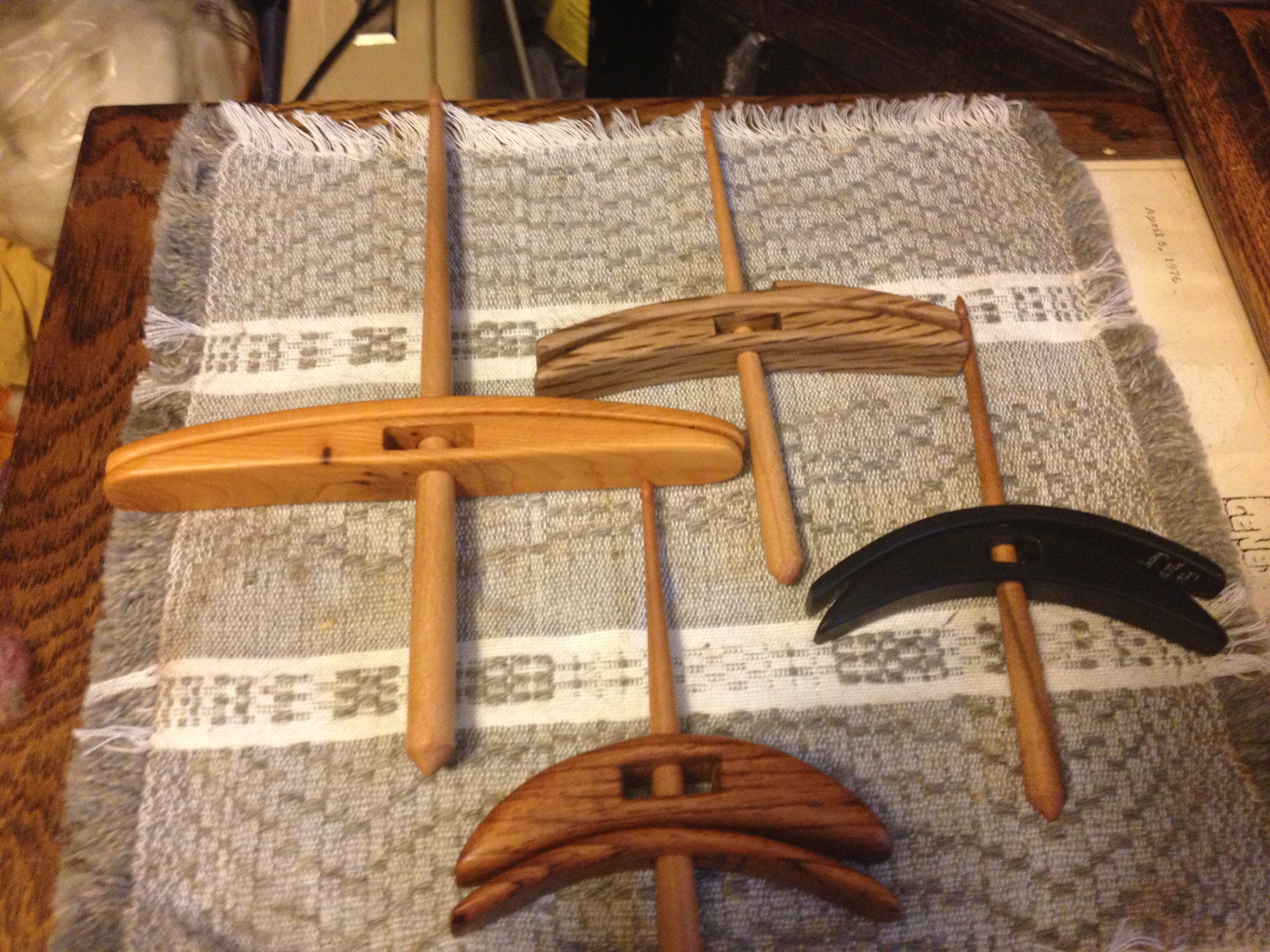
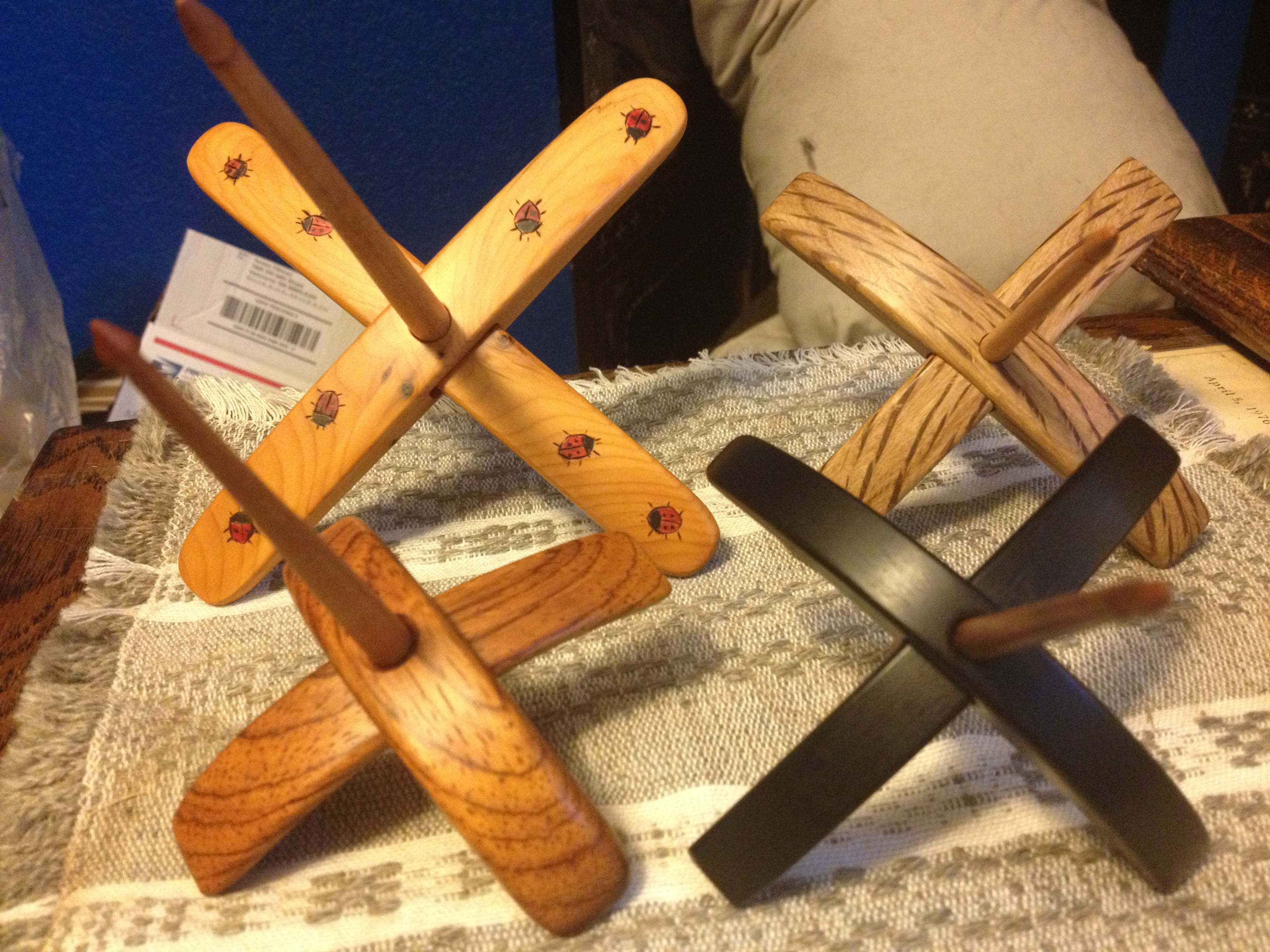
    Jenkins spindles

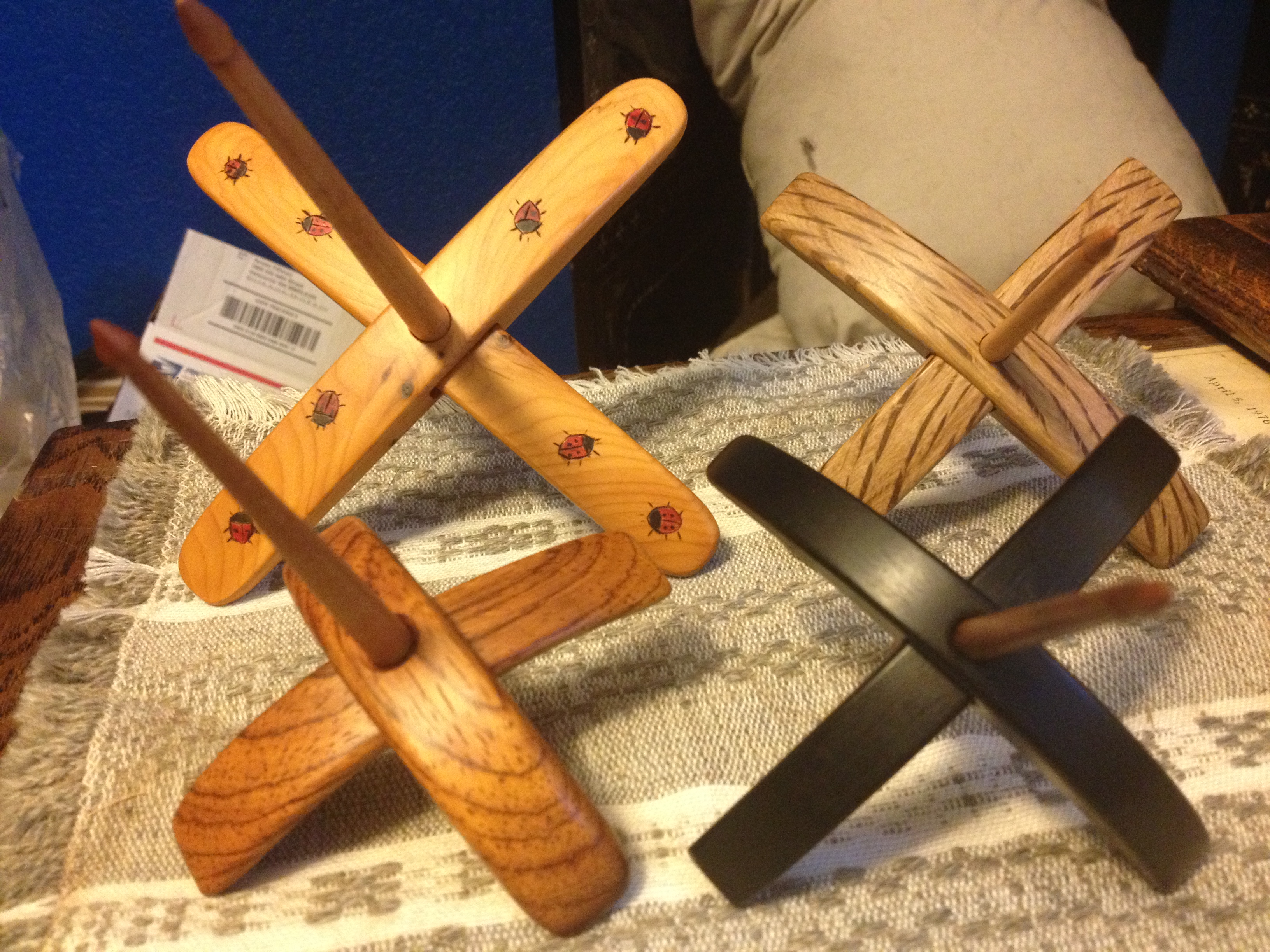
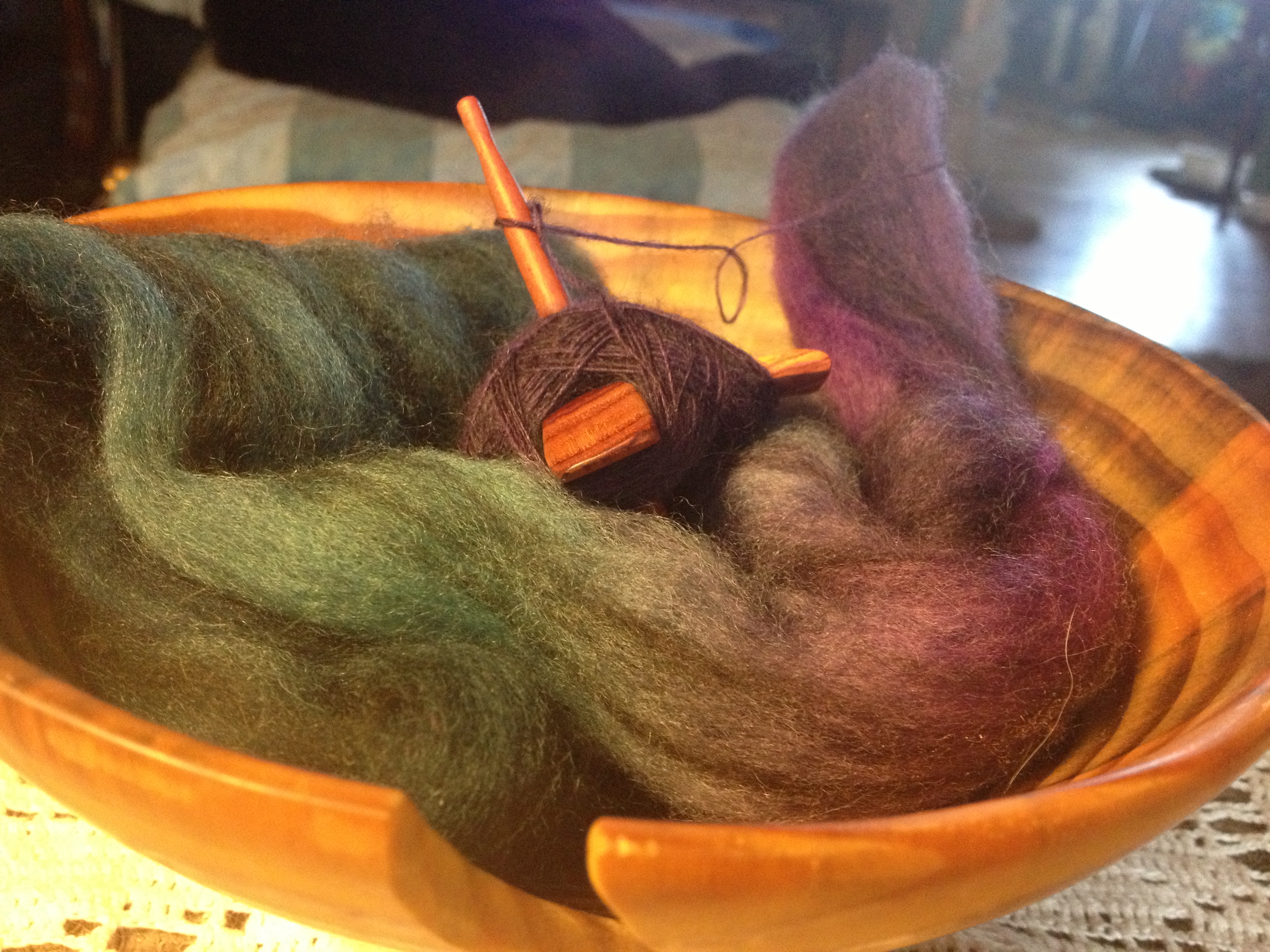
    More Jenkins spindles

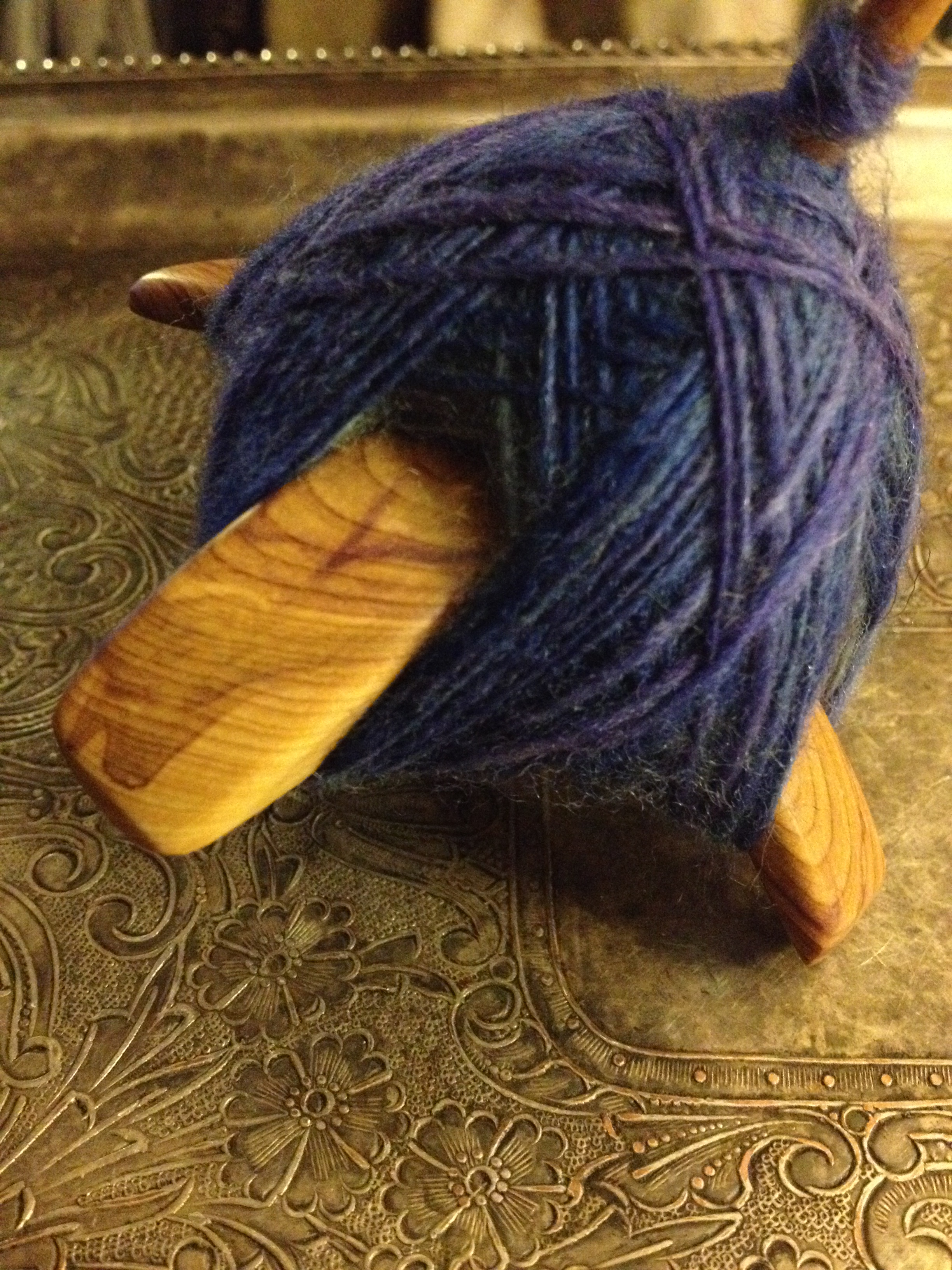
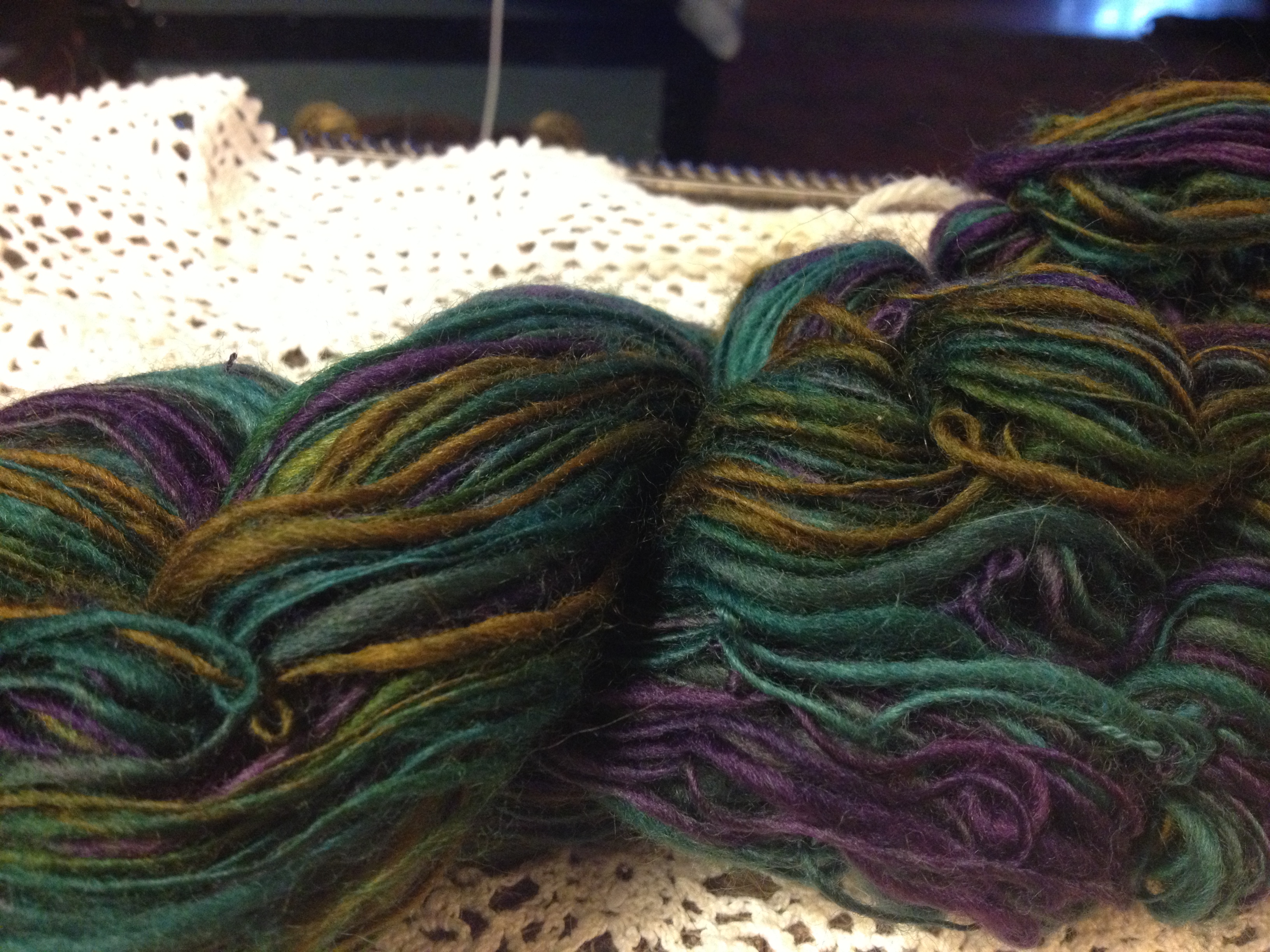
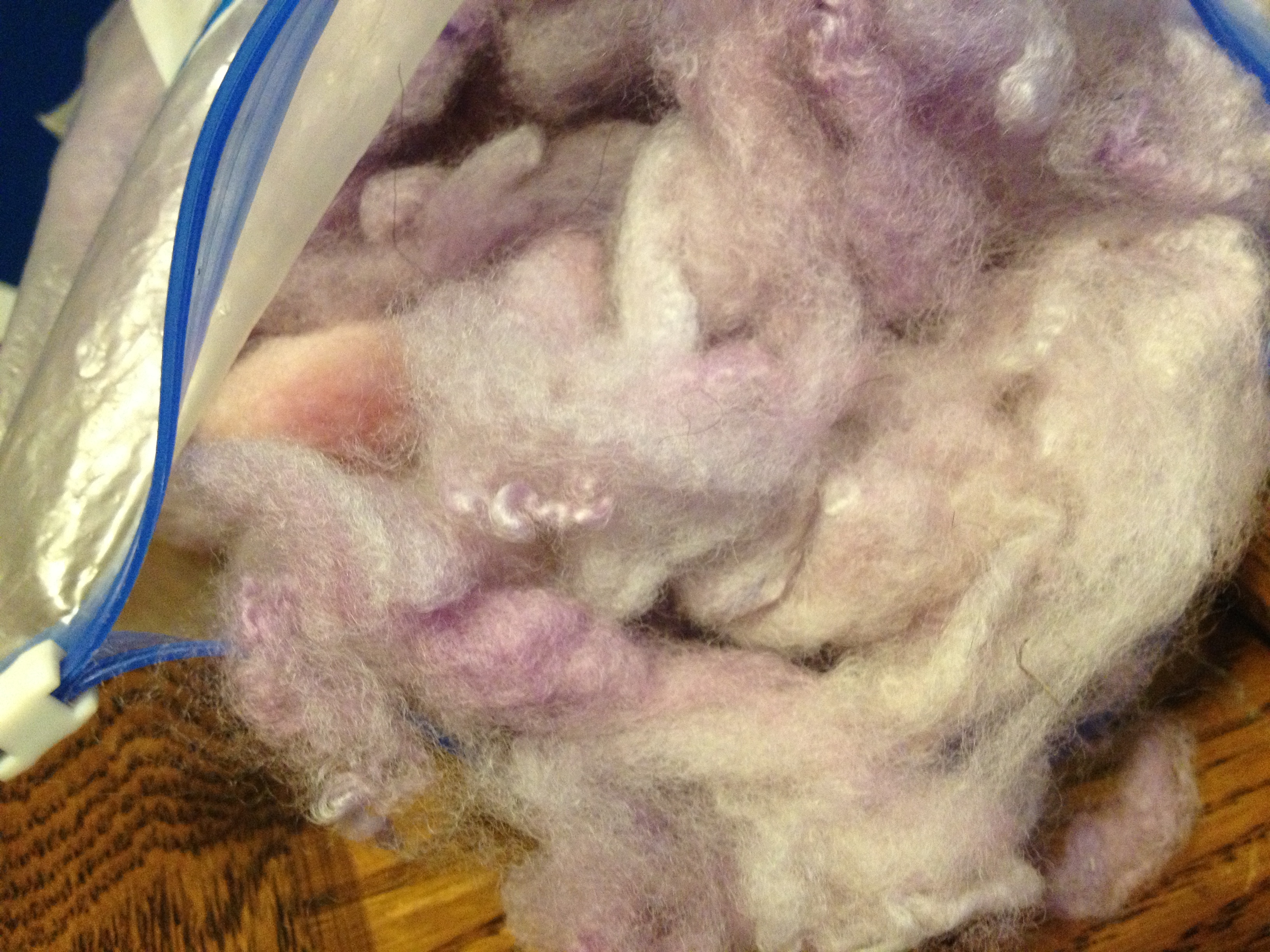
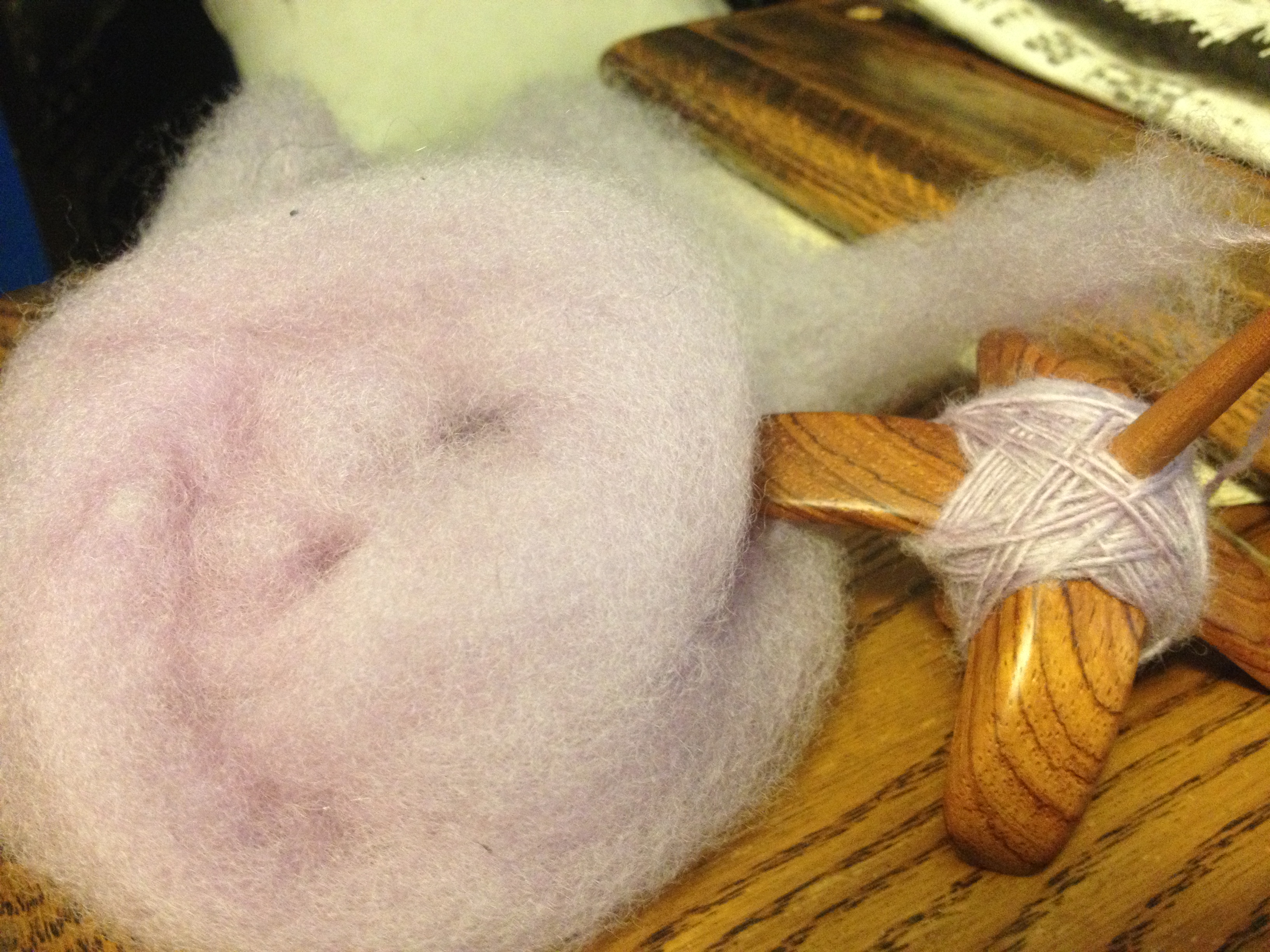
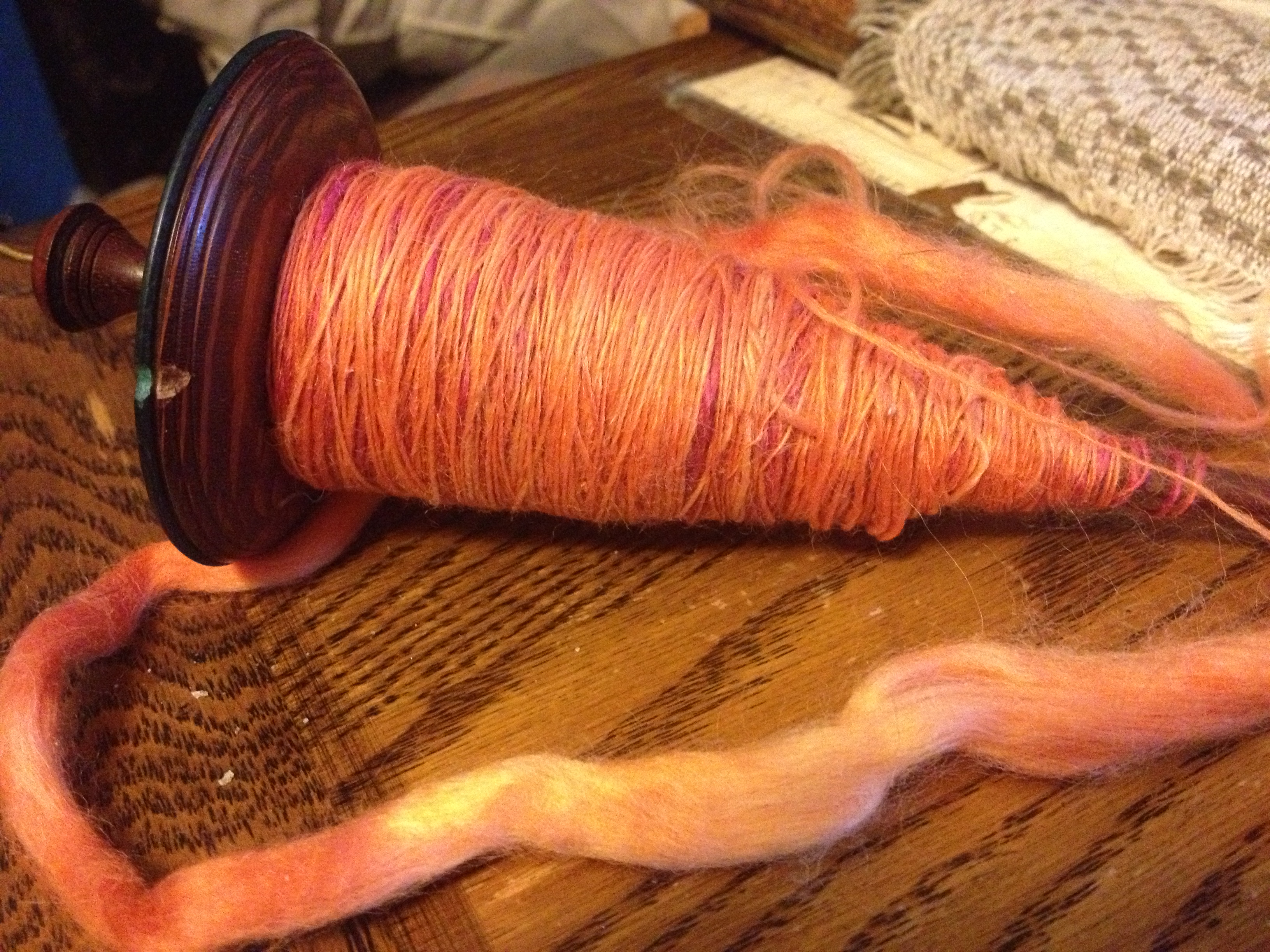
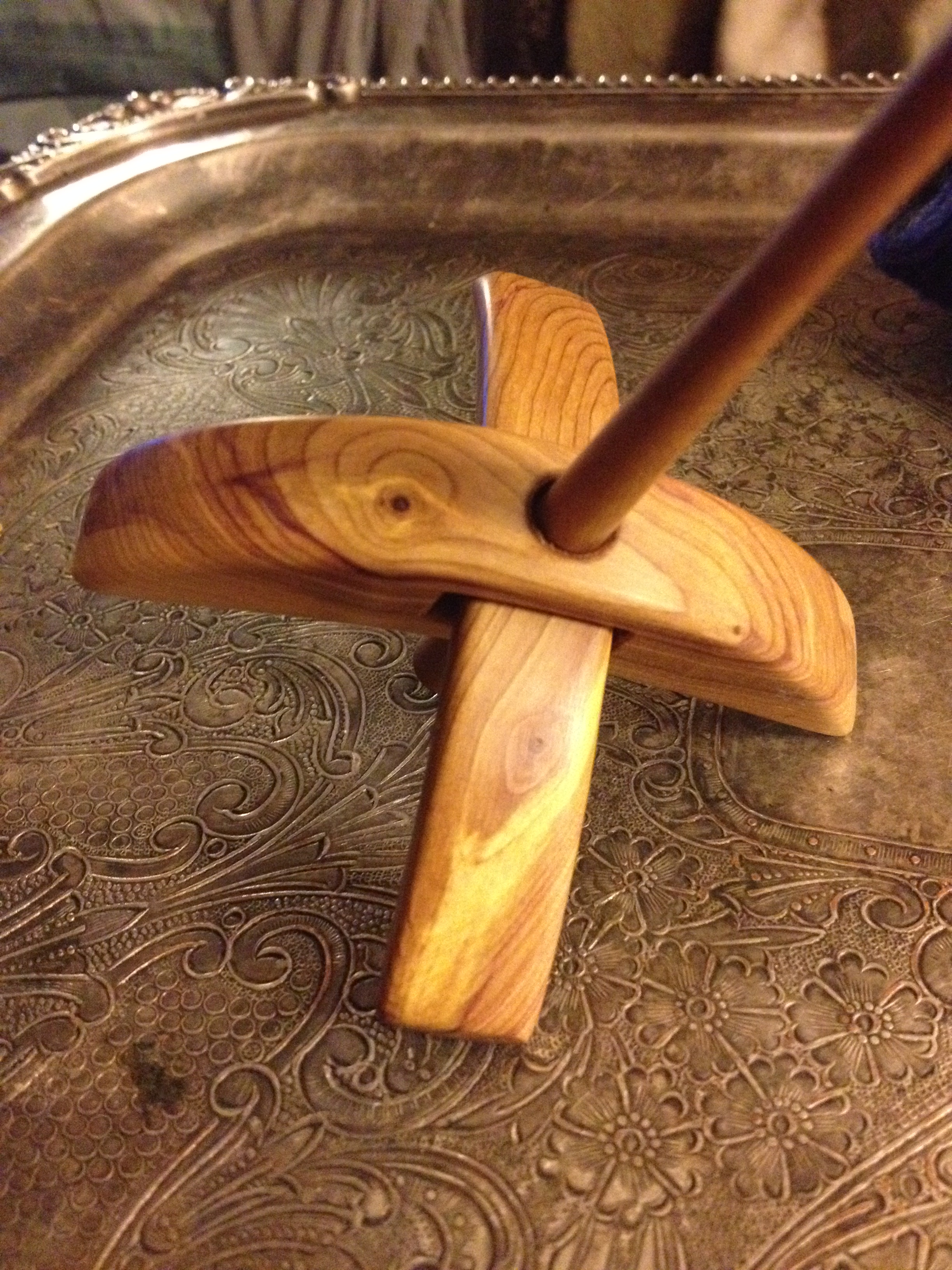
    Lilac Delight

    I admit these have become my favorite spindles. I still use my high whorls. What I have found is that these turks put less twist into the fiber than my high whorls. That is nice when you like to spin the longer wools that I enjoy. I also enjoy the craftsmanship. They are nice tools and interesting to use.

    I still have not sorted out the differences in these spindles. The two Delights are slightly different weights, yet spin similar yarns. I find that some folks don’t care for the Delights, as they find them slow. I don’t have the Jay shaft yet for my Lark, and I suspect it does make for a faster spin.

    We can vary the way we spin, to create different types of yarn. An experienced spinner will have a certain comfortable style that will be preferred. It is very useful to have a spindle that can give you a totally different type of yarn, without having to change the way that you spin.

    But what I wanted to talk about is the difference in the Jenkins spindles. Some things still hold true. Lighter spindles will give you a faster, less sustained spin. Heavier ones are slower and spin for a longer time. My Egret feels like a lightweight spindle and I suspect it is due to the Pacific Yew that it’s made from. It’s not a dense wood. I like to use the Egret for plying and for low twist singles. It works well for chain plying too. The arms are longer and flatter than my other turks, so I have to have more room around it when I spin. It also has a longer, heavier shaft than my other turks. It is a mid-shaft spindle. My Aegean is also a mid shaft spindle. It’s quarter sawn oak and feels heavier than the Egret, even though it weighs a bit less. I continue to puzzle over the way these two spindles spin.

    I like my Delights for most jobs. They are sturdy little guys. They can be used in tight spaces and make great travel spindles. They are not elegant like the Lark, but work very well for me. I find that some folks with Jenkins spindles don’t care for the Delights. More of them for me!

    I think the best thing about my new turkish spindles is that it has me spinning again, almost daily. Anything that motivates more spinning is a good thing. I’ll keep playing around with the spindles and see what I can learn. I’m going to do some chain plying soon and that will be good experience.
  • Fiber 12.02.2014 No Comments

    Let me give you a brief view of the things I’ve worked on:
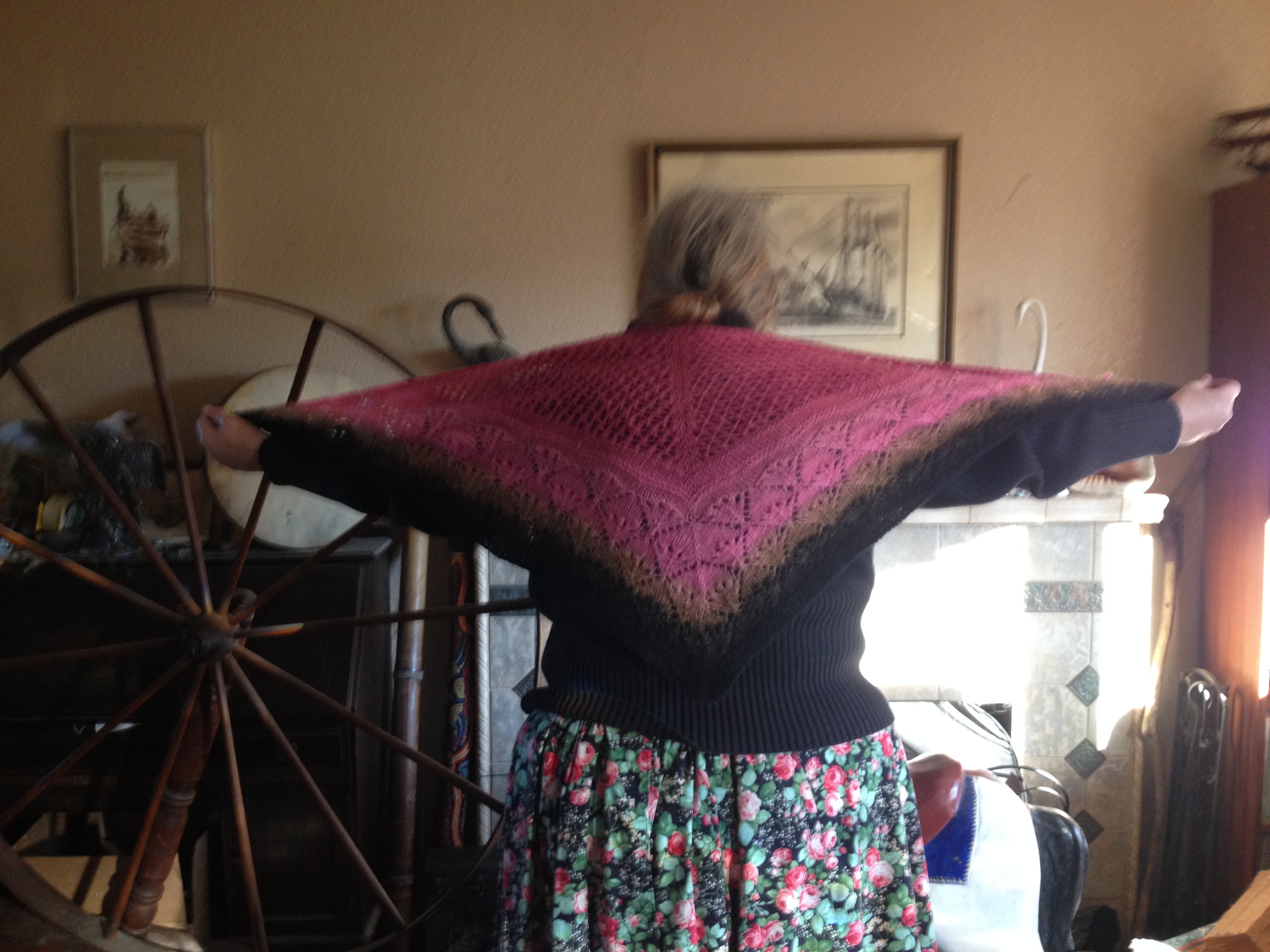
    chocolate & strawberries shawl

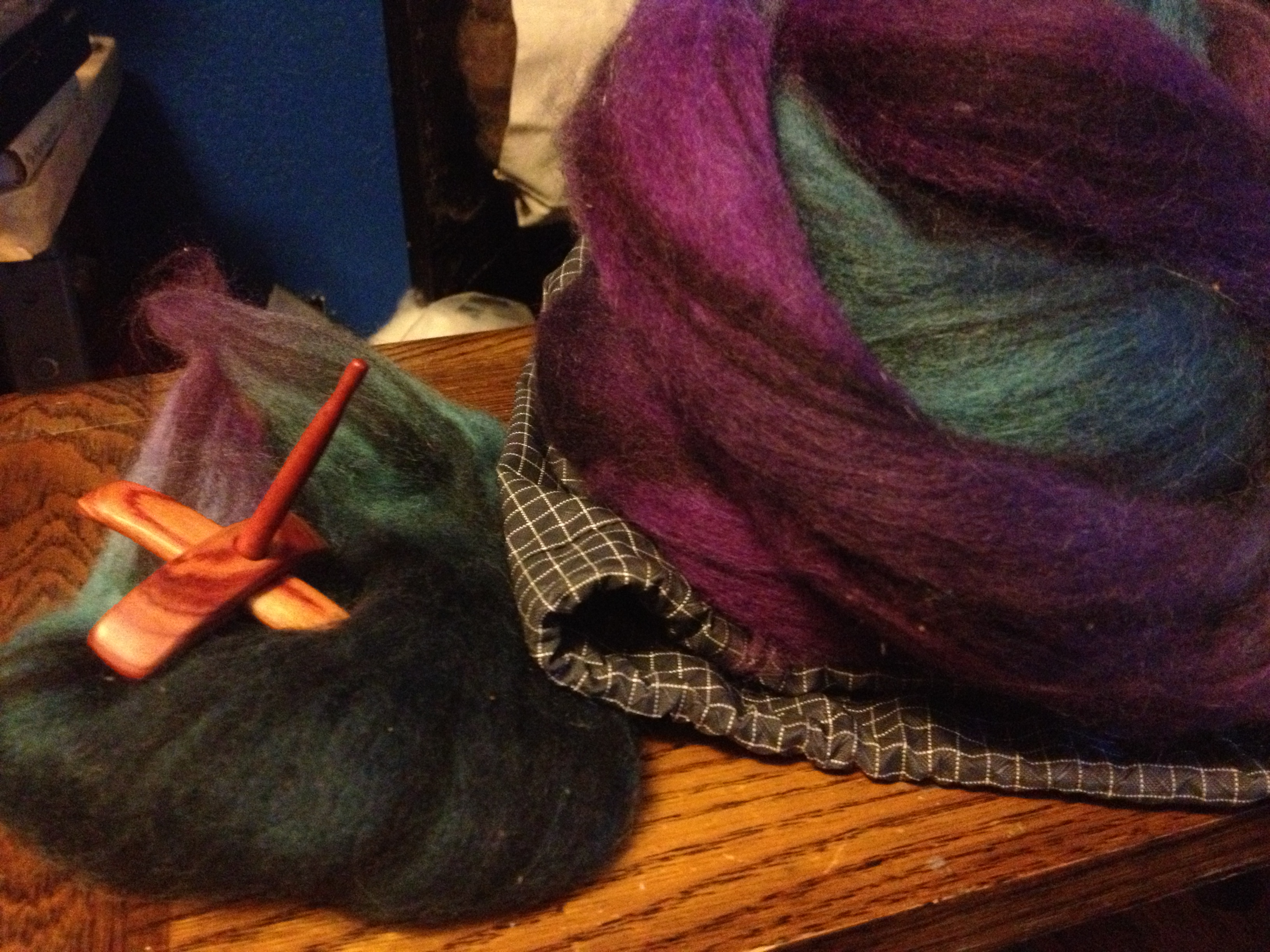
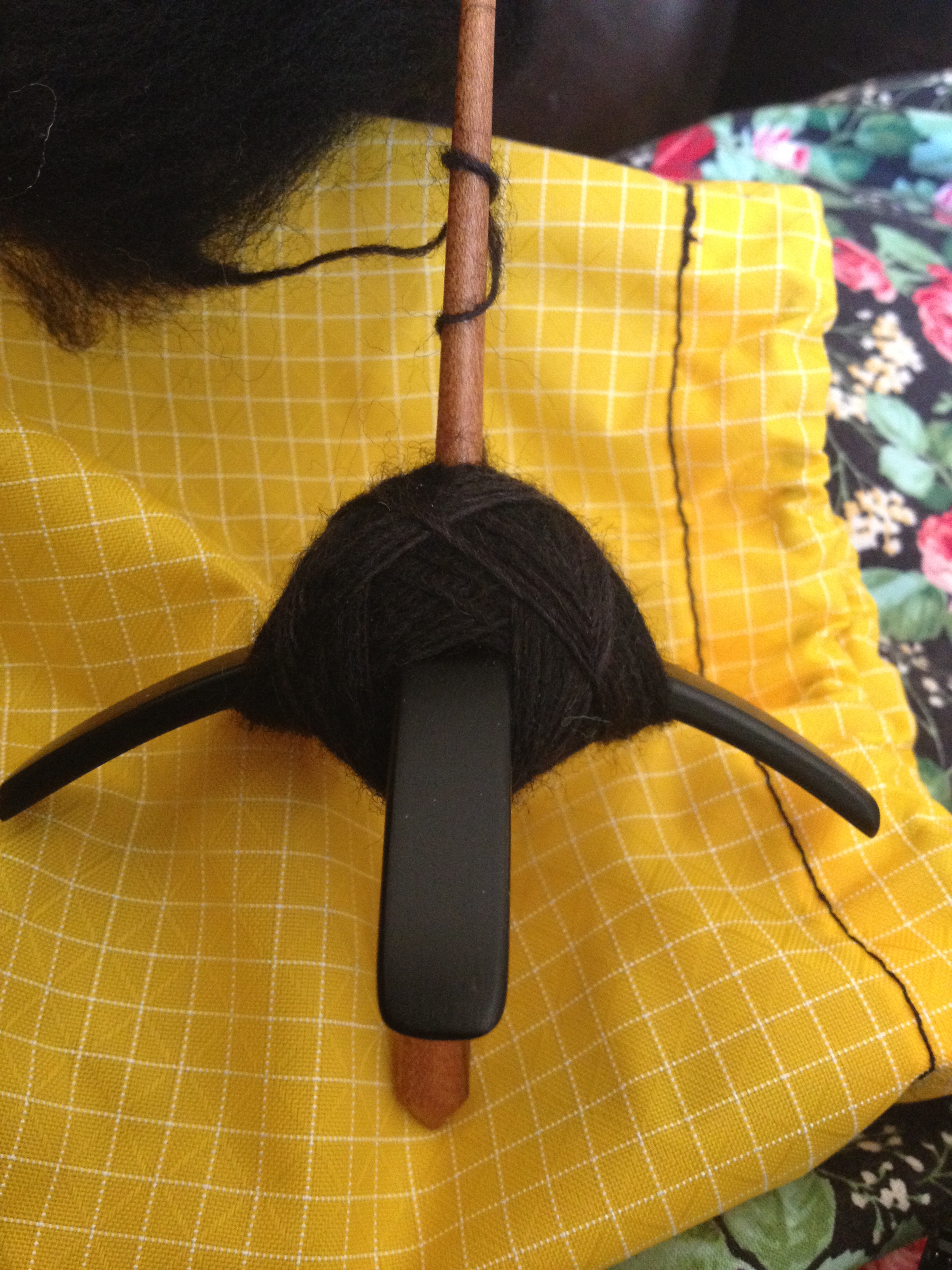
    Ebony Lark on small Tom Bihn yarn stuff sack

    Wurm sleeping toque

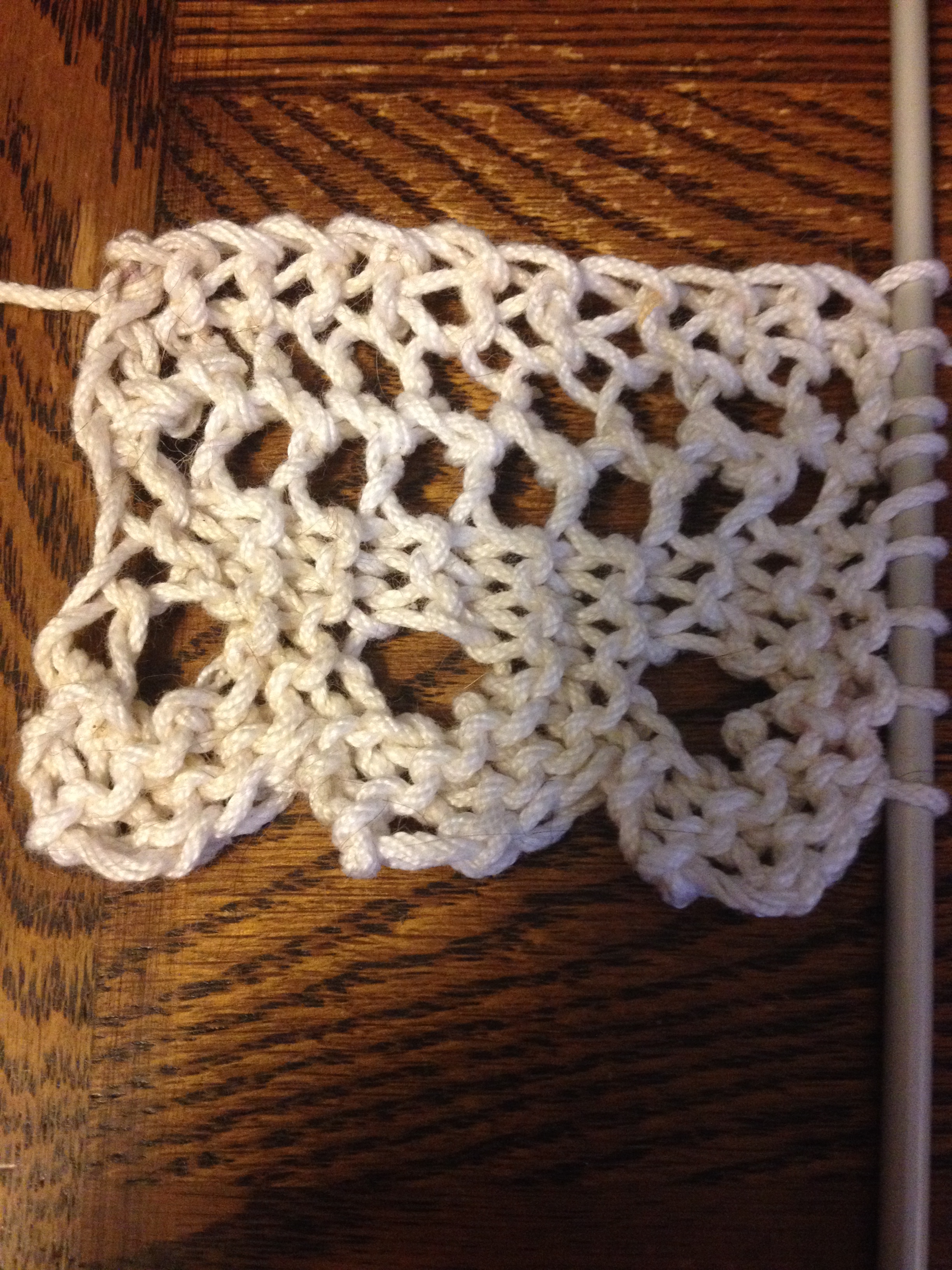
    vintage lace sample

    chocolate and strawberris singles

    Lilac Delight spindle

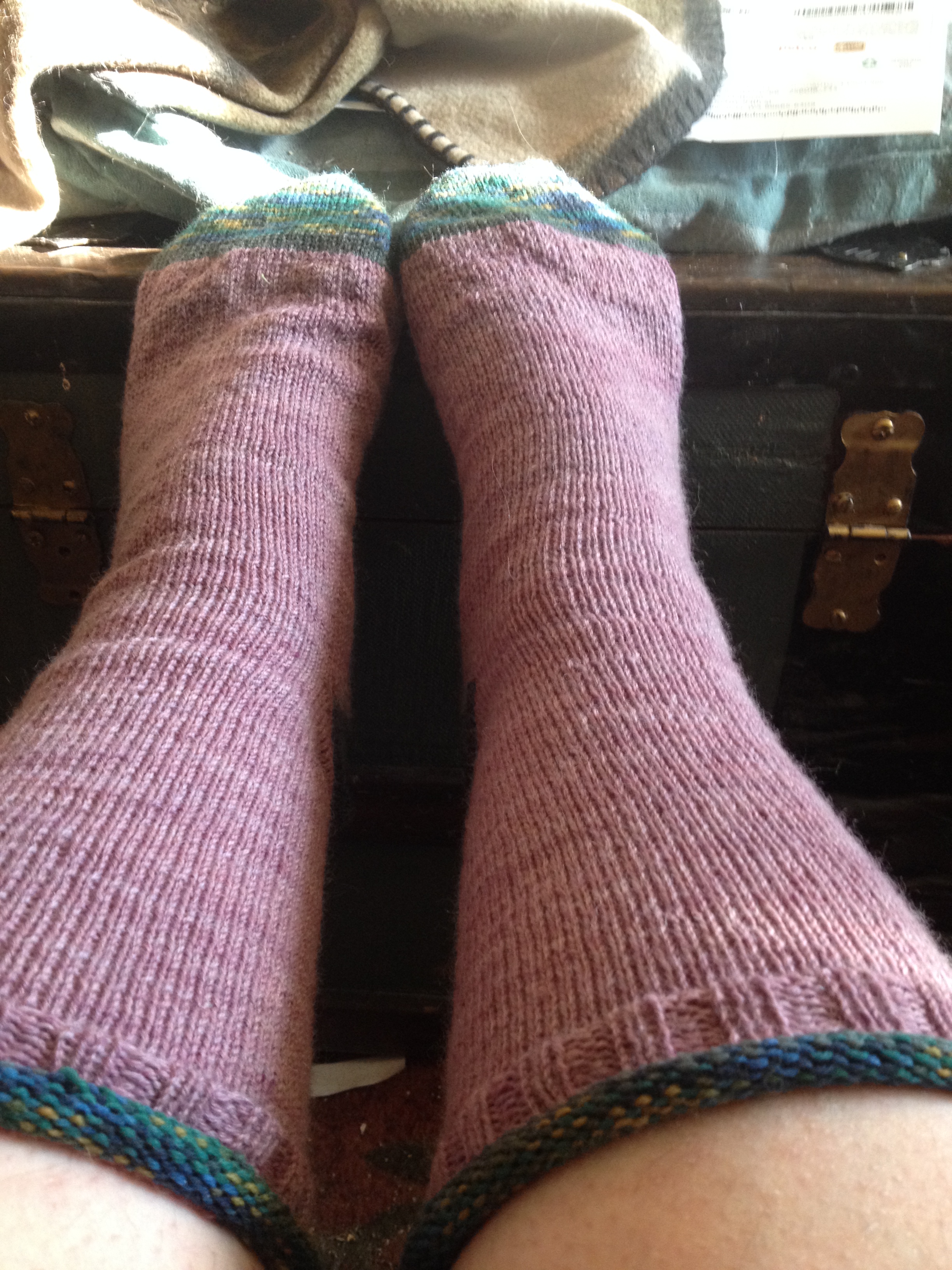
    new socks!

  • Projects 22.11.2013 No Comments

    The holidays are coming! I have a pair of socks on the needles, two more to do and a shawlette.

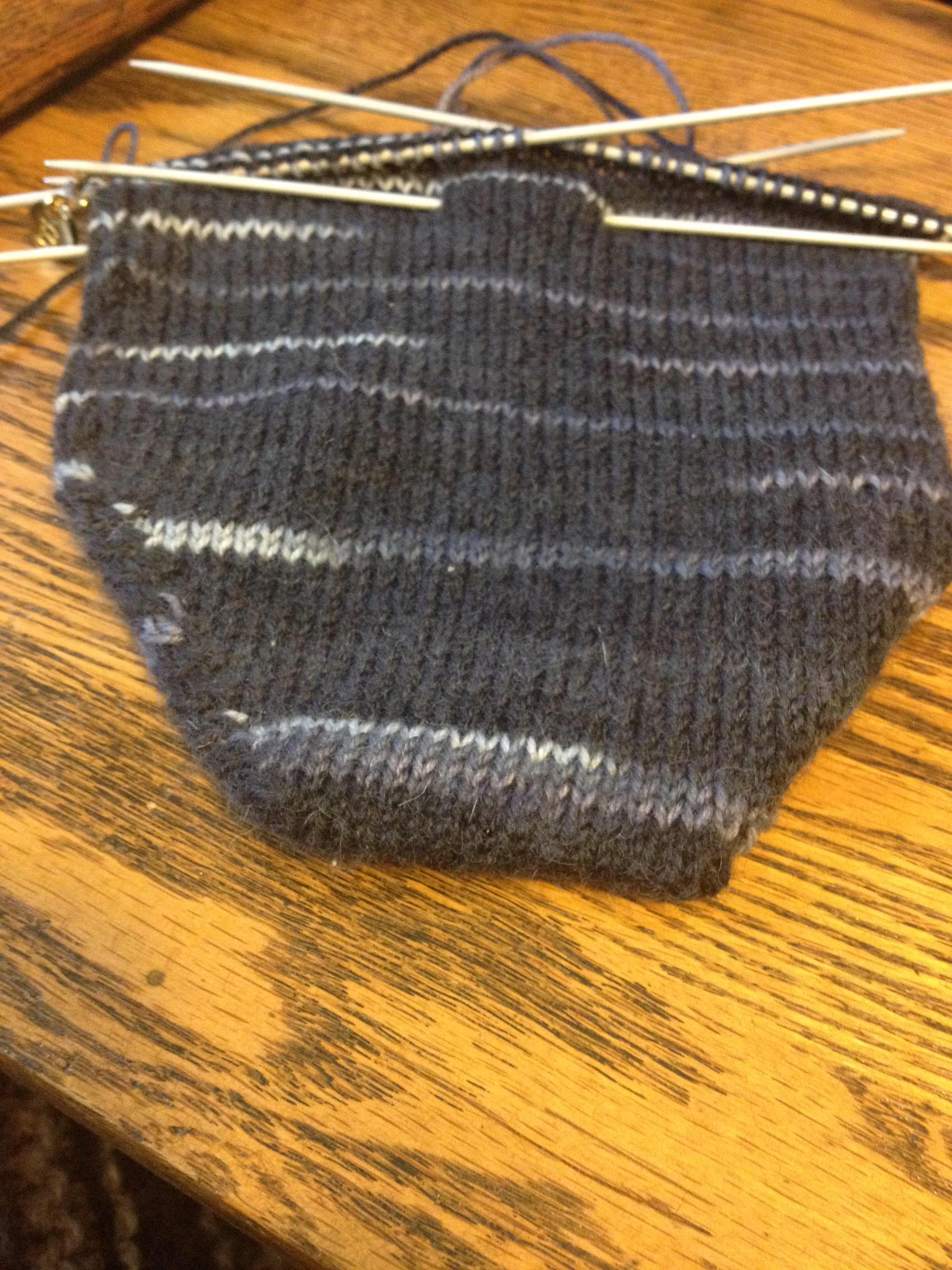
    Lon's sock
    This will be Lon’s first handknit sock. I’m using Regia sock yarn. I will also be making him a pair of socks from handspun. I’m still spinning that yarn.

    Shawlette

    This is the shawlette in progress. This is singles yarn, spun on my Egret. I’ll probably finish it this weekend, and have better pictures.

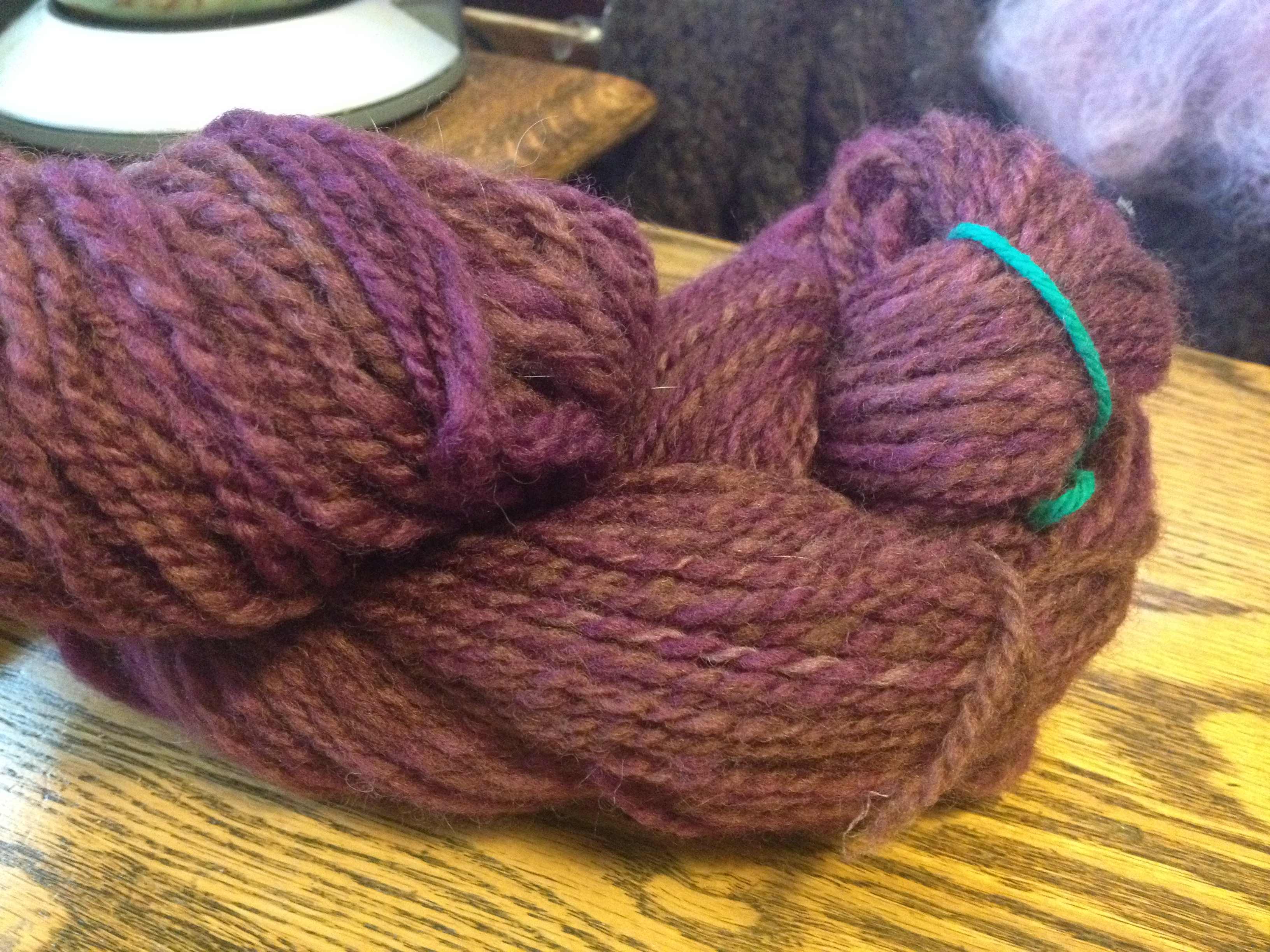
    Falklands yarn

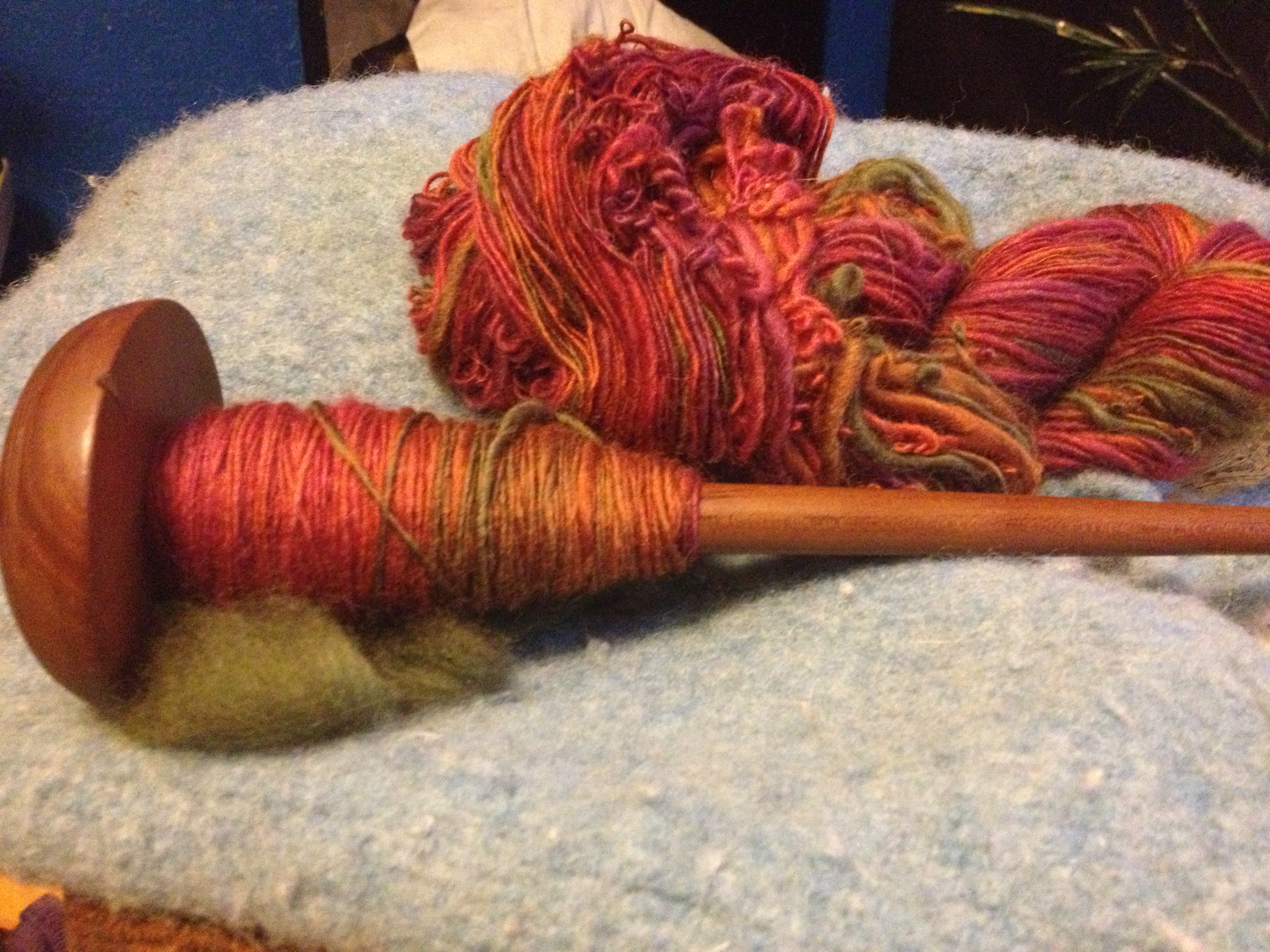
    Isn’t this interesting? (Or maybe not, depending on how well the camera captured the colors.) It’s wine with some chocolate colored areas. I really do like it. Here’s a picture of the work in progress on my Aegean:

    Aegean project

  • Projects 13.11.2013 No Comments

    This is fiber from Wintry Flower by Design (on the Aegean) and Inglenook Fibers on the Delight. Both are Falklands, and I seem to be spinning a lot of that lately.

    20131113-124911.jpg

    These are not all of my projects of course, just the ones here in the office. I don’t have plans for these two yet, but they are delightful to spin.
  • Tutorials 08.10.2013 No Comments

    I posted this over on Ravelry, so decided to share it here.
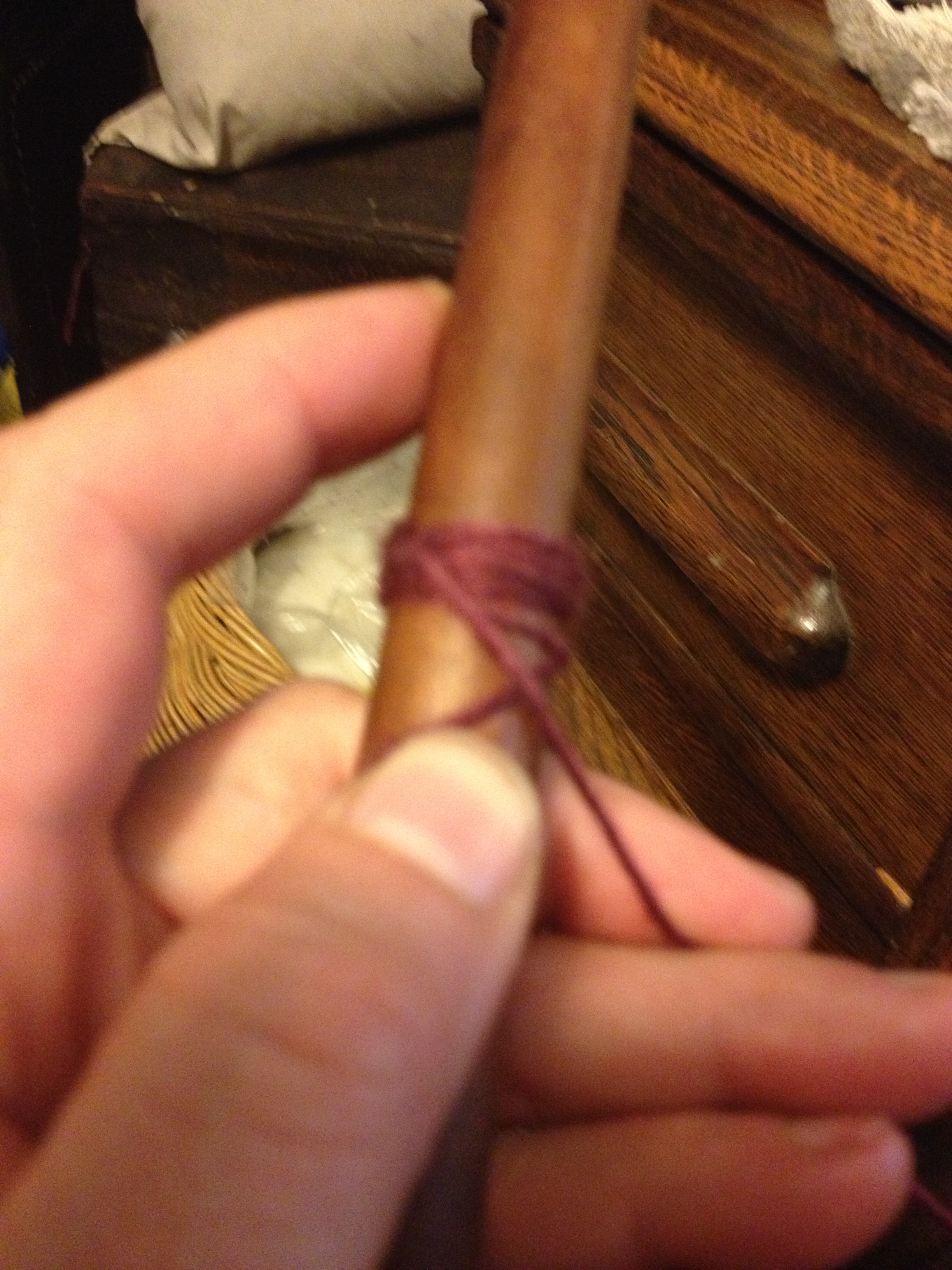
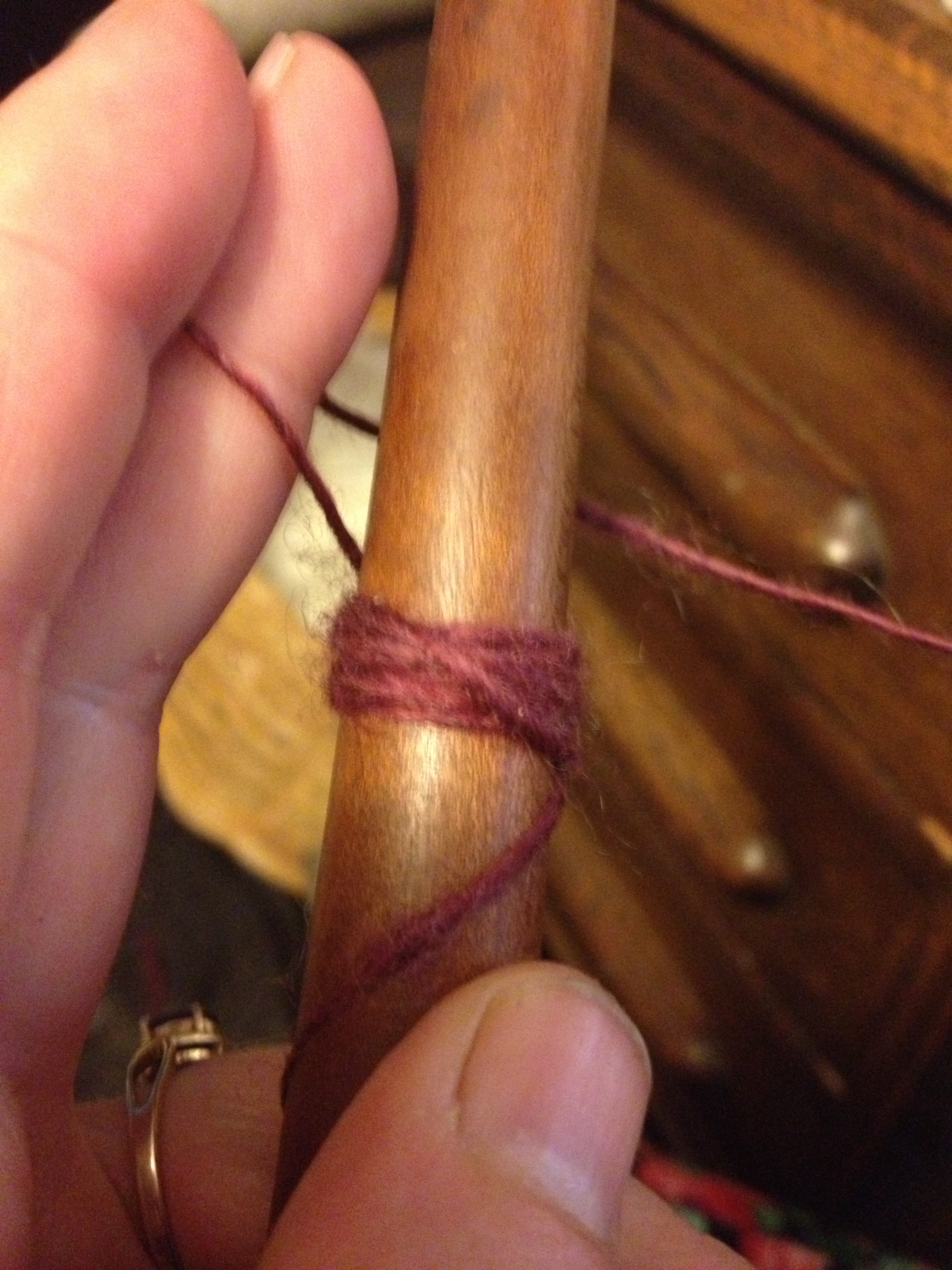
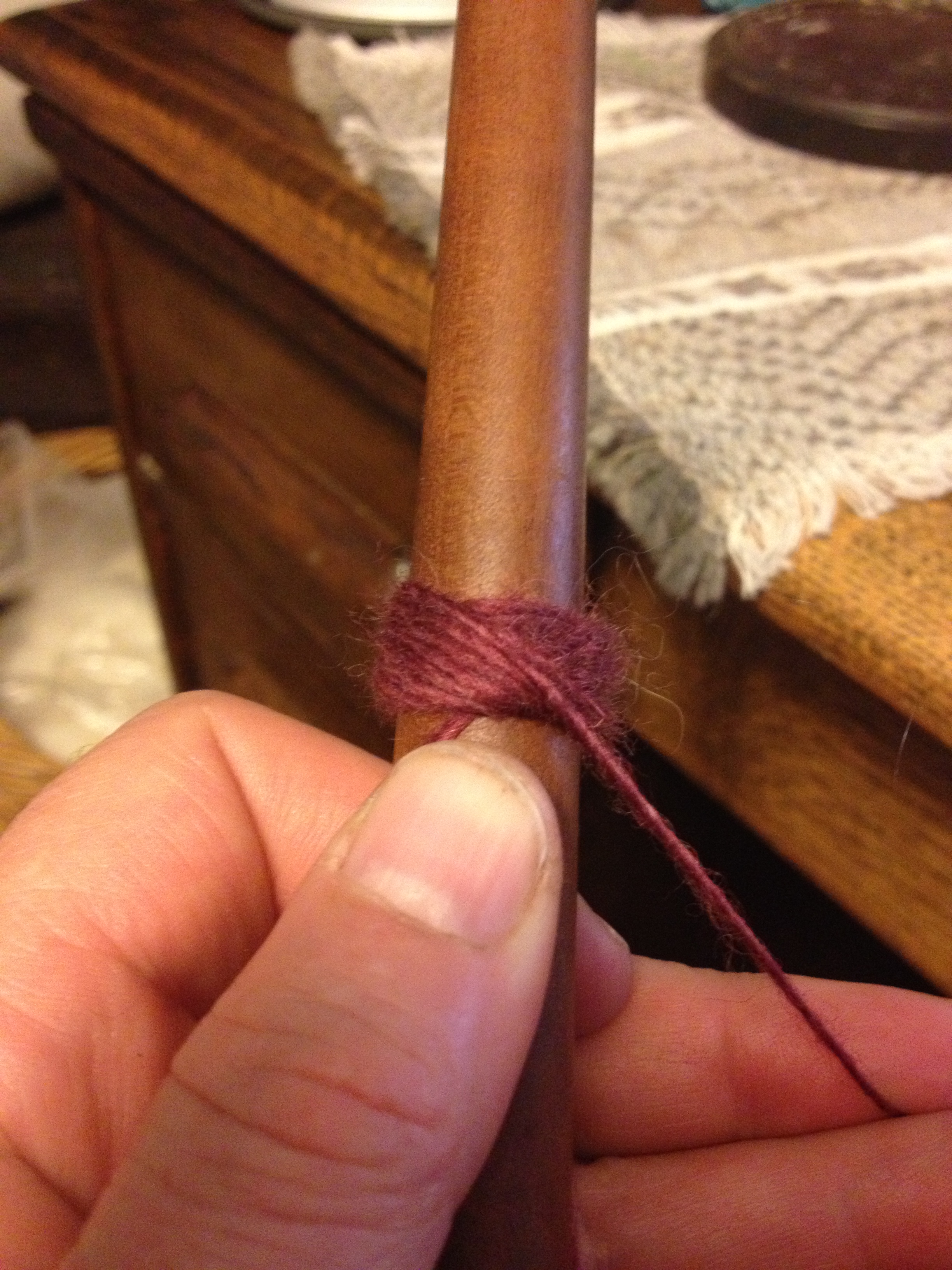
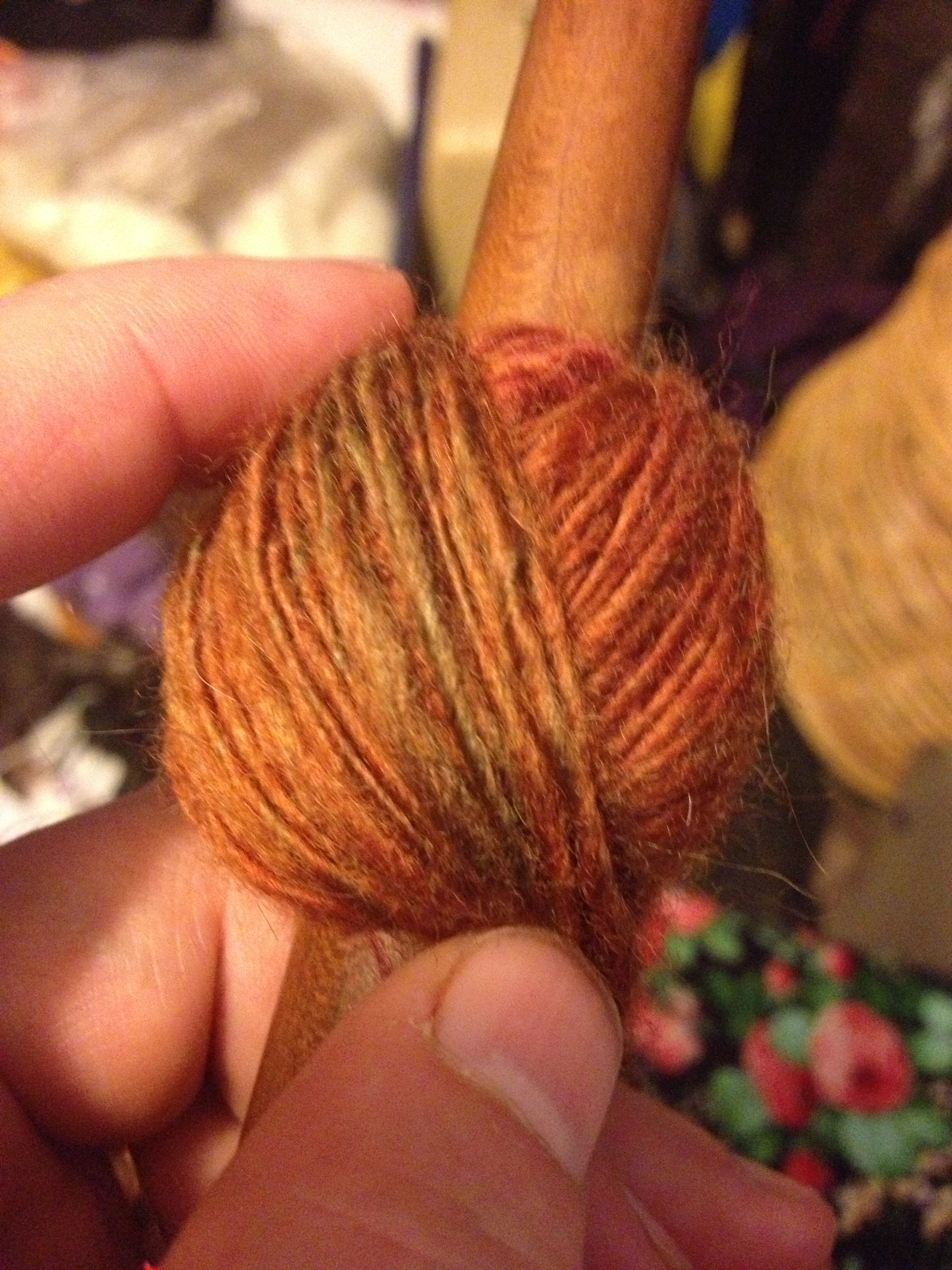
    Here’s a quick tutorial on how I use a nostepinne. A nosty is just a stick, so this would work on any stick or even a toilet paper roll.
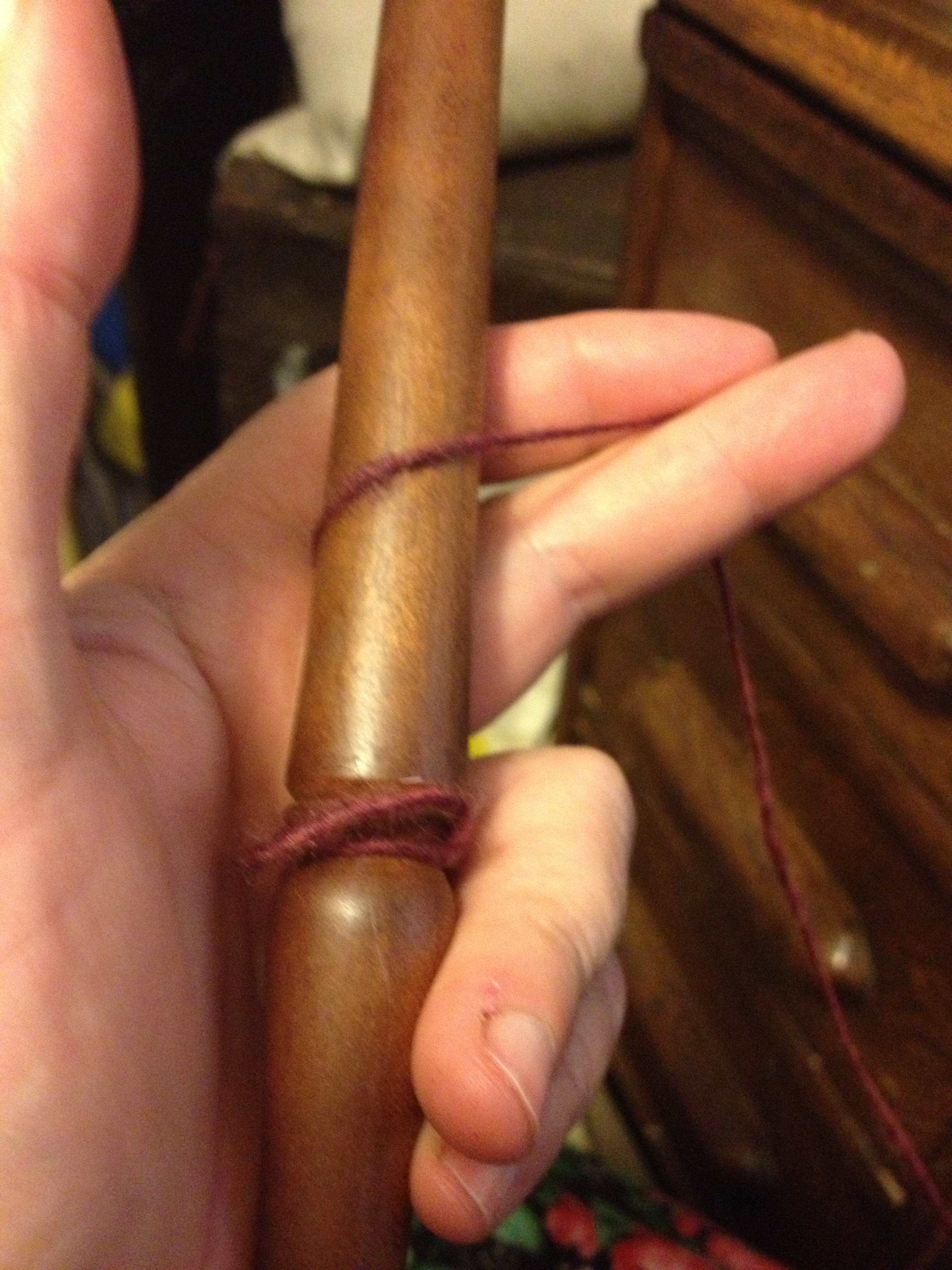
    I like to start by tying the yarn around the handle of my nosty. You can just hold it in place to start. I wrap it around towards the right.

    2013-10-07 17.58.34

    Here I’ve wrapped it a few times around the nosty to get started. Notice that I’ve got the yarn pointed up as I’m getting ready to start my wraps.

    2013-10-07 17.58.51

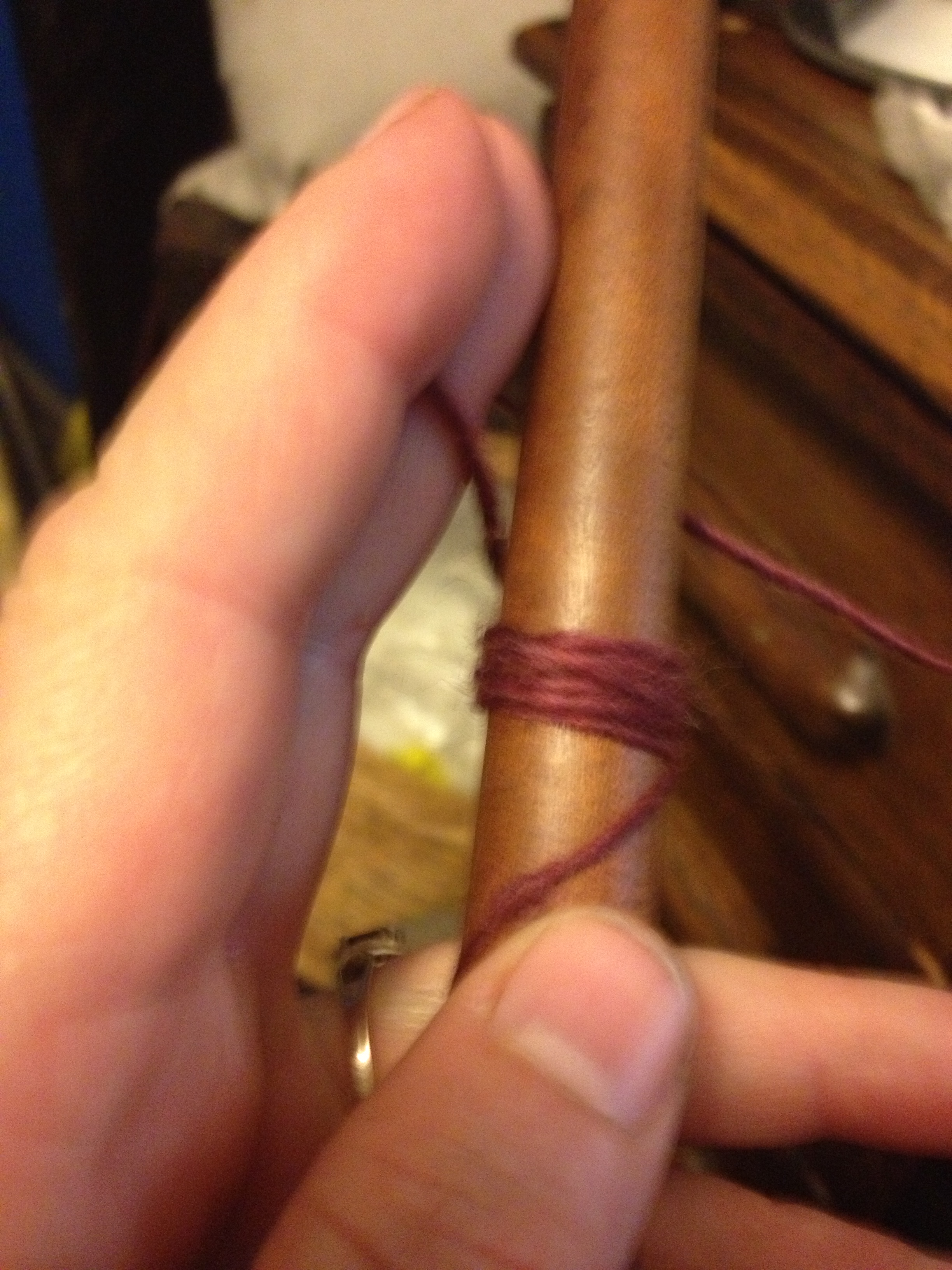
    This is my first wrap down. Most people seem to wrap up, but I feel that I am faster making that downward motion.

    2013-10-07 17.59.01

    Now I’ve gone around the nosty and back up, in position for the next downward wrap.

    2013-10-07 17.59.17

    Each wrap is next to the previous wrap. You slowly turn the nosty as you are wrapping, using that same motion down in the front, then back up at the back.

    2013-10-07 18.00.17

    I’ve done several more turns here. Notice that the wraps are getting longer and the ball is growing longer on the nosty.

    2013-10-07 18.04.33

    You can continue to go around like this, but you will wind up with a skinny long ball. I’m going to do what I call “make a shoulder” so that I make the ball fatter. Here’s my base:

    2013-10-07 18.06.34

    When you make a shoulder, you are deliberately shortening the length of the wrap. It helps to keep a finger nearby, to guide the yarn around the first few wraps.

    2013-10-07 18.06.50

    You can really start to see how I’ve shortened the wrap. It also is moving diagonally across the ball, instead of up and down.

    2013-10-07 18.07.42

    As you continue to move around the ball, it gets wider.

    2013-10-07 18.08.37

    I used up all my yarn, but you can see the shoulder that I’ve formed. When I am making a large ball of yarn, I will sometimes do this for awhile, then wrap back up to the top again for a bit. You can make a shoulder any time that you feel the ball needs to be fatter.

    2013-10-07 18.10.14

    Balls made like this tend to be flatter. When you are ready to ply, untie the starting yarn. Tie it to the ending piece and ply.

    2013-10-07 18.10.19

    Feel free to ask questions on anything that isn’t clear.

  • Spindles 30.09.2013 No Comments

    I’ve been excited about going to OF&F for several months now. I wanted to go, not just to see all the vendors and stuff, but because I wanted to get a couple more Jenkins turkish spindles. They are difficult to get right now, because they sold out so much stock at Black Sheep.  So I got some not-Jenkins spindles, an Enid Ashcroft Midge in a trade and a Riley petite:


    EAandRiley1 EAandRiley2

    I was thinking about getting another Lark, maybe a Kuchulu or a Swan for plying. For several months, all my discretionary spending was put on hold to build up my spindle fund. (Except for buying a bit of fiber–I do have priorities!) But I was disappointed to learn that they would not be at OF&F.  I planned to go anyway, and put my spindle buying on hold. And then, I found out they would be at an alpaca farm for an open house. AND, there would be spindles! So Lon and I headed out on Saturday, in a pretty bad wind/rain storm, for the alpaca place.  And I did get my spindles. In fact, I got exactly the types that I’d decided that I wouldn’t get, an Aegean and Egret. I will leave the Swan and Kuchulu for another day, maybe Black Sheep next year.

    Here’s the family portrait:

    Jenkins1 Jenkins2

    I did make a blitz visit to OF&F and purchased a nice braid from Dicentra. I tried doing a low twist single on the new Egret, which looks something like this:

    Dicentra singles

    It is interesting to spin that Egret. It’s Pacific Yew and very light for its size. I tried some finer singles, and it did not work well for that. It seems to do a nice job of plying. I really was starting to think I’d made a mistake buying it.  That’s why I started the project on it. My lap spindle is very heavy and I don’t really like using it these days. But I do like low twist singles. If this knits up okay, then I’ll have a replacement for the lap spindle.  The oak aegean, by contrast, feels much heavier. It’s actually 10 grams lighter. My thinking has been that the width of the arms would affect the amount of twist put into the fiber. That seems to be true.


  • Fiber, Projects 26.09.2013 No Comments

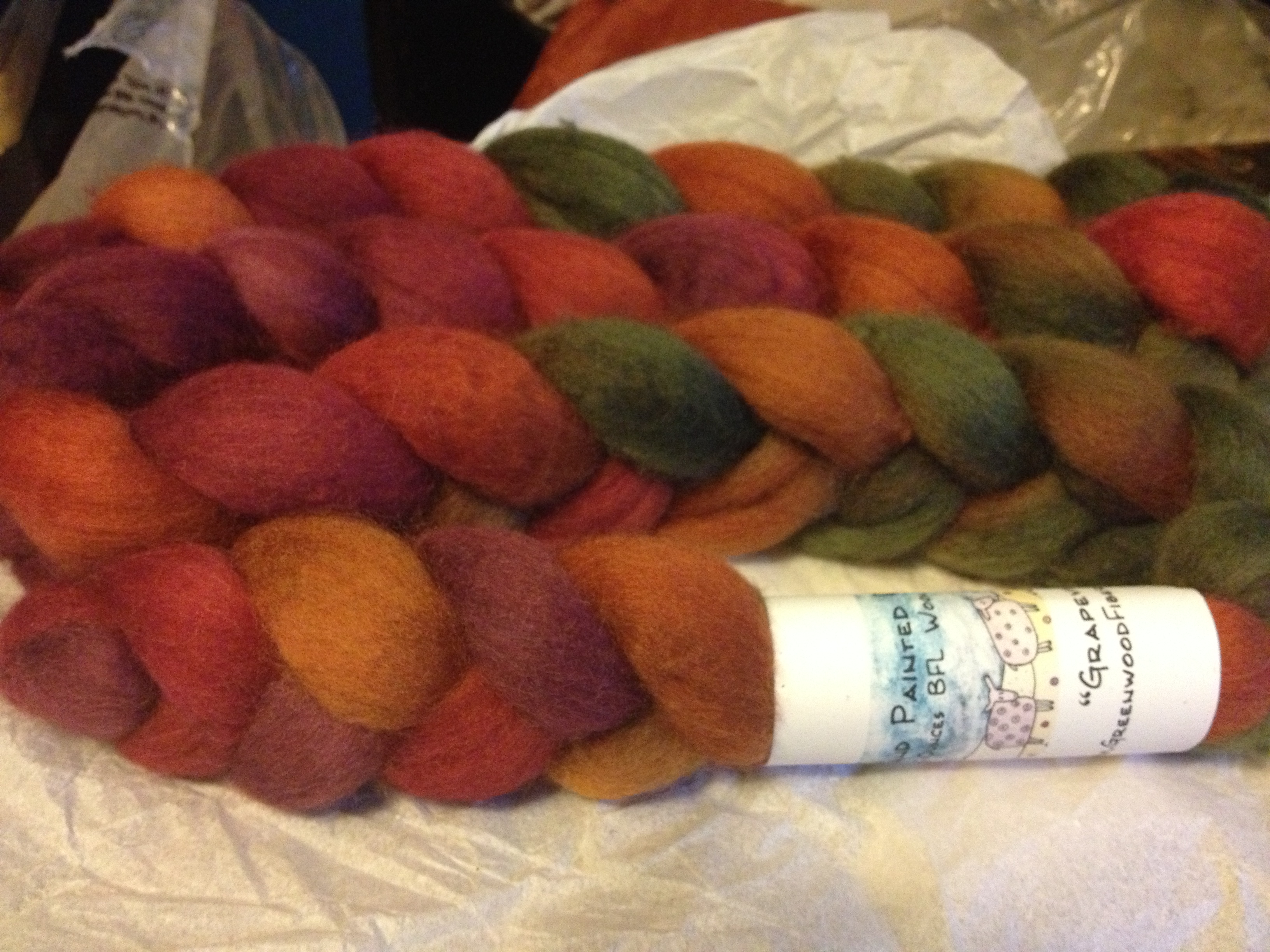
    First, an update on the project. This is the Beithe shawlette that I made for my friend Amy out of the Greenwood Fibers Grapevine.

    Beithe shawlette

    She said that she liked it well enough that she wanted to wear it to bed! I’d say it was a successful project.

    But my post is about stuff from my stash. I have a lot of fiber and handspun in my stash. Some of it can easily be 20 years old. I have a good memory for most of it. But I can’t remember what type of wool this is. I do remember that it’s dyed with Rit dye.

    mystery wool spinning mystery wool

    As you can see, it combs up nice. It might be Rambouillet. It’s crimpy, with about a 3 inch long staple.  I’m sure I’ll think of a use for it. I should at least weigh it and find out how much of it I have. I’ll have a lot of waste when I comb it though.

  • I have been busy knitting AND spinning. So let’s do some recent stuff.

    Greenwood Fibers "Grapevine" Spinning singles from Grapevine

    Greenwood Fibers "Twilight"

    Sock yarn from Twilight, using my new Enid Ashcroft Midge in Tulipwood

    The unending rayon or possibly merino

    Another spinner on Ravelry has this same stuff! She says hers was labeled as merino. It sure feels like rayon to me. I guess I’ll know more when I wash it.

    And I have a new yarn bowl!
    Twilight in progress

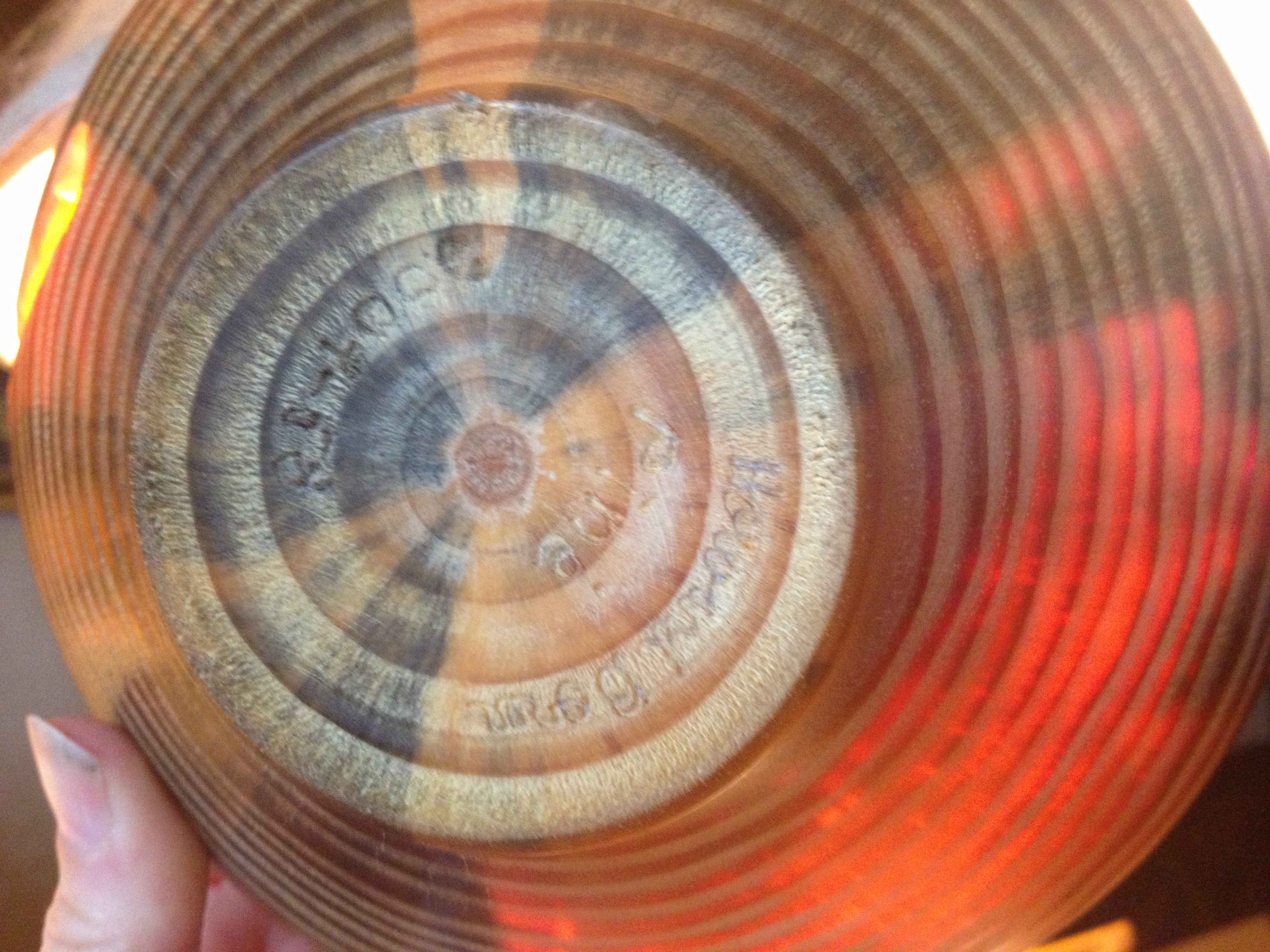
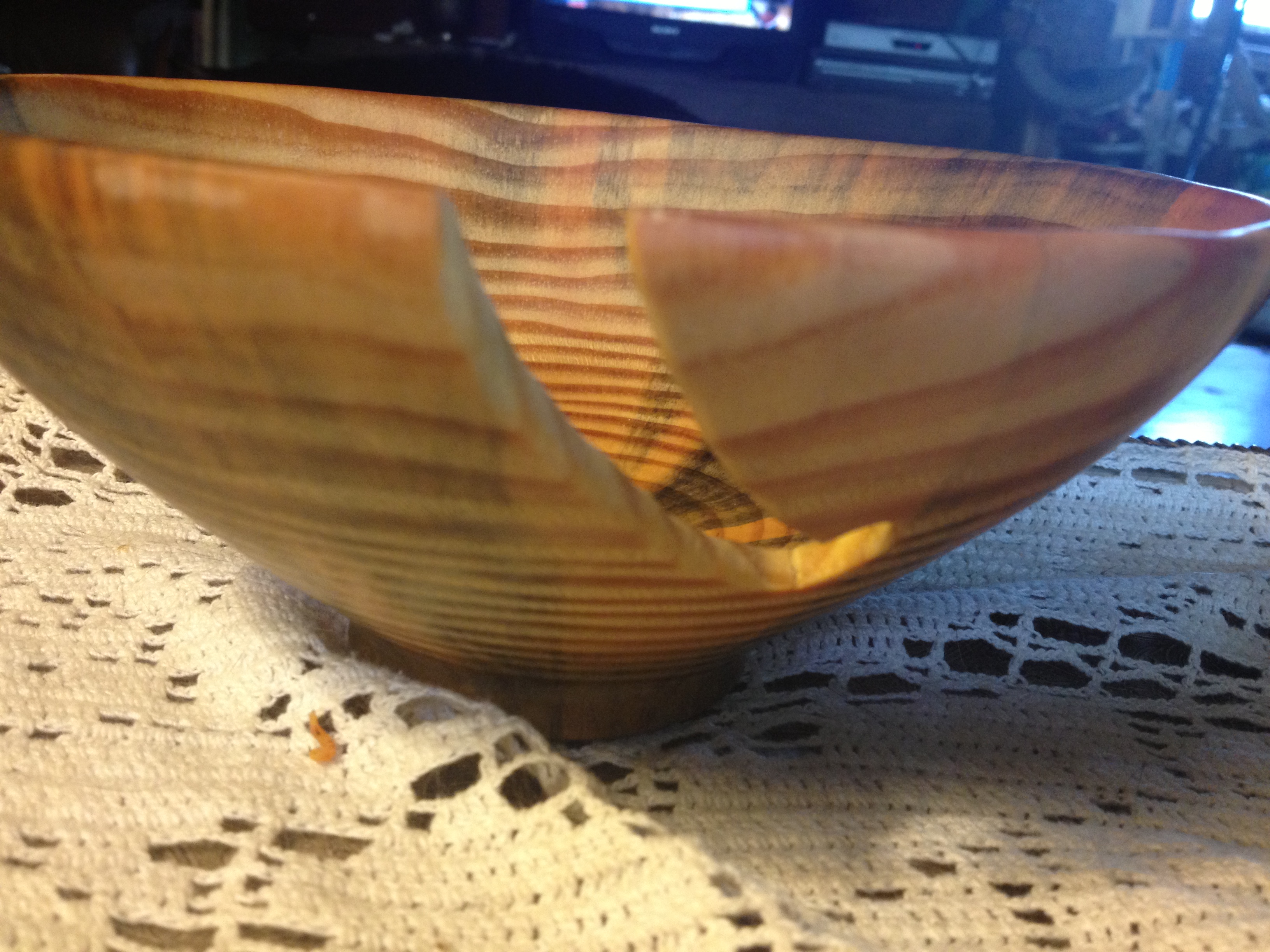
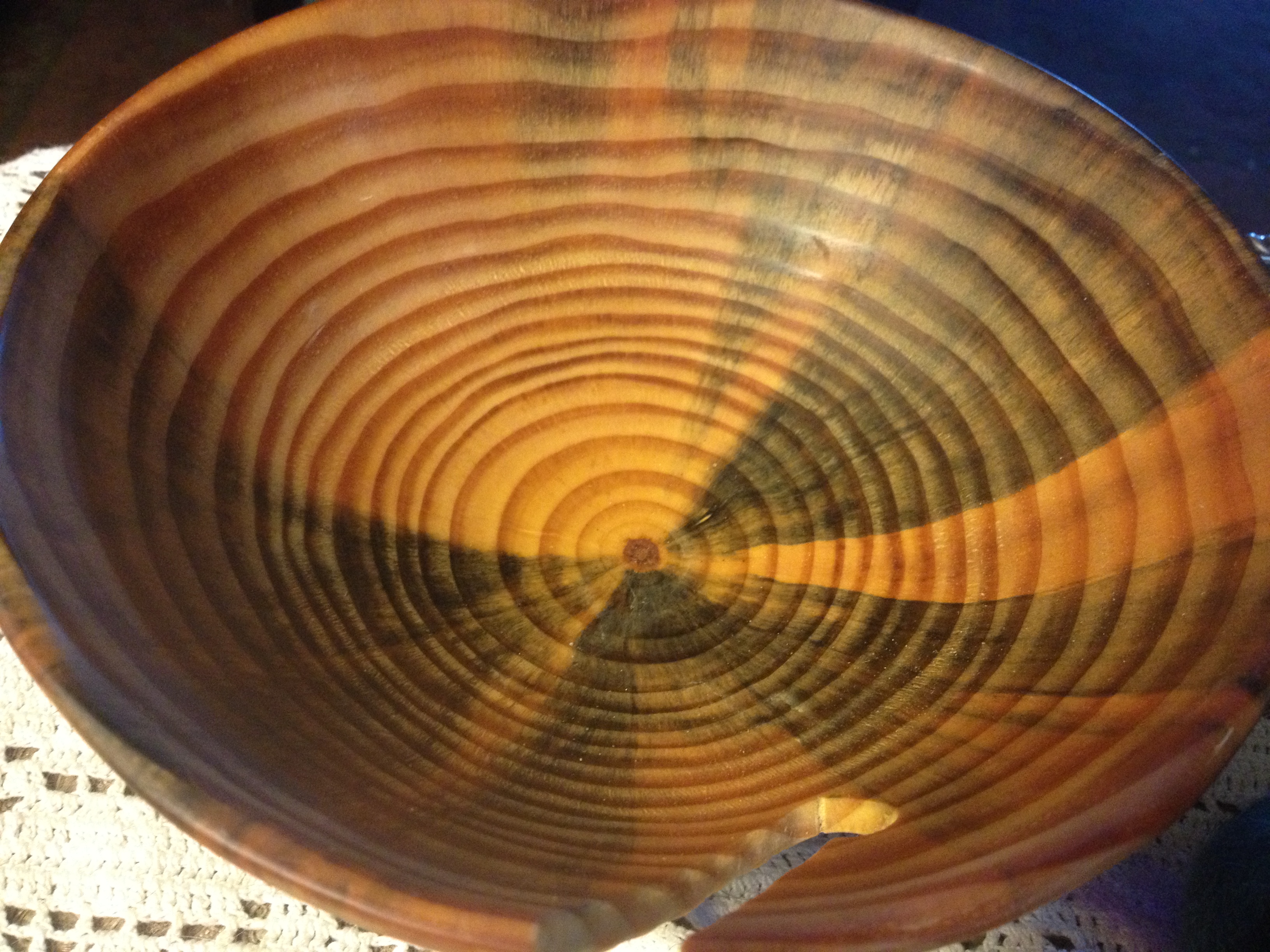
    It’s made from pine and processed a certain way to make it translucent!

    yarn bowl up to the light

    side view of my new yarn bowl

    It’s beautiful work by Lon’s wood turning teacher, Howard.

    yarn bowl from the top

    Let’s have one more picture of that EA Midge!

    Enid Ashcroft Tulipwood Midge

    This is the Milk Run shawl, done up in natural colored wools. This is almost all spindle spun. Most of this yarn has been kicking around in bins for a long time now. I really like this shawl.

    River Run shawl in natural browns Side view of the River Run shawl Front view of the River Run shawl

    And that’s it for today!

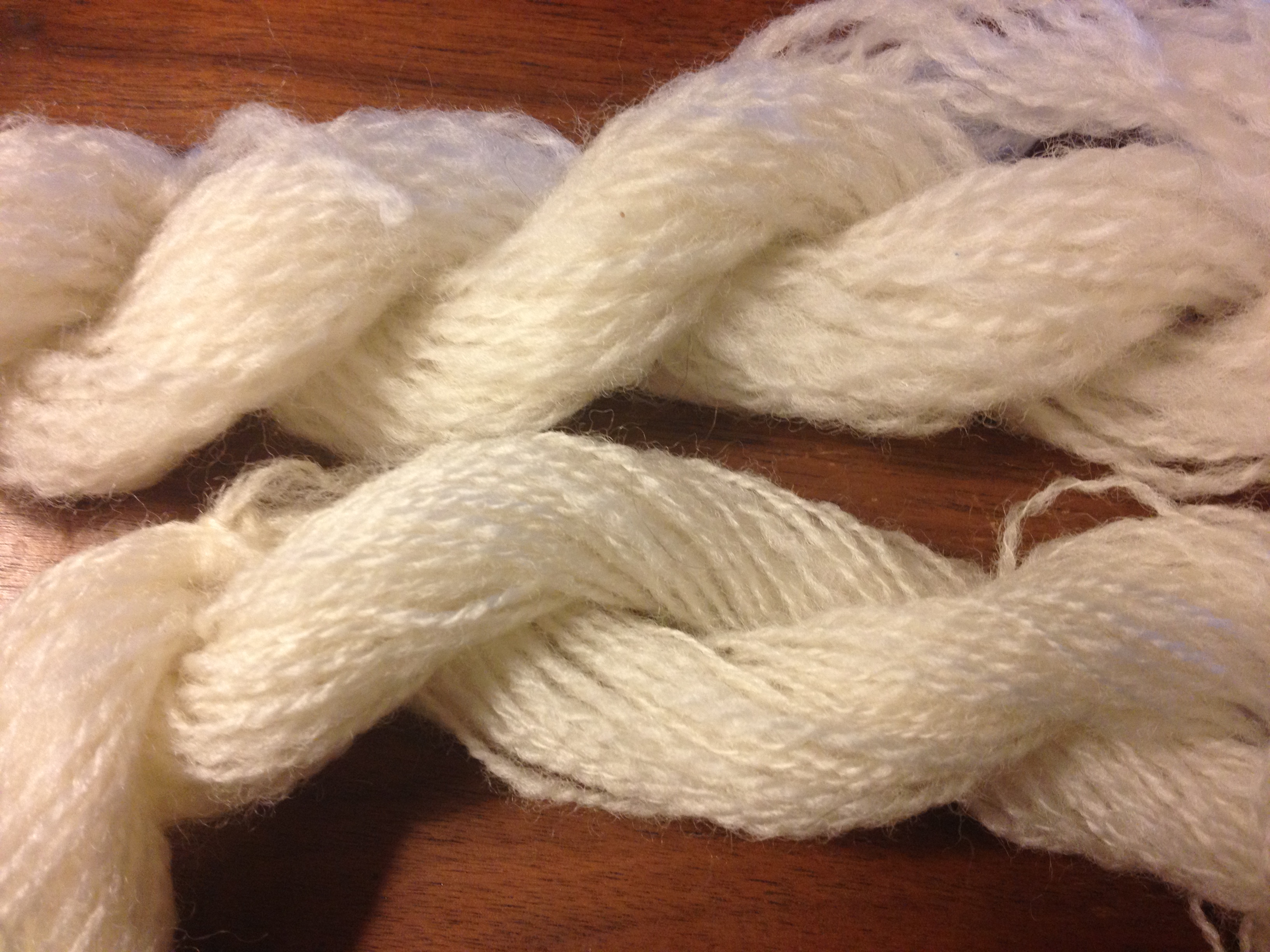
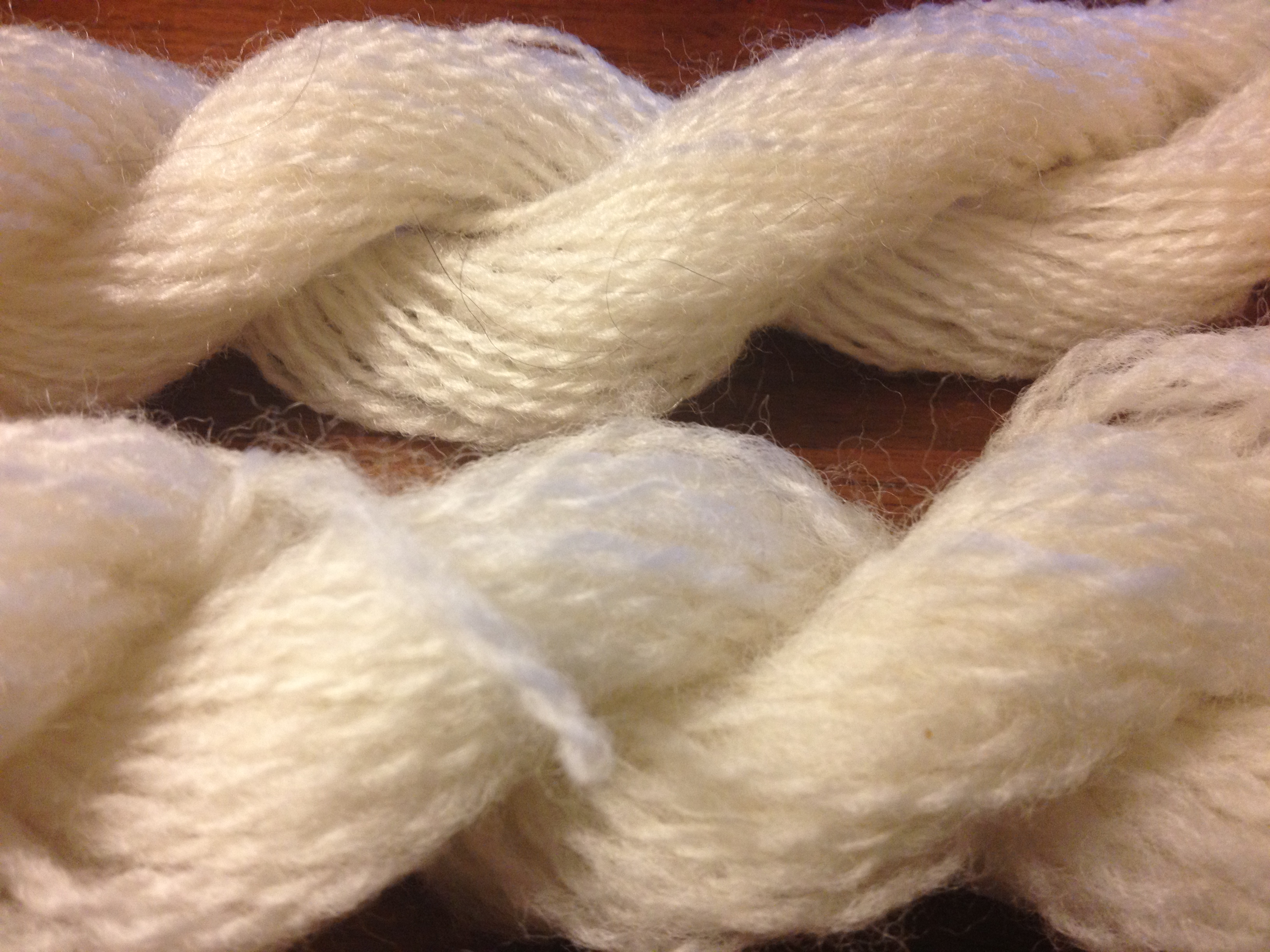
  • I posted this on the Jenkins forum, but thought I’d post it here too. I did a sampling study, which is pretty unusual for me. I noticed that the yarn spun and plied on my Turkish spindles had a puffiness that I hadn’t seen before. I wanted to do a test, with spindles of similar weight and fiber prepared in the same way. So here’s my test, starting with the first group of spindles:

    Jenkins Lark and unidentified boat anchor

    Jenkins Lark and unidentified boat anchor

    The high whorls are:

    Greensleeves Loki and custom high whorl

    Greensleeves Loki and custom high whorl

    The custom is a tiny bit lighter than the boat anchor Turk, but close.

    The fiber is a Corriedale/Romney, combed on Viking combs from roughly the same area of the fleece. I tried to use the same draw on both samples. I did give the Turks an extra spin, during the original spinning and also on the plying. The high whorls didn’t need that.

    Here are the results;

    High whorl on the bottom, Turkish spun on top

    High whorl on the bottom, Turkish spun on top

    Second picture of the samples:

    Turkish spun on bottom, high whorl on top

    Turkish spun on bottom, high whorl on top

    I think you can really see the difference here.

    I have not counted twists per inch and it’s likely that the Turks are putting less twist into the fiber. The interesting thing is that you could choose to use Turkish spindles to deliberately get a puffier yarn, even out of fibers that are a bit on the coarse side. But, if you are doing socks, you might want to go with high whorls. That would give you a longer wearing yarn.

    If anyone else tries this, please let me know how it turns out! I think I’d like to try it with carded fiber too. I’ve been spinning a long time, but there are still new things to be learned.

  • Fiber 06.08.2013 No Comments

    I realize I am linking to old posts on Abby’s blog again. But here is another interesting one: Should everyone spin? And while I do agree with this one, it concerns me that the thing most spinners spin is prepared fiber. I’m not sure that it does you a lot of good to know how to spin when that supply of fiber dries up. Knowing how to process a fleece from scratch is part and parcel of spinning.

    I finally have taken out all of the bins of fiber in storage. I found one more fleece to wash, now drying. There’s a lot of fiber that’s already been spun. I found more cotton roving. I have my office now full of bins and fleece, roving and yarn everywhere.

    And I bought this:
    Greenwood Fiberworks Lovely stuff and I look forward to spinning it (along with my ongoing combed fleece project.)