This was triggered by discovering the wonderful Knitting Sarah blog (just added to my blog list). Let me say again how much I like her blog. I think she is doing beautiful work. And I am saying this up front, because I don’t want my thoughts here to be taken as a slam against her. But in one of her tutorials, she says:
“Most spinners you talk to will say their #1 goal is to spin a yarn that it could be mistaken for mill spun, or at least something that looks like the control involved could not possibly have been executed by human hands.”
I’m sure this is true of modern spinners. Back in the 70s,when I learned how to spin, we despised this. We did not want to replicate commercial yarns. We wanted yarns that looked like they were created by human hands. And we made all those crazy, irregular yarns that machines couldn’t make (until they started making thick and thin yarns!) What we see today are spinners using the same type roving the mills would use. It’s great stuff, don’t get me wrong. But it disconnects us from the craft. Let me explain.
Knitters used to create simple yarns and use their skills as knitters to create beautiful things. You can look at ads for yarns back in the 1900s and see that most were basic colors and usually four ply. There were novelty yarns of course. The knitter created the colorwork, from the pattern they chose and the colors they used. Think of Fair Isle. Now, we get the colorwork in the yarn and the patterns we choose need to be simple. You’ll see a few projects at Knitting Sarah where the yarn overwhelmed the pattern and she had to choose a different pattern. Makes life easier for busy knitters. No reason to do something complicated. We are handspinning yarns like the mills turn out.
Who makes the money under this system? The mills, that process the fiber and spin the yarn. It’s a system that rewards the ranchers that turn out white fleeces, preferably merino these days. Ranchers make their money off the meat, not the fleece. Small farms, raising endangered breeds or colored fleece, rely on spinners to help them keep going. Why bother, if modern spinners are not interested in purchasing a fleece and preparing their own fiber? What happens to the market for fiber prep tools? If you are buying nothing but commercial roving, why would you need a drum carder or cards? (You might want to blend even commercial fibers, but still.)
There is something to be said for watching a sheep get sheared, buying the fleece and processing it yourself. There is something to be said for having the ability to hand card or comb your on fiber. There is something to be said for being able to create your own beauty, out of simple yarns, using your skill as a knitter. And being able to do these things, makes you a better spinner.
I don’t want to take anything away from spinners that only use these prepared fibers. I understand that folks have busy lives and may not have the space or time to work from raw fleece. I started thinking about these issues when I was demo’ing at the local fair with a group of spinners. They had us back by the sheep pens. I looked and everyone was spinning commercially prepared fiber. So the next day, I brought my cards and combs and clean fleece. Some of the young folks with sheep came over to demonstrate their carding expertise! It was fun, if a bit hard on my cards. It made the connection between their animals and the yarn we were spinning. That’s important for the continuation of our craft. Be versatile! Go to a fiber festival (it’s important to support those), buy some raw fleece and learn how to wash and process it. Make something beautiful out of natural colored wool. Support local shepherds by buying their wool. Show young people that connection between the wool from the sheep and the yarn. Keep spinning alive by broadening it, not narrowing it down to replicating what the mills make.
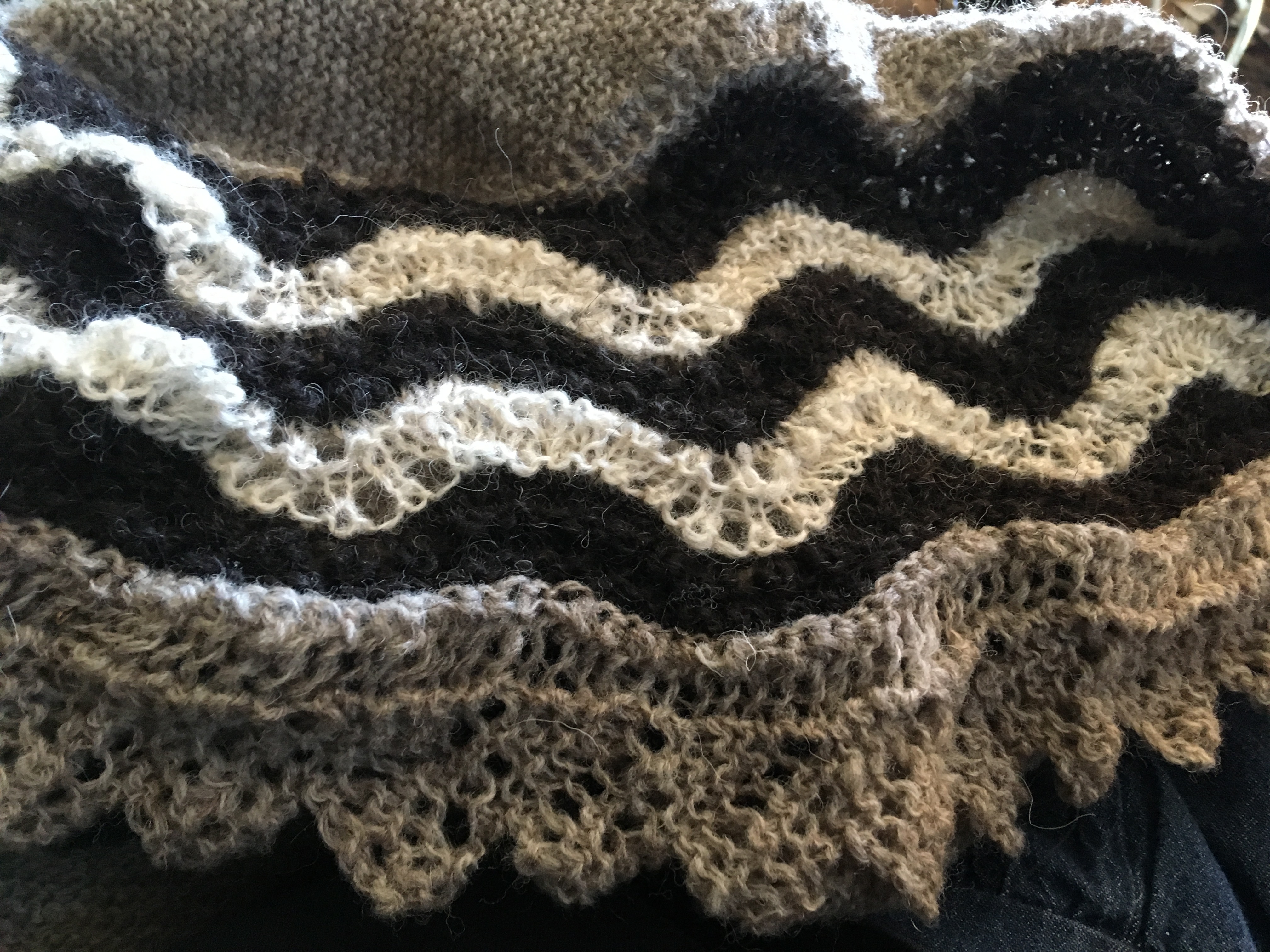
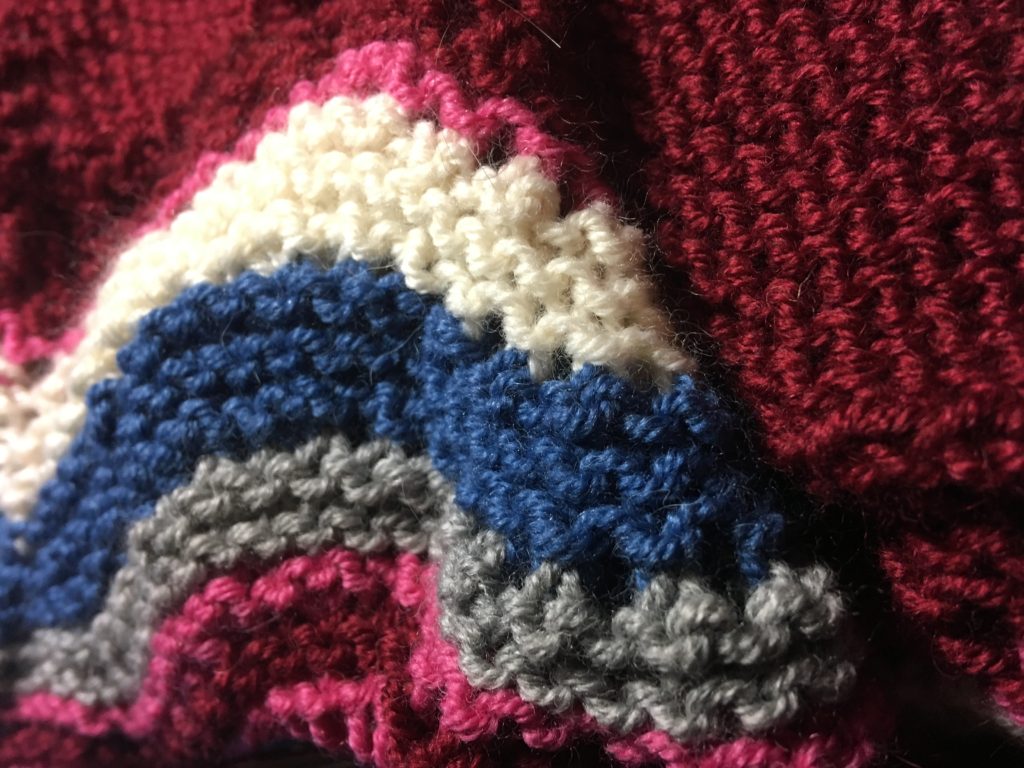
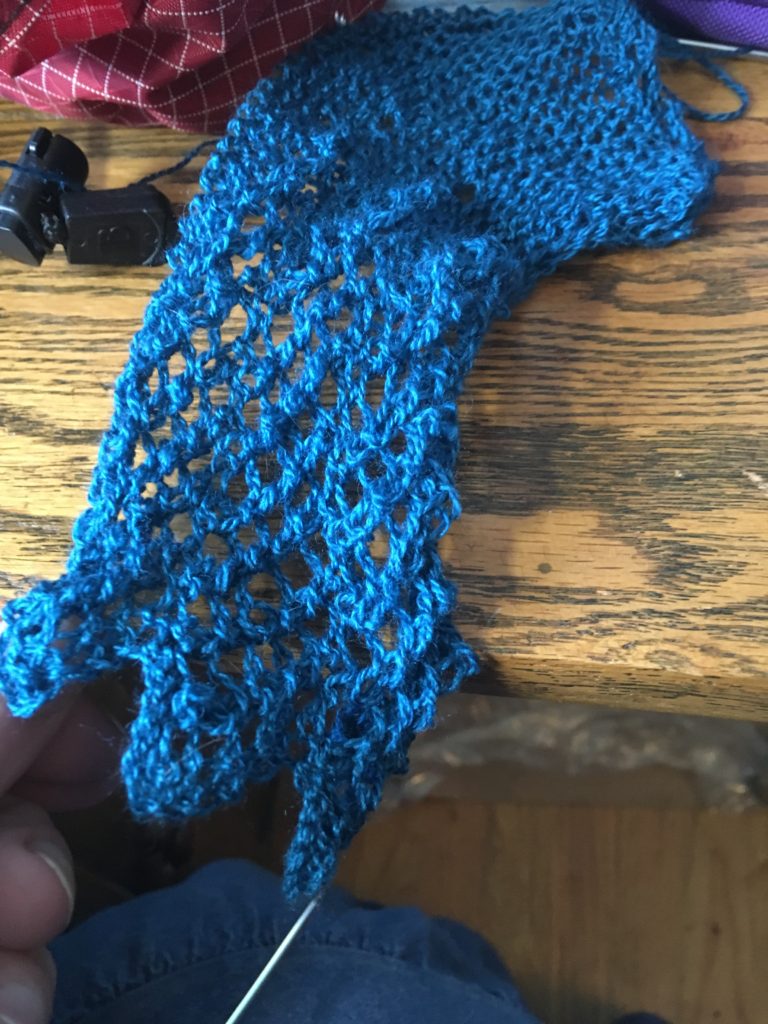
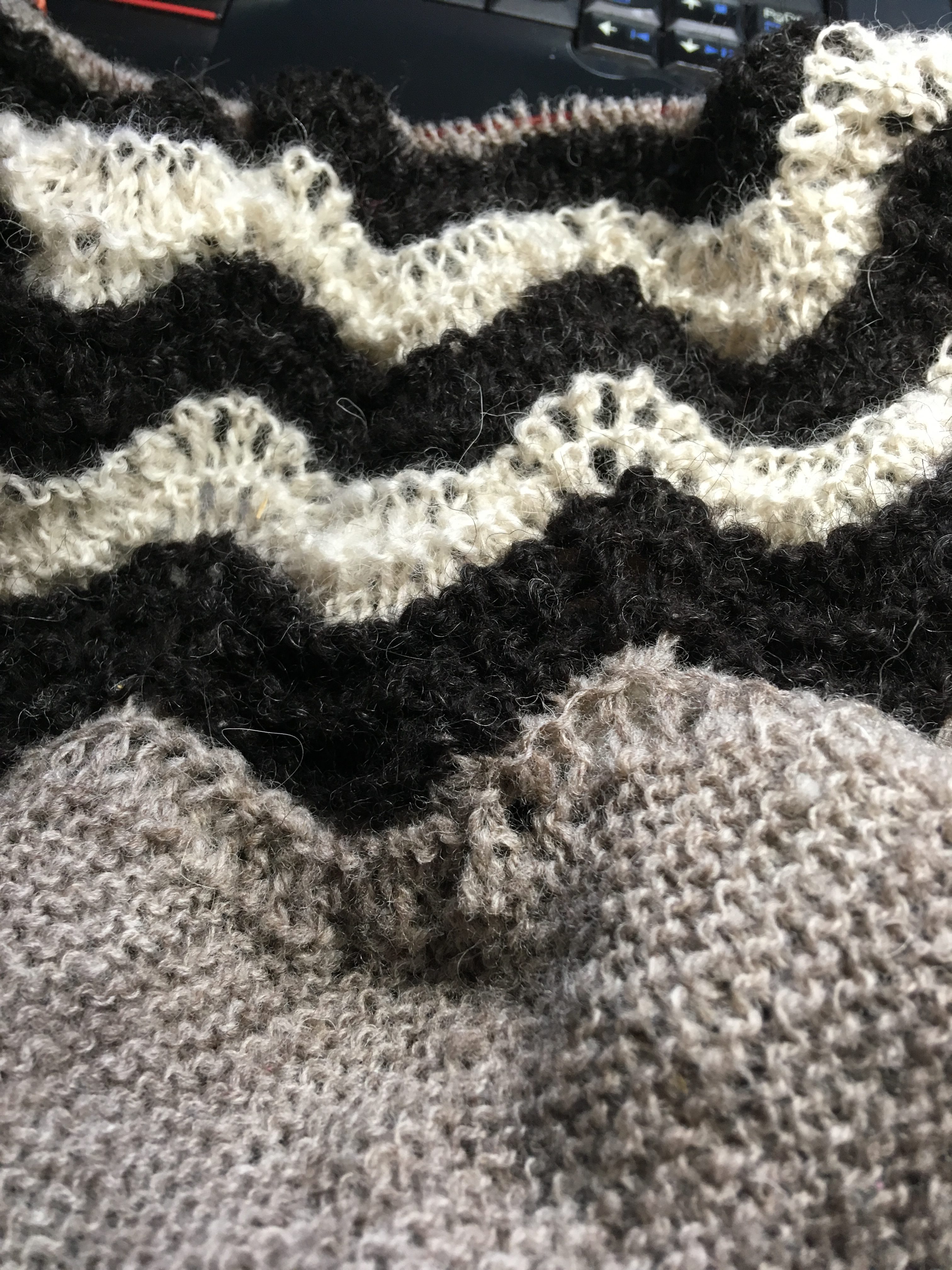
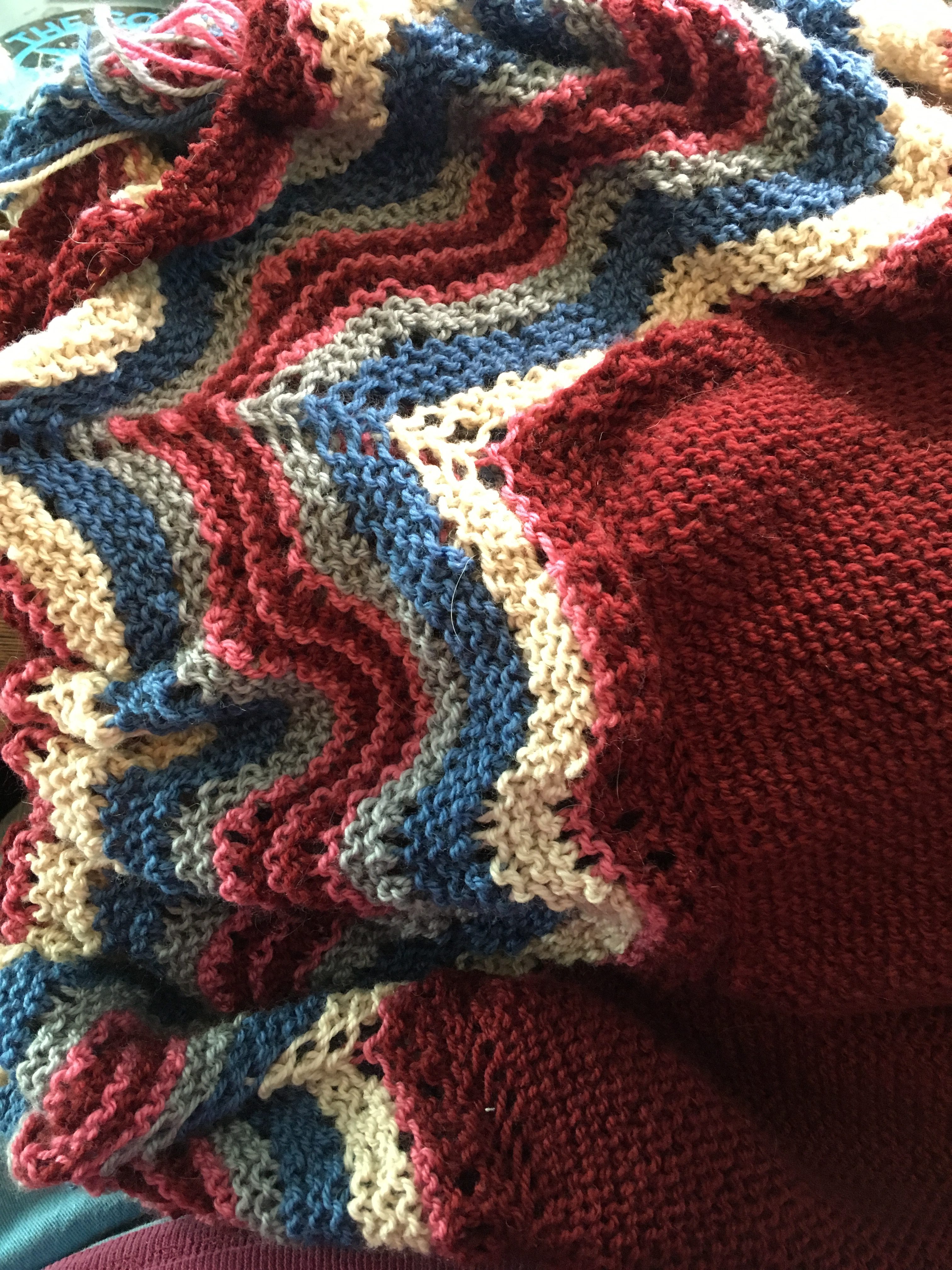
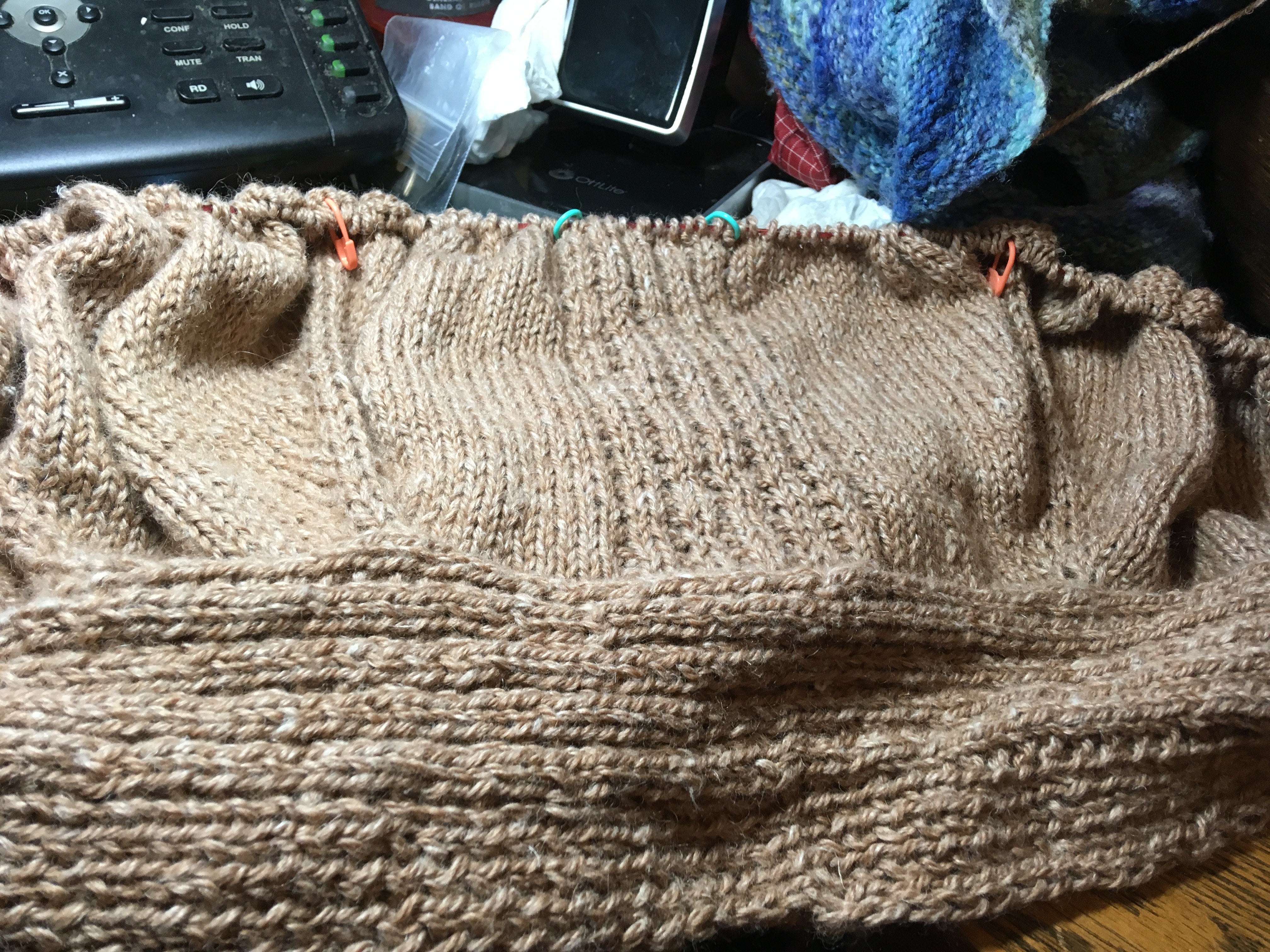
 I used charcoal Bartlett sport weight, with some Shetland yarn in “Cunningham Red”. I think the white might be Jamieson from Schoolhouse Press. The grey is Cascade 2020 worsted. I needed that color to finish and the fingering weight was just too light. I’m going to block it this weekend. I really enjoyed making this Hap. The pattern is well written and there is a Craftsy class.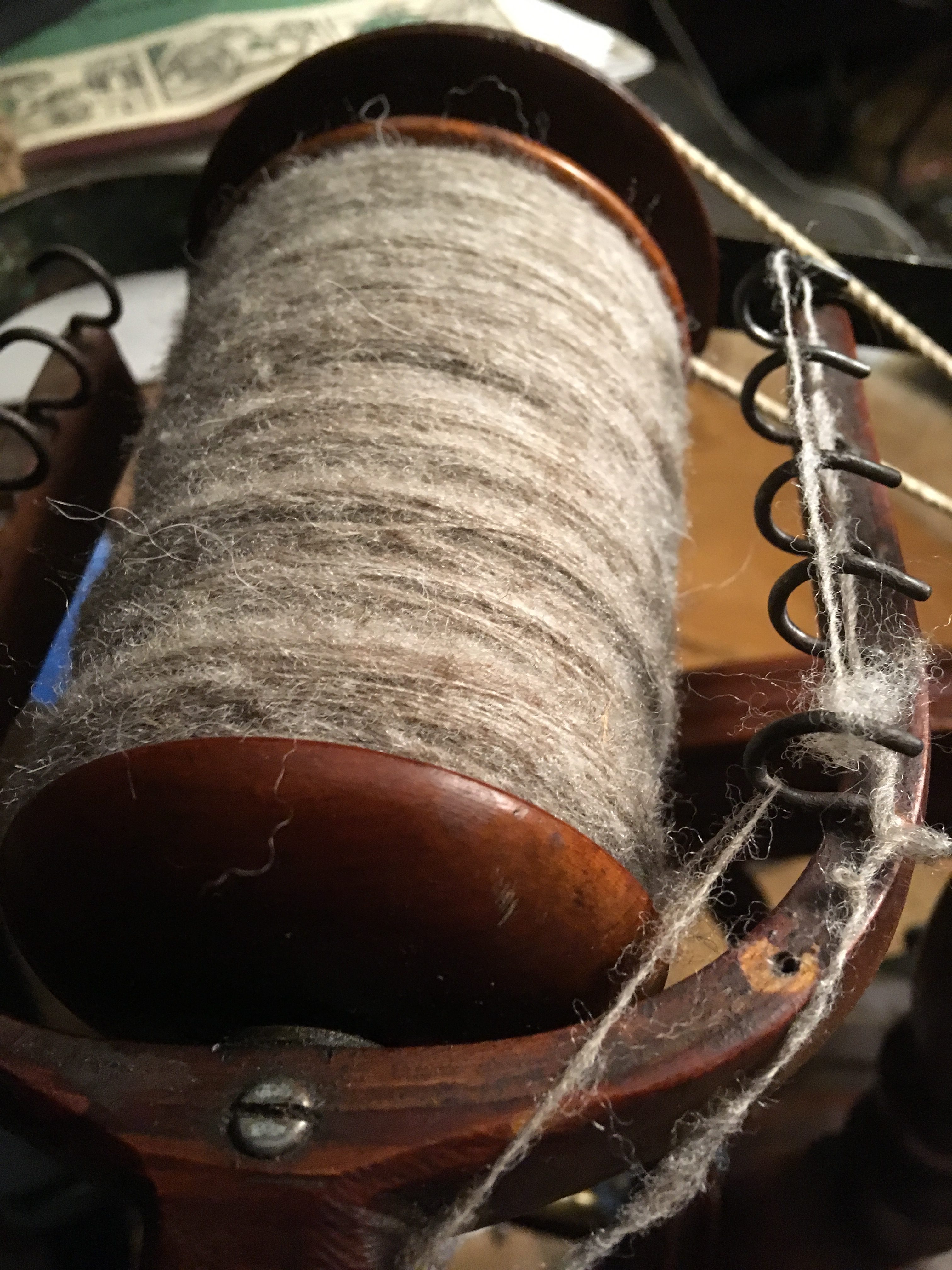
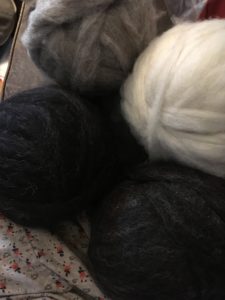 This is the grey with a white, black and charcoal. I should have leftovers which will likely lead to hap number three. I’ll post the yarn for the first shawl when I finally get the main color. It is taking forever to get here. I’m doing a pattern called Old Shale Shetland Hap. This is another one done from the center square out. I also picked up Shetland Old Shell Triangle and Square Shawl, which does the border, then edging and finally the center. I do want to try that style, but not just yet. Things are picking up around here as far as packing, so I don’t want to be working on something complicated just yet.
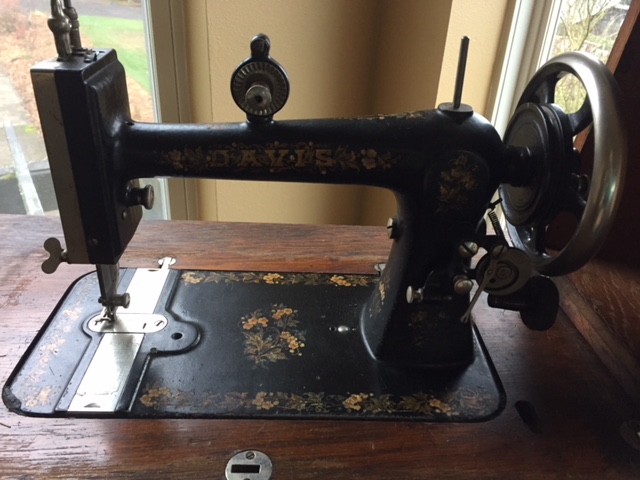
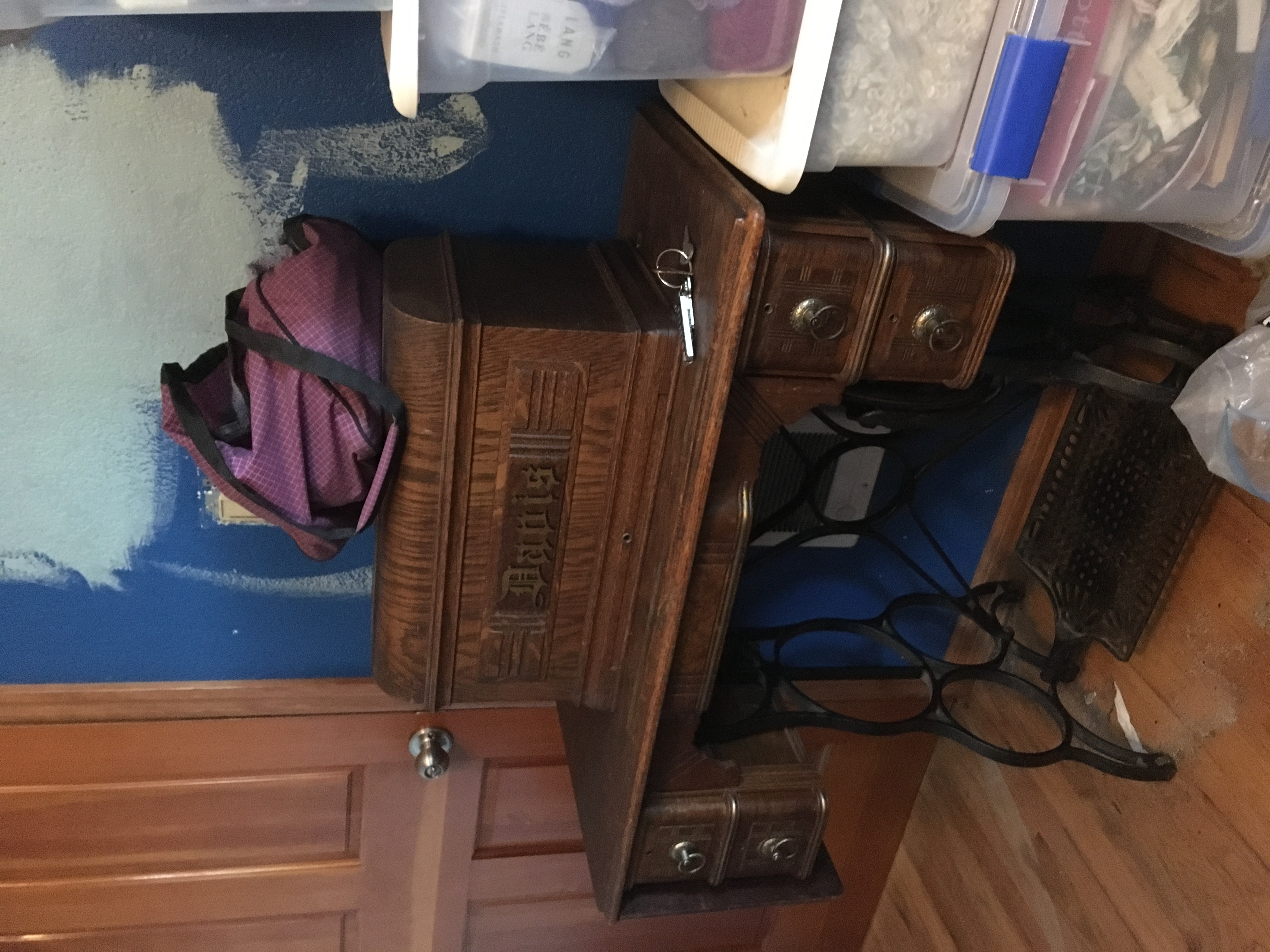
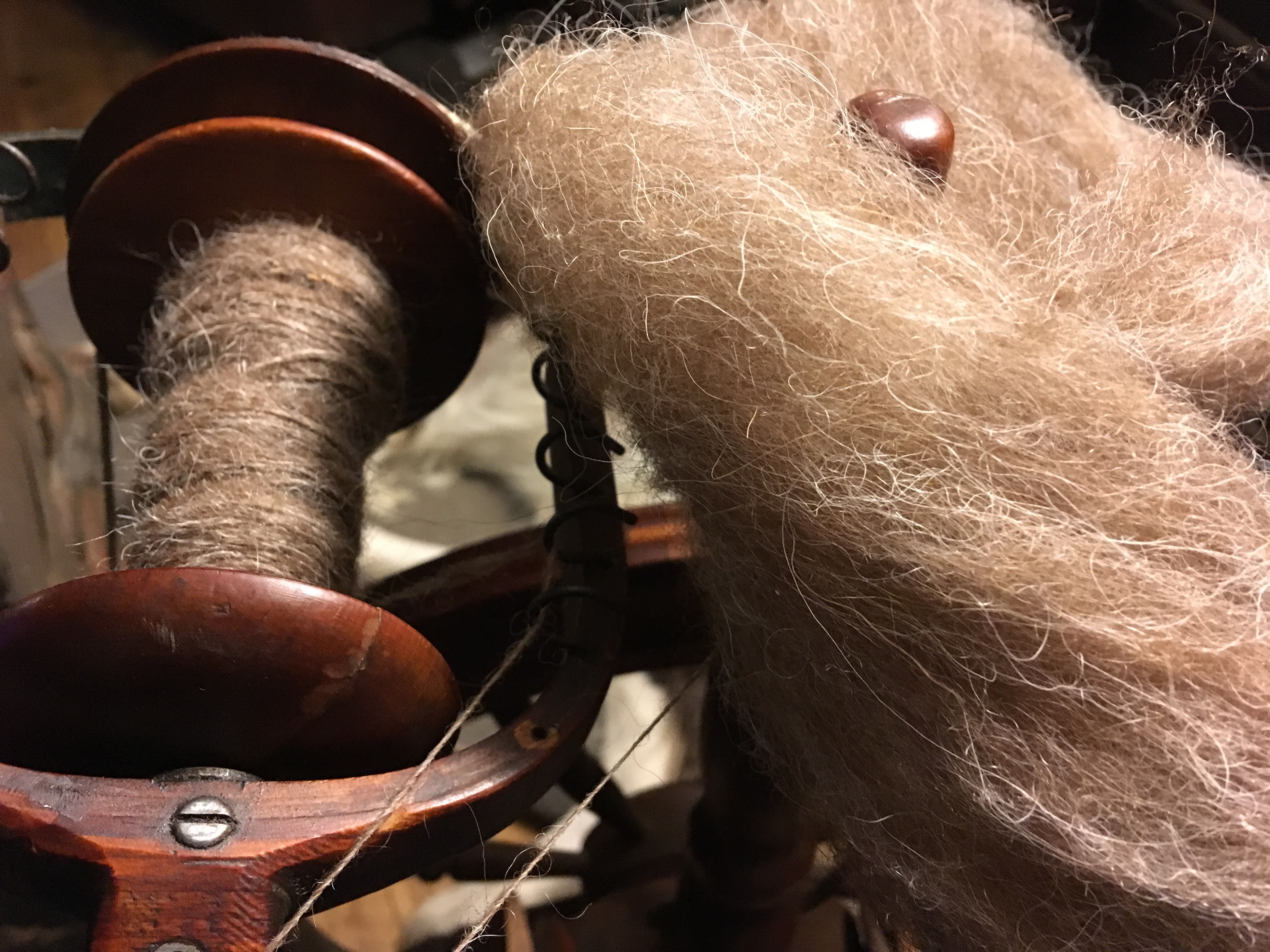
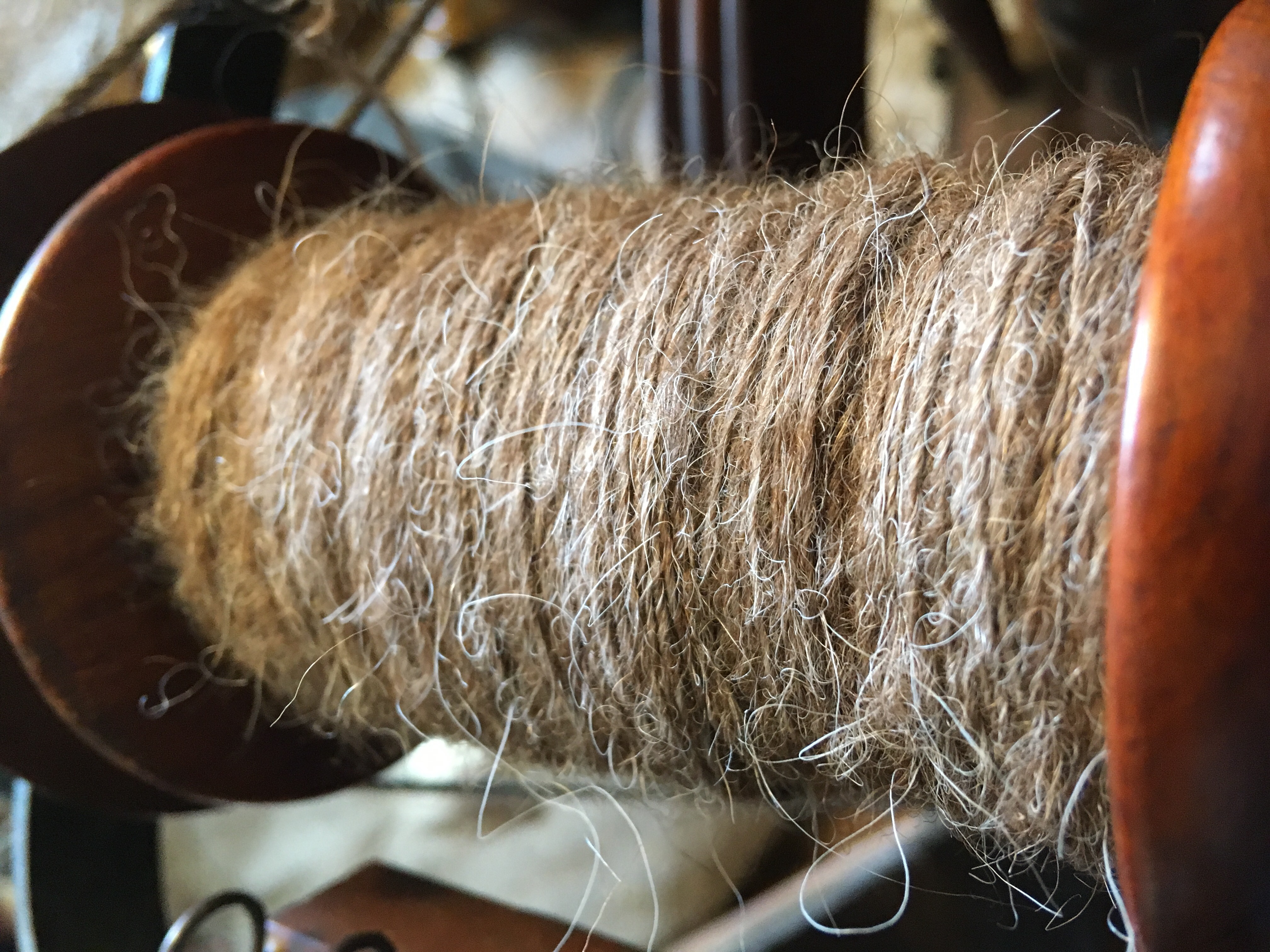
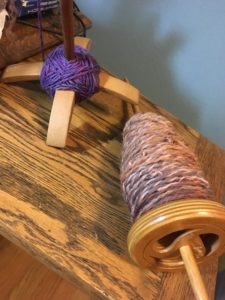 I’m trying to gather up some of the yarn that needs to be plied and work on it as I have time. It helps me clear out a few things in the office, which needs to be packed up this weekend. We are going to refinish the floors in the bedrooms, so it all needs to be packed up. Also, I have a sewing machine for Abby. She needs to be able to patch Quinn’s work pants. I found a nice Wards Signature that I will go through tomorrow. It has built in cams, so probably fancier than she needs. But it looks to be a solid machine and is pretty quiet. I’ll have to go down and give her a sewing lesson too.